Description
Direct answer: Private Label Pre-Makeup Moisturizer Primer Cream is a configurable face-care direction for buyers who want one cosmetic product to support a comfortable moisturized feel and a smoother-looking makeup-ready finish. GUOCUI BIO TECH / Guangzhou Guocui Biological Technology Co., Ltd. can review texture, ingredient direction, scent preference, package format, custom logo, sample plan, QC checkpoints, multilingual artwork and export packing needs. Final formula, public claims, MOQ, quotation and timeline are confirmed after the buyer brief and packaging route are reviewed.
Product positioning
This direction sits between daily moisturizer and makeup-preparation skincare. It is not presented as a wear-time guarantee or a treatment product. The practical B2B value is the ability to define the finish that a buyer wants before makeup: a cushioned cream for dry-feel markets, a lighter gel-cream for humid channels, or a balanced cream that absorbs without leaving a heavy film.
Suitable buyers and channels
- Skincare or makeup brands adding a preparation step to a complexion range.
- Amazon and TikTok beauty sellers who need a clear demonstration-friendly texture.
- Salon, spa and makeup-artist retail programs.
- Distributors and wholesalers building coordinated face-care starter sets.
- Private-label buyers who want packaging, label and carton support from one factory discussion.
Trend and search positioning
Primary keyword: pre-makeup moisturizer primer OEM.
Supporting terms: private label face primer cream, makeup-prep moisturizer, custom formula skincare, airless jar cosmetics, low MOQ private label skincare.
These terms describe a buyer need and product format. They do not assert unverified market growth, ranking, sales or clinical performance.
Custom formula and texture directions
The formula brief may discuss humectant, emollient and barrier-supporting cosmetic directions such as hyaluronic-acid-positioned hydration, panthenol, niacinamide, ceramide-positioned care or other buyer-requested ingredients, subject to feasibility and destination-market review. A buyer can also compare buttery cream, soft whipped cream, fast-absorbing gel-cream and low-scent directions. Ingredient percentages and finished claims are not fixed on this page; they belong in the sample and documentation review.
Sensory options to confirm during sampling
- Slip during application and compatibility with the intended makeup routine.
- Absorption speed, surface feel and visible pilling checks with representative products.
- Fragrance-free-positioned or light cosmetic scent direction, where feasible.
- Finish options from softly dewy to more natural-looking.
- Target climate, skin-feel preference and intended order of use.
Packaging, capacity and artwork options
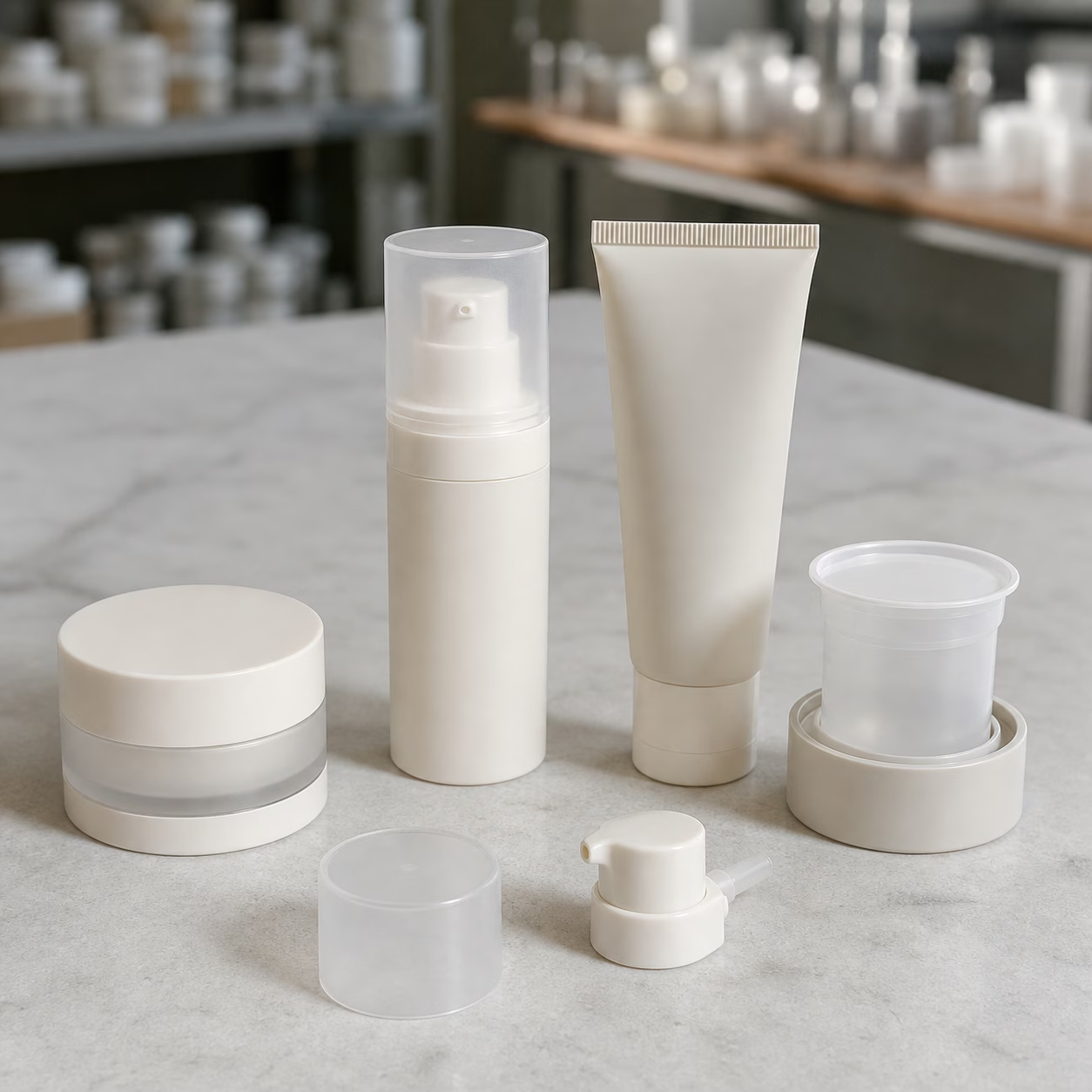
Potential packaging routes include a compact airless jar, conventional jar, airless pump or soft tube. Capacity, component material, cap or pump color, decoration method, label stock, carton, set box and shipping carton can be reviewed against formula compatibility and the buyer’s channel. Refill-ready concepts can be discussed where a suitable stock component and filling route are available. No package shape, color system or artwork from a referenced brand is reproduced.
MOQ, quotation and timeline
MOQ and quotation can be confirmed after formula, packaging and order-plan review. Quotation depends on formula direction, component choice, decoration, label and carton work, quantity, destination-market needs, testing or document requests and shipping plan. Sample and production timeline can be confirmed after formula and packaging review. A stock component with custom label work follows a different sourcing route from custom-colored components or a multi-SKU set.
Factory sample, QC and packing workflow
- Buyer brief: channel, target finish, formula restrictions, capacity, package reference, quantity range and launch timing.
- Feasibility review: GUOCUI checks the proposed texture, ingredient direction, component route and public wording.
- Sample evaluation: the buyer reviews spread, absorption, after-feel, scent and intended makeup-preparation use.
- Package-fit and artwork confirmation: component, fill compatibility, label position, multilingual copy and carton are checked before bulk preparation.
- QC and packing preparation: appearance, fill, closure, label placement, carton and shipment instructions are confirmed against the approved specification.
What buyers should send before inquiry
- Target market and sales channel.
- Preferred cream or gel-cream feel and makeup-finish goal.
- Ingredient preferences, exclusions and public-claim limits.
- Package format, capacity, logo and carton reference.
- Estimated quantity range, label languages and target launch date.
- Any documentation, testing, shipping or set-packing requirements.
FAQ
Is this a moisturizer or a face primer?
It is a customizable skincare direction designed around moisturized feel and makeup preparation. Final positioning depends on the approved formula, sensory result and destination-market wording.
Can the texture be adjusted for a humid market?
A lighter gel-cream or faster-absorbing direction can be discussed. The final route should be confirmed through sample evaluation and package compatibility review.
Can GUOCUI provide custom packaging and multilingual labels?
Custom logo, label, carton, color and selected component options can be reviewed. The buyer should provide market, language, barcode and artwork requirements before proof confirmation.
Are MOQ and lead time fixed?
No. MOQ, quotation and timeline depend on formula, packaging, decoration, quantity, label work, testing needs and shipping plan.
Next step: Review the GUOCUI product catalog, Face collection, Facial Cream collection, Customization service and the OEM buyer brief. Then send the project brief through Contact.
At the sample table: separate cream, routine and application effects
Direct answer: a pre-makeup moisturizer primer OEM comparison needs a recorded routine and a control. Keep the buyer’s chosen sunscreen and foundation unchanged, compare that routine with and without the candidate cream, and record actual application amounts and elapsed times. This helps identify which cream version deserves further review. It establishes no universal makeup compatibility, wear duration or sunscreen performance.
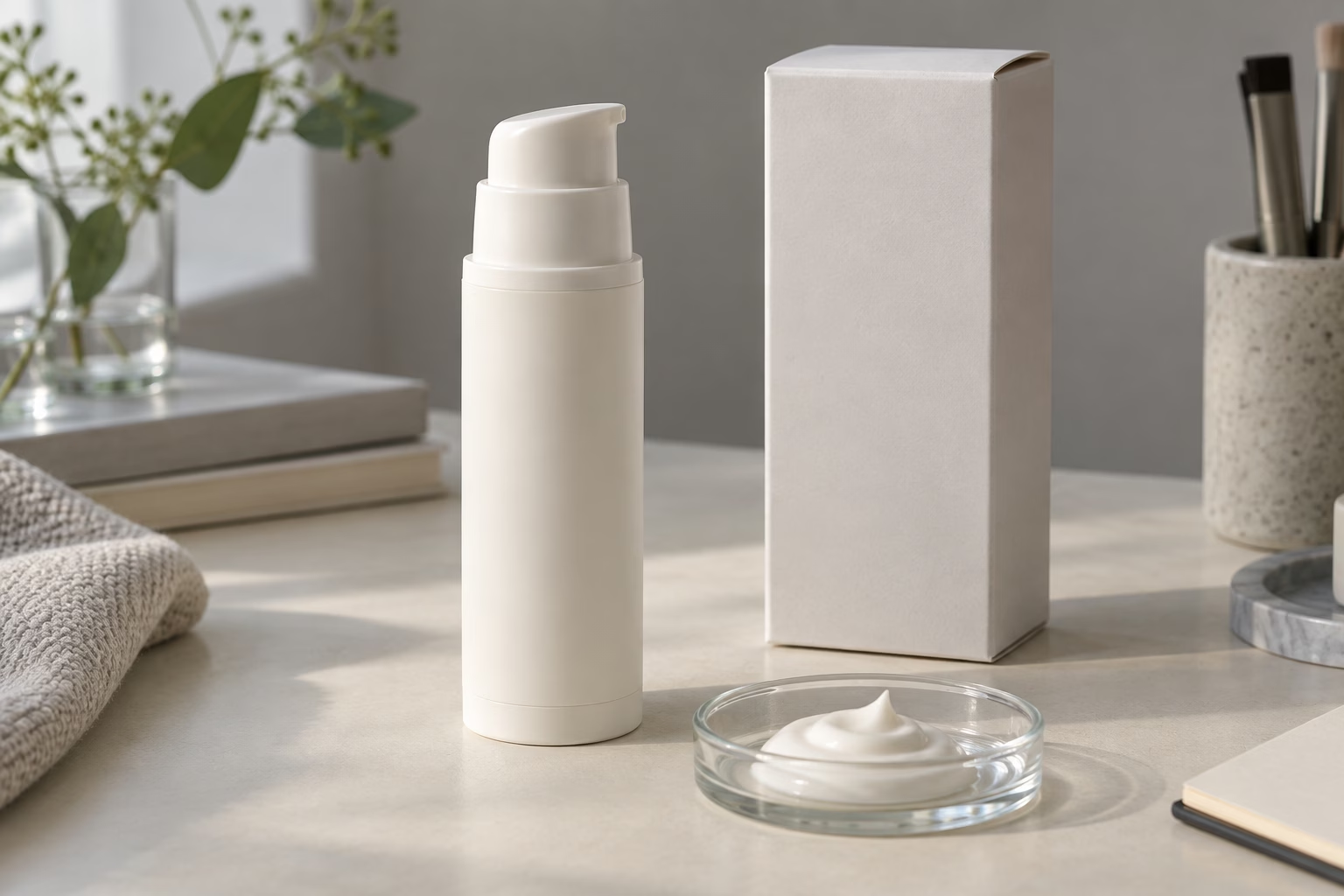
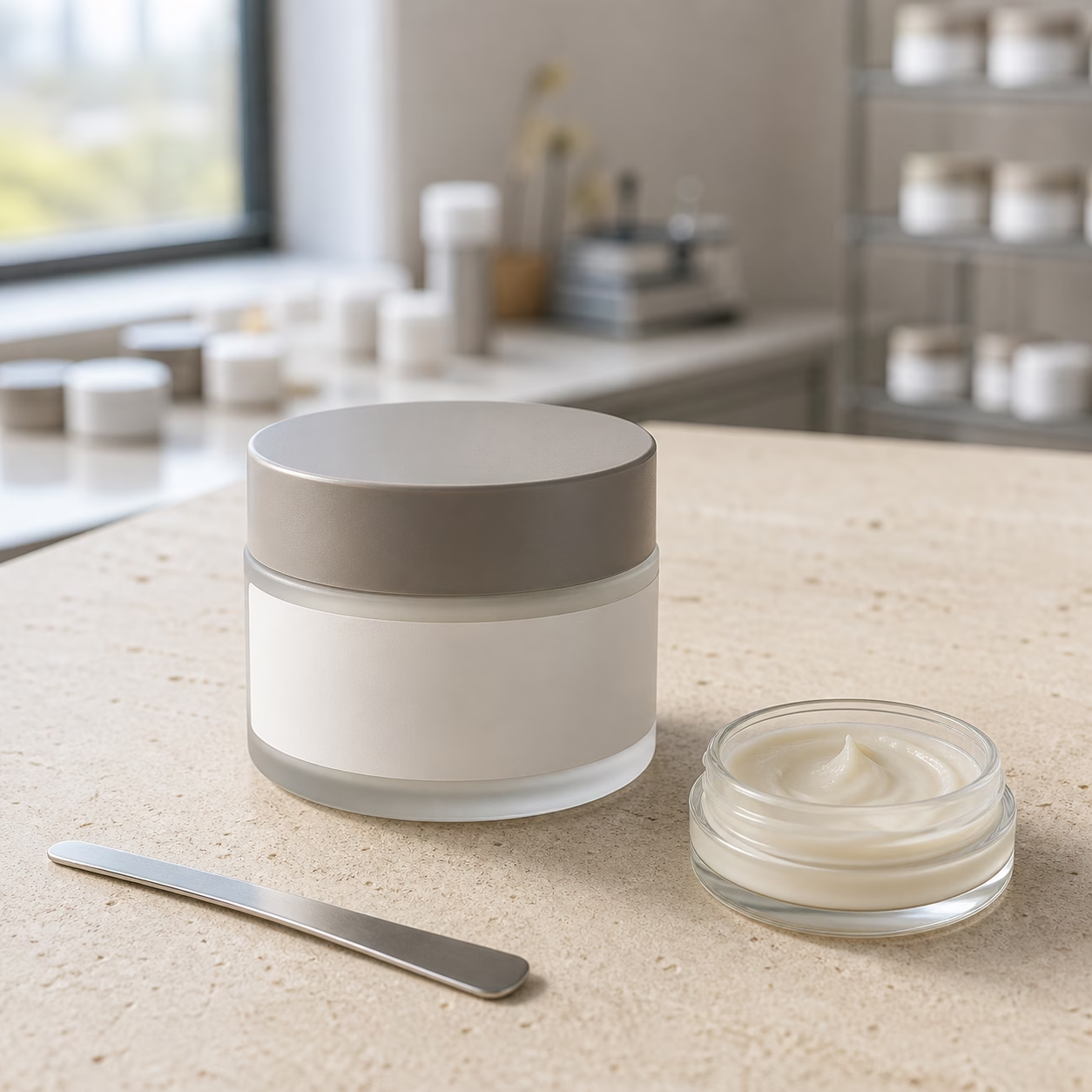
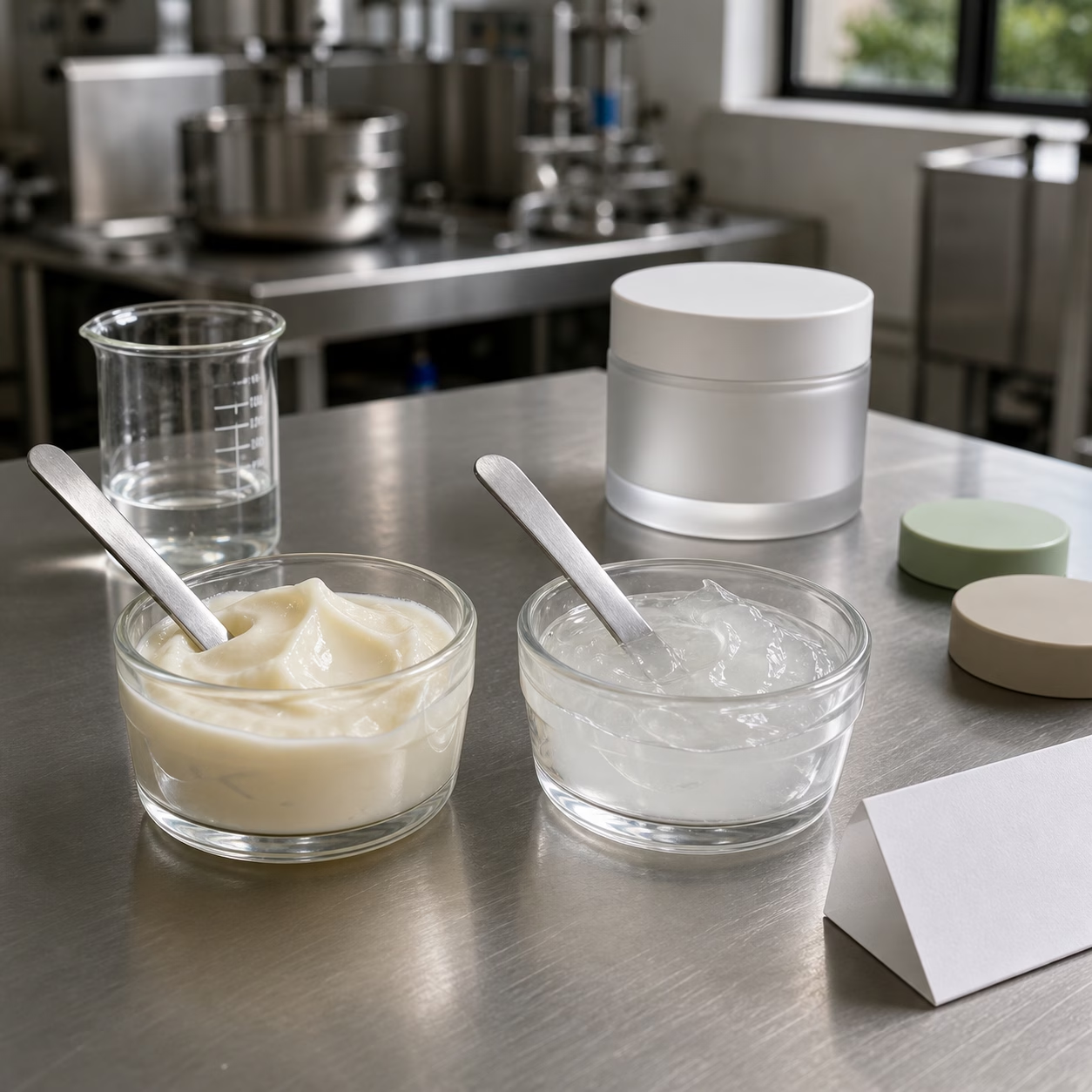
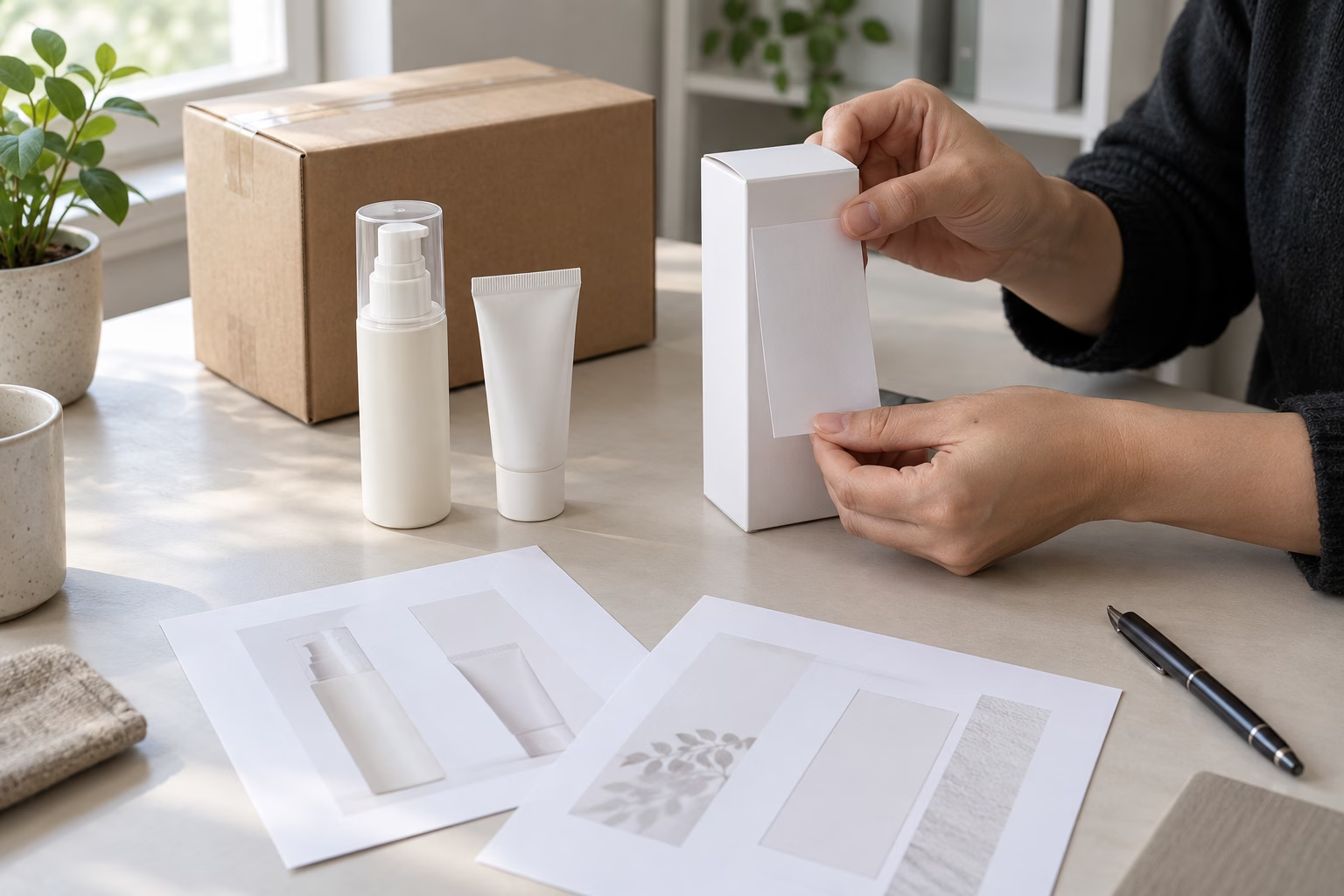
The five AI-generated development illustrations show hypothetical cream samples, packaging and review tasks. They are not photographs of GUOCUI premises or staff and do not establish approved formulas, completed QC, stock, production capacity or shipments.
Define the routine before requesting another formula
A report that says “the cream pills” leaves the sample team several unanswered questions. Was the same amount applied? Had the preceding layer settled? Was the foundation pressed on or repeatedly rubbed? Record the actual routine before changing ingredients. GUOCUI BIO TECH can discuss a lighter gel-cream and a more cushioned cream as separate sample routes while keeping this product’s moisturizer-primer positioning.
Identify the cleanser or preparation method, any preceding skincare, the sunscreen and the foundation by exact product, variant and batch where available. Record the package used to dispense each material. Keep one application tool, its condition and the application pattern consistent within a comparison. The control omits only the candidate cream; it retains the same preceding skincare, sunscreen and foundation. Never reduce or omit sunscreen to make the cosmetic result look better.
Use a small matrix with one planned change at a time
| Comparison | Keep constant | Question it answers |
|---|---|---|
| Routine without candidate cream versus routine with one cream | Preceding layers, sunscreen, foundation, amounts, tool and timing | Does adding this cream change visible application behavior in this routine? |
| Coded light cream versus coded cushioned cream | Agreed cream amount, routine and application method | Which texture merits a second sampling round? |
| Two agreed amounts of the selected cream | Formula, sunscreen, foundation, tool and timing | Is feedback sensitive to cream application amount? |
| Two agreed cream-settling intervals | Formula, amounts and the following layer’s instructions | Does the intended preparation schedule suit the routine? |
Run these comparisons separately rather than changing amount, wait and tool together. Choose the amount range with the sample team; this page prescribes no universal dose. Record mass in one consistent unit where practical. A pump count is useful handling information, but it is not an equal mass across different components or formulas. Keep the record of dispensed cream separate from the amount actually applied.
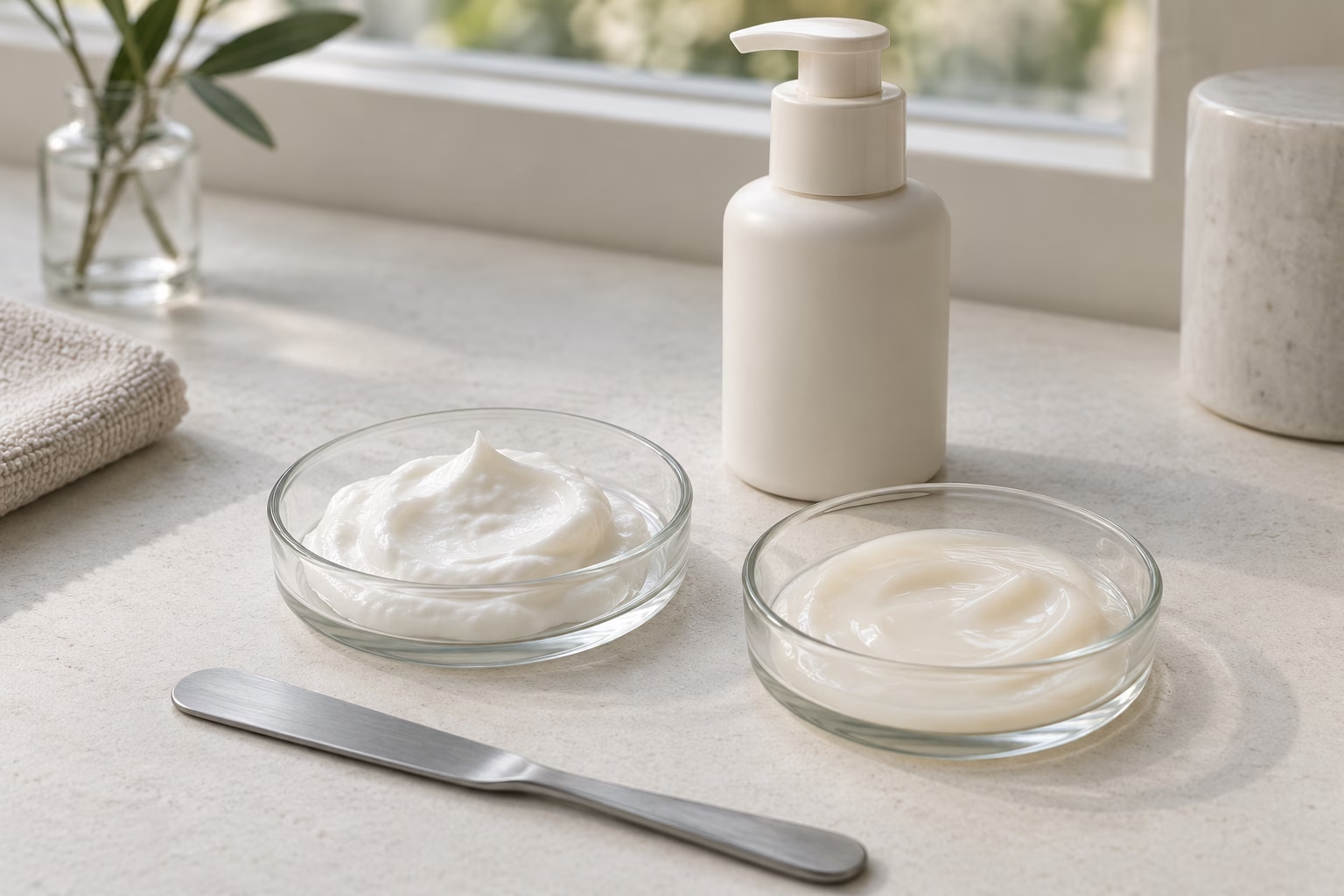
Keep the cream wait and sunscreen wait separate
Record elapsed time from cream application to the next layer, then separately from sunscreen application to foundation. “Waited a while” cannot be reproduced. Follow each product’s directions and keep the sunscreen’s required application amount and interval unchanged. Any alternative cream interval must fit that routine rather than override sunscreen instructions. Note room conditions, order of application and interruptions when they affect the comparison.
First observe the cream alone at the agreed amount: spread, remaining slip, tack and visible residue. Then evaluate the full routine. This separates a cream’s own finish from an interaction that appears only after another layer. Keep fixed observation points after foundation application and use consistent lighting, framing and exposure for visual records. A photograph records appearance under those conditions; it does not prove hydration, barrier change or protection.
Code the samples and agree the decision rule
Use neutral sample codes and keep the formula key separate from the person evaluating the finish where practical. Rotate the presentation order across repeats so “the first sample” does not always mean the same formula. The coordinator retains the record of the control and every formula, routine and package revision. Complete concealment may be limited by visible texture differences; record that limitation.
Agree plain observation anchors before review: visible particles, patchiness, drag during application, excess slip and the finish the buyer wants. Record each observation separately instead of reducing everything to one “best” score. A blinded appearance review is a development comparison, not a clinical trial. Disagreement should trigger a repeat under the same conditions or a clearer method before the formula is rejected or a claim approved.
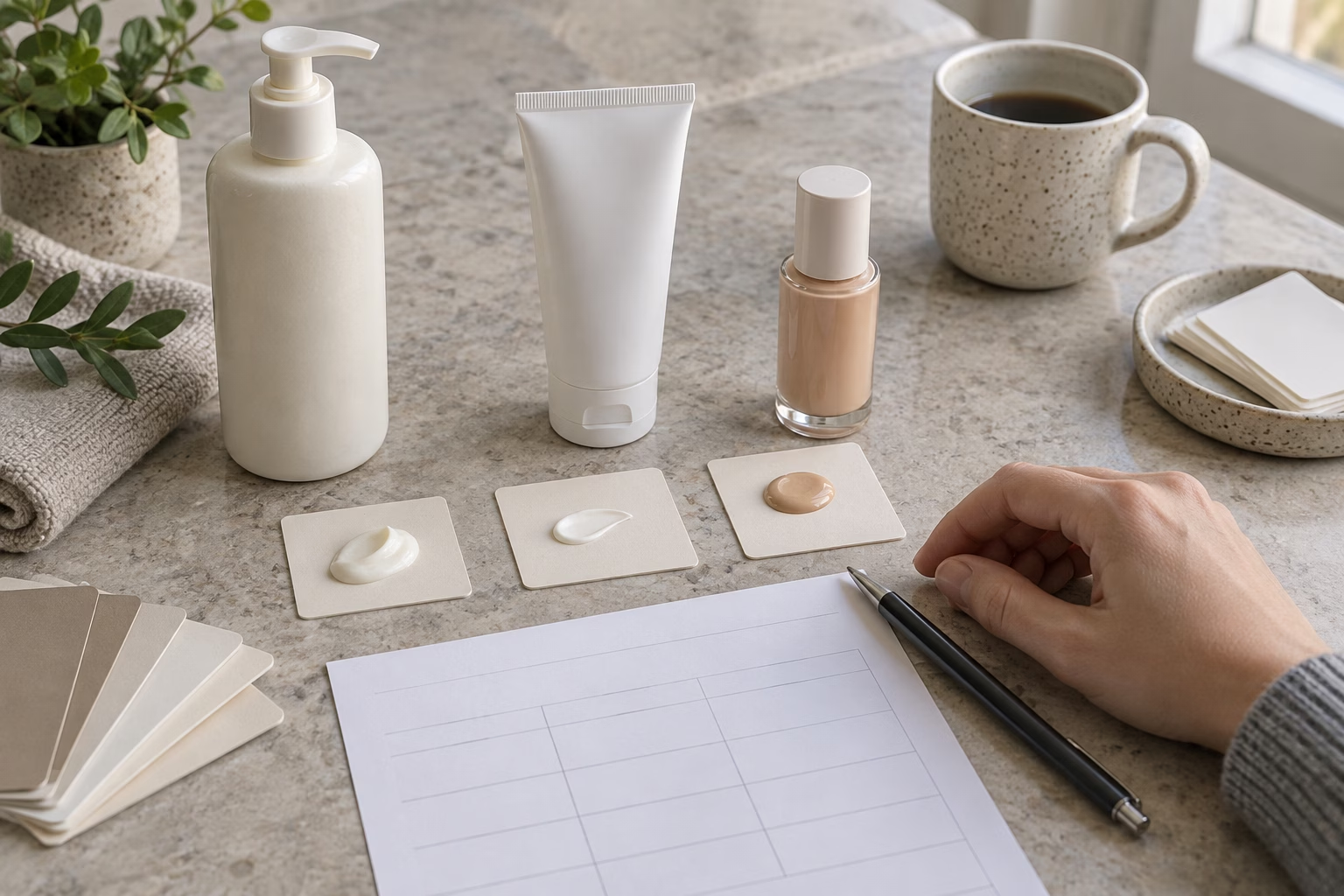
Take the selected cream into the actual package
Fill the shortlisted cream into the intended pump, tube or jar and repeat amount collection with that component. Review first use, established dispensing, restart after an agreed rest, outlet residue and recoverable fill. Final capacity, closure, decoration, label language, carton and kit size follow the buyer’s use setting and compatibility work. A successful dish sample does not establish that a filled component dispenses the same amount or remains compatible over time.
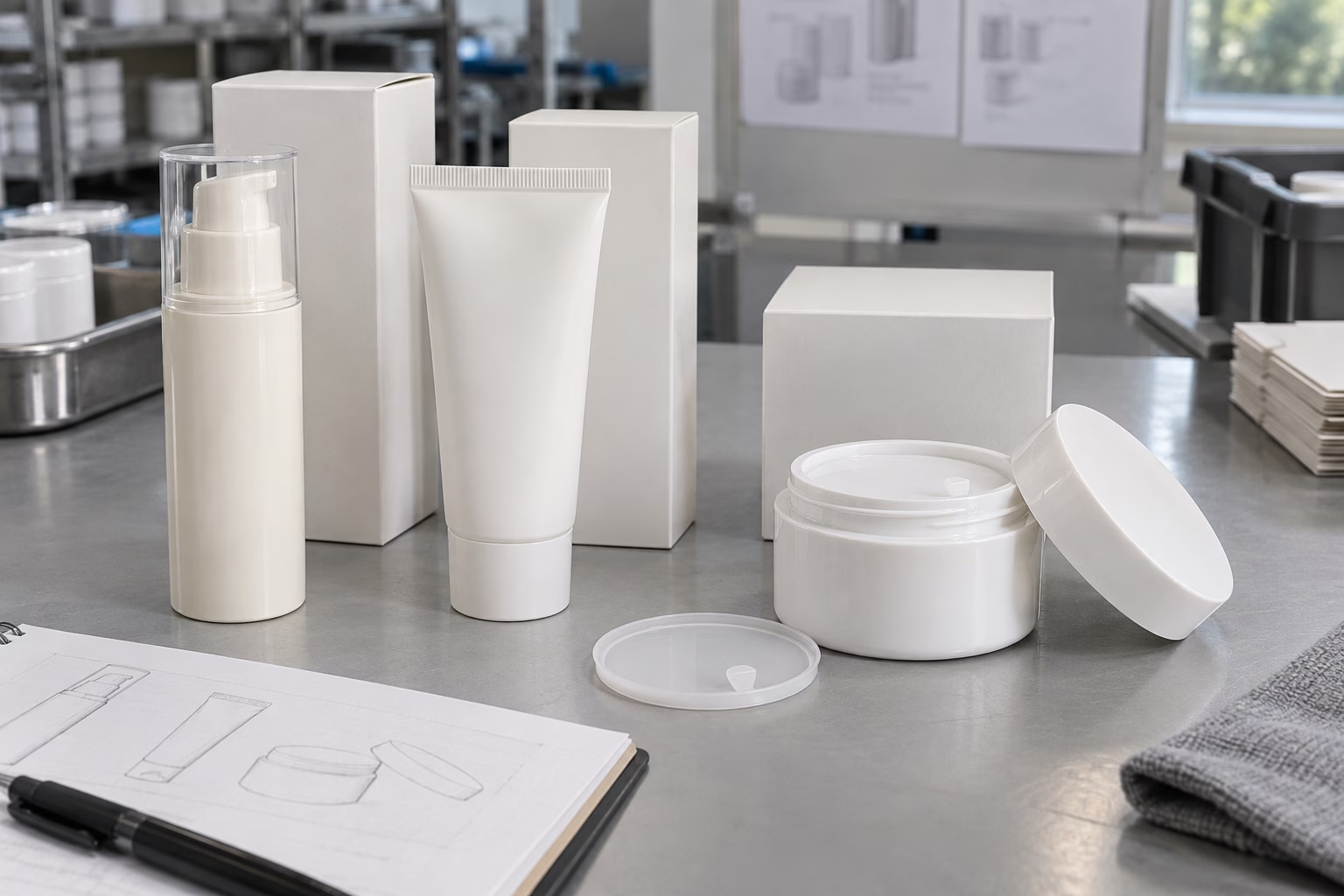
Turn observations into the next factory request
Send GUOCUI the coded cream observations, routine identities, applied amounts, both actual waits, application tool, image conditions and unresolved differences. Add ingredient restrictions, fragrance direction, destination, channel, component preference, LOGO artwork, language versions, carton plan and quantity range. Ask which formula or packaging question should change next. MOQ and quotation can be confirmed after formula, packaging, and order plan review; sample and production timeline can be confirmed after formula and packaging review.
Does one successful routine support a claim about all foundations?
No. Keep feedback tied to the tested cream code, sunscreen, foundation, amounts and method. Broader wording requires a separately defined evidence plan.
What if the no-cream control also shows particles?
Repeat and review the base routine before attributing the observation to the candidate cream. The control still includes the same sunscreen and foundation.
Use the pre-makeup OEM buyer guide to prepare the brief. Review Products, Facial Cream, Customization and Skincare Industry Trends, then send the routine and sample requirements.