
Description
Hyaluronic acid hydrating face serum private label: direct answer
A hyaluronic acid hydrating face serum private label project should start with the intended texture, fragrance position, routine role and dispensing component, then move to supporting ingredient options. GUOCUI BIO TECH can discuss clear and milky serum samples, fragrance-free and low-fragrance routes, dropper or pump packaging, a travel format, custom logo labels, cartons and export communication. The final formula, claims, packaging, MOQ, quotation and timing are confirmed only after the project brief and samples are reviewed.
Evidence boundary, checked 4 September 2026: a dated public serum launch and its current product page were used internally to identify practical buyer questions about a light botanical-positioned texture, small-drop dosing, fragrance response and layering with the next routine step. They are not evidence of demand, sales, organic review speed, formula equivalence, certification, clinical performance or GUOCUI test results.
Suitable buyers and channel decisions
This direction suits private label brands, distributors, spa or salon lines and online beauty sellers. A marketplace seller may need reliable dropper presentation; a salon may prefer a controlled pump; an importer may prioritize label languages, carton information and shipment orientation.
- Hero serum programs: compare one clear water-gel route with one translucent milky route before choosing the final story.
- Discovery and travel programs: review a compact pump or dropper separately from the full-size component.
- Warm or humid markets: screen tack, shine and makeup layering instead of assuming one finish suits every climate.
Custom formula directions without copying another product
Hyaluronic acid remains the core product direction, but the brief should not become a long list of fashionable ingredients. A buyer can discuss betaine, beta-glucan, panthenol, glycerin, selected algae polysaccharides or another documented botanical option as supporting cosmetic directions. The formula team should review the exact raw-material identity, supplier documents, addition basis, pH, color, odor, preservation and compatibility before any ingredient is placed on artwork.
A fragrance-free route and a low-fragrance route should be treated as two coded samples. “Fragrance-free” needs formula and market review and does not mean odorless. A low-fragrance sample needs the proposed fragrance, allergens and destination-market label plan. No natural, organic, hypoallergenic or sensitive-skin certification is implied.
Compare clear and milky texture routes
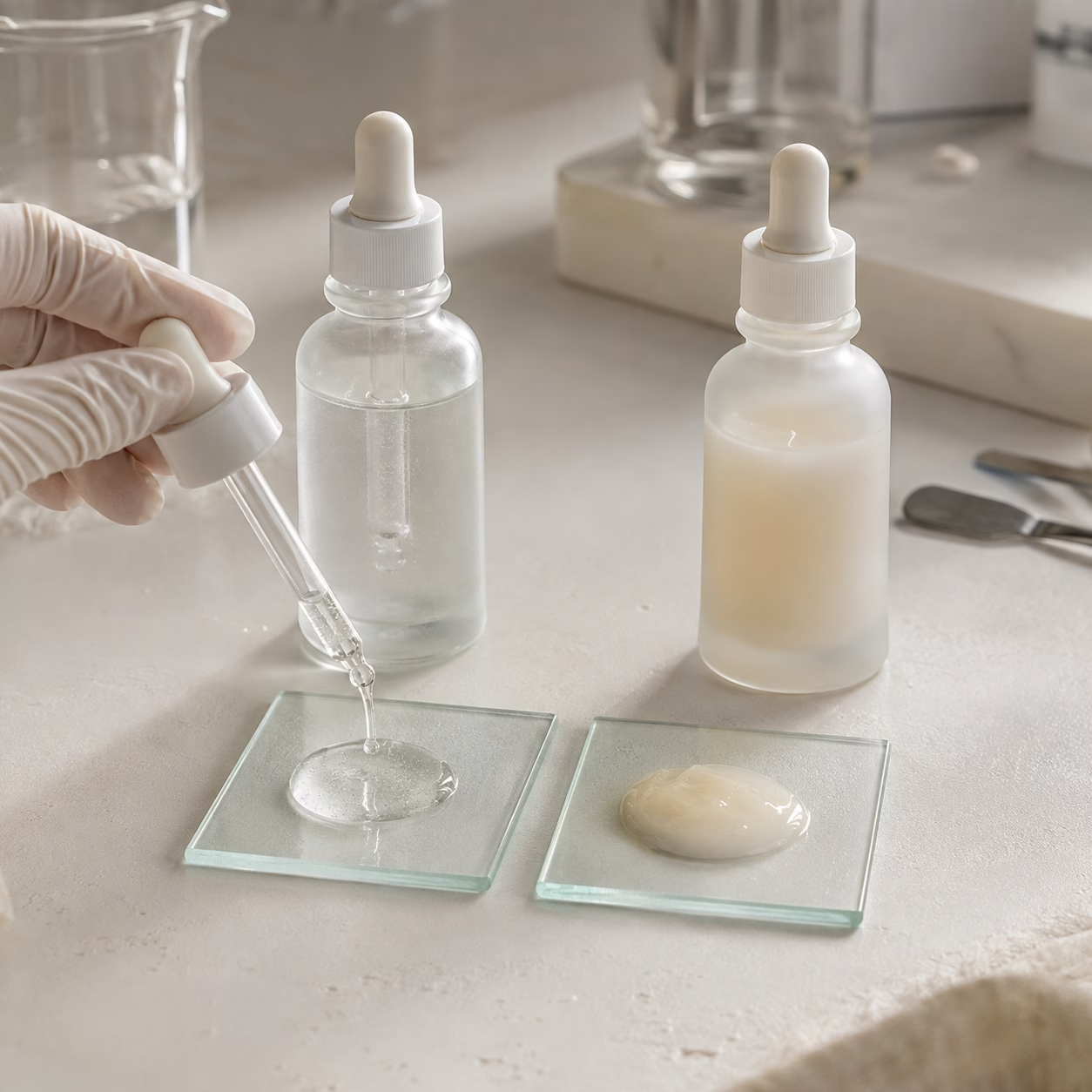
A clear water-gel serum can support a light visual and fast-spread routine, while a translucent milky serum can provide a softer, more cushioned appearance. These are texture directions rather than efficacy levels. Compare the same controlled amount for spread, stringiness, tack, pilling, shine, residue and the way the sample sits under the intended cream, sunscreen or makeup step.
- Clear water-gel: review clarity, bubble release, drop formation, flow down the pipette and low-residue finish.
- Translucent milky serum: review emulsion uniformity, pump or dropper output, wall residue and temperature handling.
- Fragrance-free sample: record the base odor at each agreed checkpoint instead of masking it with a scent.
- Low-fragrance sample: compare the same texture with the approved fragrance level and allergen review.
Three-drop and pre-makeup layering review
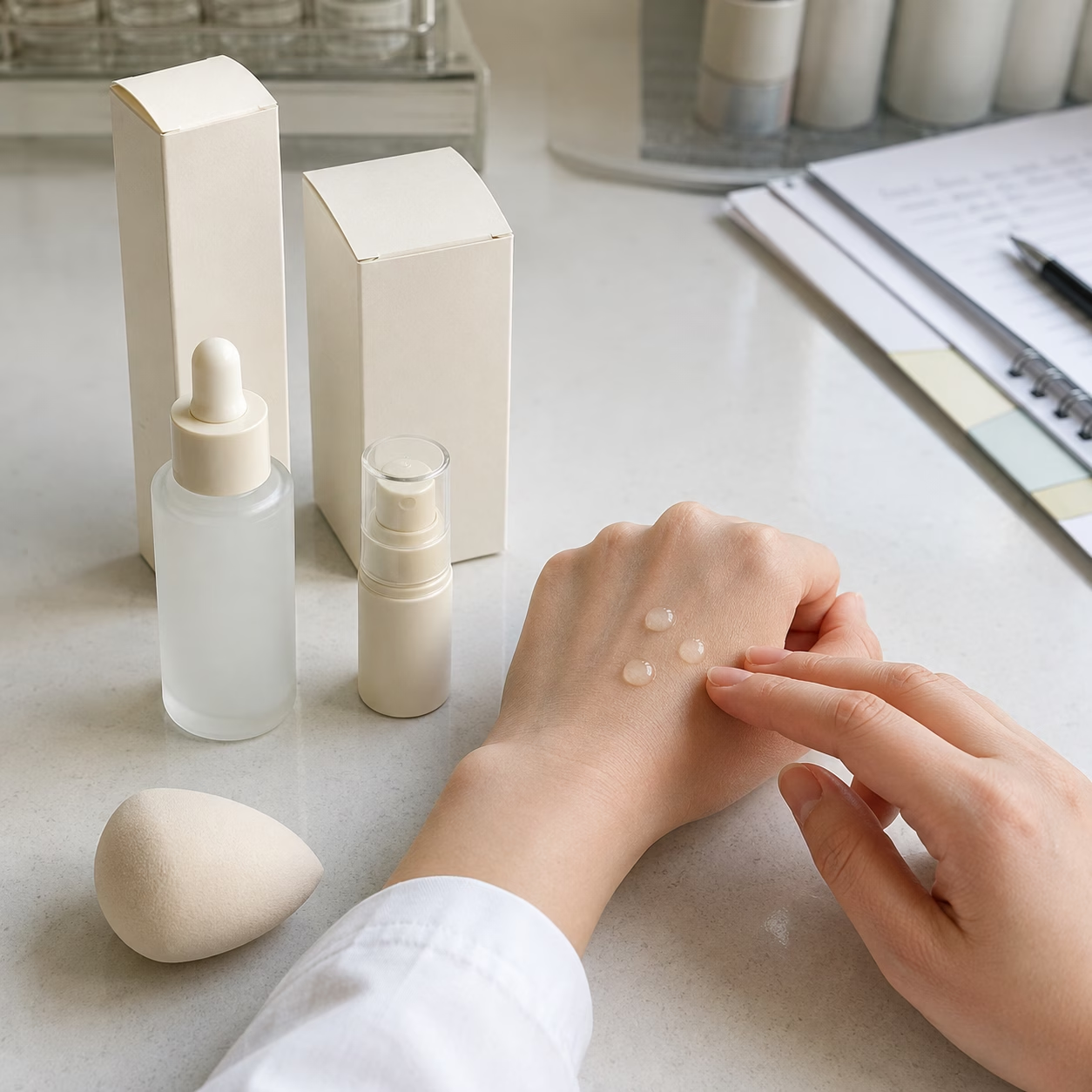
A three-drop demonstration can be a useful sample-review method, but it is not a universal dose claim. Bottle geometry, dropper bore and viscosity can change drop size. Record the component and sample code, then observe spread, tack, pilling, residue and compatibility with the next routine layer.
For makeup-facing channels, apply the agreed serum amount, wait a recorded interval, add the selected next step, then use the same makeup product and tool. This can reveal an obvious layering conflict but does not replace stability, safety or market-specific work.
Dropper, pump, capacity and carton options
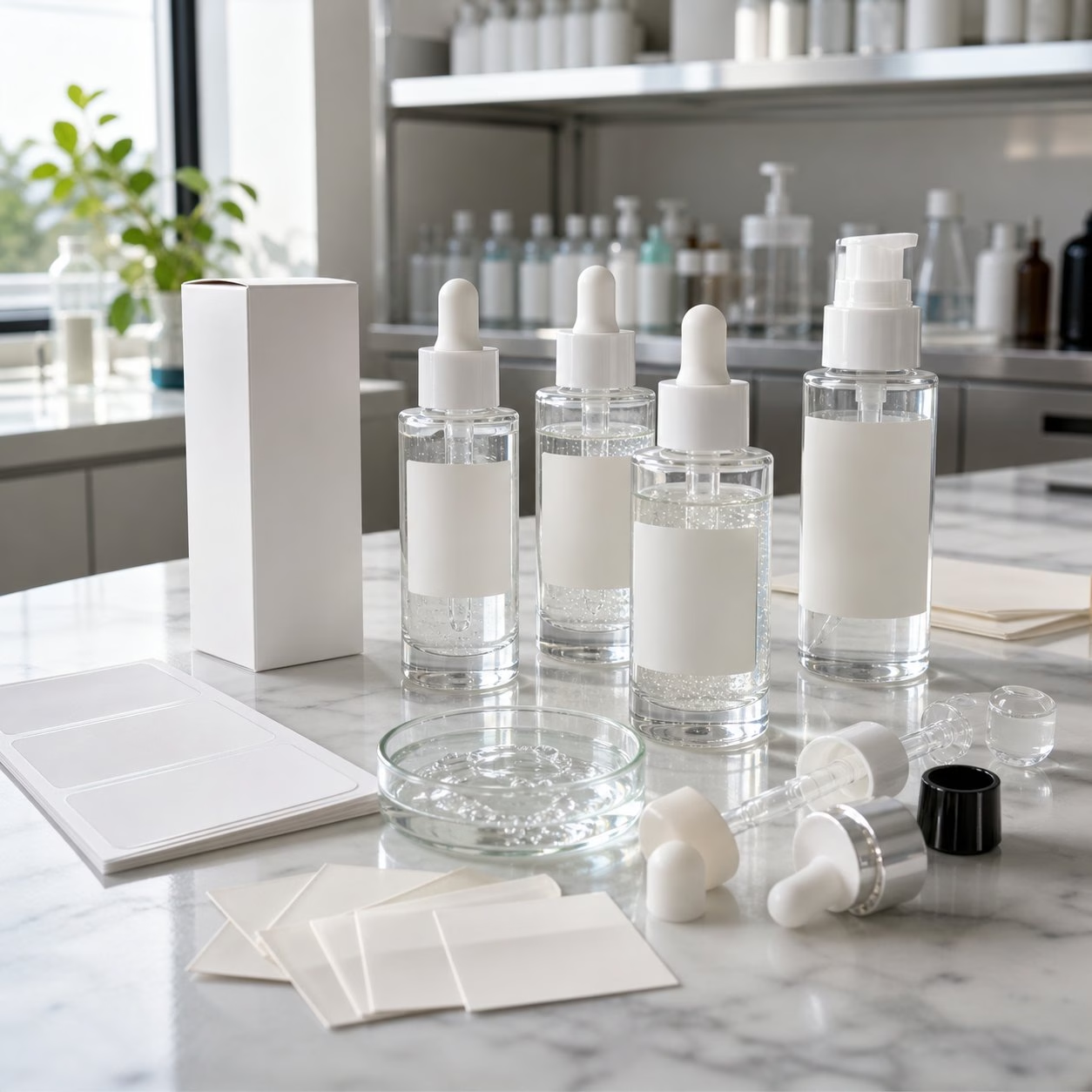
Packaging should be selected with the formula. Options can include a frosted glass dropper, ordinary plastic dropper, airless pump or compact travel pump, subject to availability and compatibility. A 30 mL reference or 15 mL travel sample is a review direction, not a fixed public specification.
- Check pipette draw, drop consistency, neck wiping, cap fit and repeated opening for a dropper route.
- Check priming, output, residue, closure fit and leakage orientation for a pump route.
- Review clear, frosted, amber or opaque component directions against the actual formula and light-control plan.
- Confirm custom logo position, label languages, batch-code area, carton fit, insert needs and export carton plan.
A No-Pump Replacement Bottle Is a Different Refill Route
A standard replacement bottle without a new pump is different from a refill pouch. The buyer receives a closed, filled replacement bottle with its own temporary closure, then fits the original dispenser only after the first bottle is finished. This route can be reviewed for the hydrating-serum project when the replacement bottle, pump and formula remain one controlled component system.
The word standard means the selected component family can be sourced and documented for the project. It does not mean that any pump fits any bottle. The neck finish, thread engagement, sealing surface, gasket, dip-tube reach, actuator connection and formula-contact materials still need to match the approved bill of materials and filled sample.

Seven checks before a retained pump can be proposed
- Lock the formula and component version. Record the formula code, first-bottle code, replacement-bottle code, pump code, gasket and temporary closure. A replacement bottle from another supplier, mould or production lot is not automatically interchangeable.
- Check the neck, thread and seal together. Review neck finish, thread start and engagement, sealing land, gasket compression and closure torque on the actual components. Appearance and nominal capacity cannot prove fit.
- Check dip-tube reach and dispenser contact. Confirm the dip-tube length, cut, clearance from the base, priming and expected residual product using the filled hydrating-serum sample. Do not infer dose or evacuation from an empty-pack assembly.
- Define the transfer boundary. The buyer brief should state how the first bottle is finished, how long the pump may remain exposed, what handling is allowed, whether cleaning is permitted and how the temporary closure is removed. GUOCUI should not publish a universal cleaning or transfer instruction before the selected pump, formula, market and evidence plan are reviewed.
- Set a pump-life review. Compare priming, output, restart after storage, leakage orientation, residue and actuator return over the agreed cycles. No fixed reuse count, service life or replacement interval is established until the selected pump and filled pack complete the buyer-approved review.
- Prevent formula and pack mismatch. Use visible formula, capacity and component-version identifiers on the bottle, carton or lot record. A retained pump should not move between different formulas or unapproved bottle families merely because the thread appears to engage.
- Approve transport and repeated use separately. Review the replacement bottle with its temporary closure for filled-pack transport, then review the original pump fitted to the replacement bottle. Passing one state does not prove the other.

Evidence boundary, checked 9 September 2026
Verified product-definition facts: two current brand-owned product pages show a replacement primary pack supplied without another pump and direct the customer to retain or transfer the original dispenser. These pages confirm that the architecture exists in current skincare and body-care offers. They do not establish sales velocity, environmental impact or suitability for a GUOCUI formula.
Factory-side inference: a matched no-pump replacement bottle may reduce repeated dispenser procurement and can create a clearer repeat-order component list. That inference is useful only after the component identity, filled-pack compatibility, pump cycles, handling boundary and mismatch controls are agreed.
Not claimed: this page does not claim a guaranteed environmental benefit, a validated pump lifetime, sterility after transfer, a universally safe cleaning method, compatibility with any pump, a fixed reuse count or exact savings. MOQ, price, capacity and production timing are also not set by the trend reference.

Commercial information for a two-pack-system quotation
MOQ and quotation are confirmed after primary and replacement bottle quantities, pump sourcing or retention route, formula, component family, decoration, carton and destination-market requirements are reviewed.
Timing is confirmed after the bill of materials, filled-pack compatibility, pump-cycle and transfer plan, artwork and requested documentation are agreed.
For the first review, send the target market, channel, formula direction, capacity, first-order and repeat-order quantity ranges, preferred pump, replacement-bottle closure, decoration, carton and required documentation. GUOCUI can then compare a conventional bottle-and-pump route with a matched first-bottle plus no-pump replacement-bottle route.
Read the linked buyer explanation, Hydrating Serum Replacement Bottle OEM: Seven Pump-Reuse Checks, before sending the component and repeat-order fields.
Stability, microbiological and compatibility planning
Botanical-positioned materials can affect color, odor, clarity and preservation. Define suitable stability, microbiological and packaging checks for the actual formula and destination. Checkpoints may include appearance, odor, pH, viscosity, separation, sediment, dispenser function, component contact, leakage and label condition.
Changing the botanical extract, fragrance, preservative, bottle, dropper, pump, decoration or supplier can reopen part of the review. A visually acceptable first sample is not proof of shelf life, compatibility or completed QC. GUOCUI will not convert another product’s certification, test number or consumer review into evidence for this project.
Sample-table and QC workflow
The export team records the buyer brief and separates must-have decisions from optional ideas. Formula and packaging teams prepare identifiable sample routes, and the selected texture, fragrance level, component and artwork direction is recorded. Before bulk planning, align the approved reference, packaging, label, packing arrangement and agreed checks.
- Confirm target markets, channels, routine role and permitted cosmetic positioning.
- Prepare clear versus milky and fragrance-free versus low-fragrance sample routes as required.
- Screen texture, layering, color, odor and the selected dropper or pump together.
- Review custom logo, multilingual label, carton, coding area and shipping orientation.
- Confirm the approved reference and project-specific QC and documentation plan before production release.
MOQ, quotation, sample and production timing
MOQ and quotation can be confirmed after formula, packaging, quantity, label requirements and the order plan are reviewed. A standard bottle can follow a different commercial route from a decorated component, travel set or multilingual carton. Selected ingredients, sample revisions, checks, packing and shipping also affect quotation.
Sample and production timing can be confirmed after formula and packaging review. Component availability, fragrance review, compatibility work, artwork, feedback and destination requirements can change the schedule. No fixed MOQ, price, lead time or capacity is promised.
What the buyer should send before inquiry
- Target countries, sales channels, buyer group and intended launch window.
- Preferred clear or milky texture, finish, fragrance position and routine step.
- Ingredient directions to include, avoid or support with supplier documents.
- Dropper or pump preference, capacity direction, component material and decoration needs.
- Custom logo file status, label languages, carton, insert, barcode and coding requirements.
- Approximate quantity range, sample deadline, document needs and shipping destination.
Verified, factory-side inference and not claimed
- Verified on this page: product 5136 is the existing GUOCUI hyaluronic acid hydrating face serum catalog item; it remains inquiry-only and has a disclosed development gallery.
- GUOCUI factory-side inference: texture, fragrance, dispensing component, label area and layering behavior should be reviewed together because changing one can affect the others.
- Not claimed: sales, ranking, growth, clinical performance, deep penetration, disease treatment, certification, formula equivalence, universal suitability, completed testing, fixed commercial terms or guaranteed timing.
Image disclosure
All gallery and inline images are AI development illustrations for sample, texture, packaging and workflow discussion. They are not photographs of GUOCUI premises, employees, an approved formula, completed QC, inventory, a customer project, test results or a shipment. Blank and unbranded packaging is a neutral placeholder only.
FAQ
Can the serum be fragrance-free?
A fragrance-free route can be discussed. The final formula, base odor, ingredient composition, preservation and destination-market wording still need review; fragrance-free does not automatically mean odorless or hypoallergenic.
Can I compare a clear serum with a milky serum?
Yes. The two coded samples can be compared for appearance, spread, tack, residue, layering and component output before one direction is selected.
Does the page promise three drops for every package?
No. Three drops is a review method. Actual drop size and use directions depend on the final formula, dropper and assessment.
Can GUOCUI review a 15 mL travel pump and a full-size dropper?
Both formats can be discussed, subject to component supply, formula compatibility, label area, decoration, MOQ, quotation and the order plan.
Which botanical ingredients can be used?
Betaine, beta-glucan, algae polysaccharides and other documented cosmetic directions can be reviewed. Final selection depends on raw-material identity, supplier documents, formulation, claims, market and testing requirements.
What should be approved before bulk production?
Approve the formula and reference sample, fragrance position, packaging component, artwork, label text, packing arrangement, agreed checks, documents and shipping requirements.
View GUOCUI products | Browse Facial Serum | Review serum packaging components | Use the sample approval checklist | Discuss OEM/ODM customization | Send a hydrating serum inquiry
Full-face and local-zone serum use need separate coverage records
Direct answer: spreading one serum portion across the face and placing that portion on a smaller defined zone are different use conditions. Equal total mass does not establish equal mass per unit area. For this hyaluronic acid hydrating serum direction, GUOCUI BIO TECH proposes a coverage review before a buyer chooses broad application, local application or repeat-layering wording.
This is an OEM/ODM sampling discussion for an existing hydrating serum project. It does not define a finished formula, consumer dose, eye-area suitability or proven hydration result. A brand, salon line or online seller can use the record to explain its intended routine clearly before selecting a dispenser, artwork and commercial order plan.
Decide what the sample comparison should answer
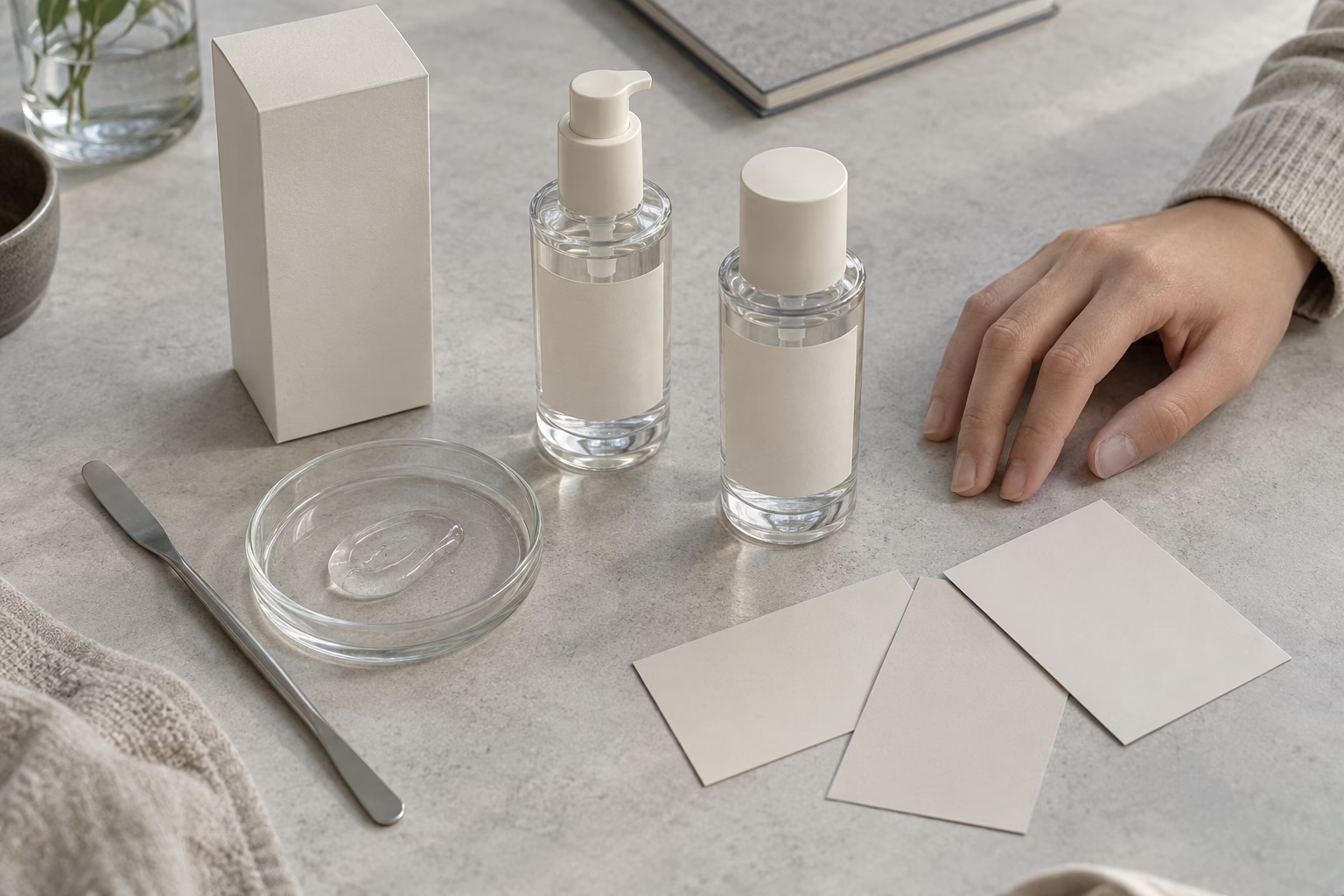
To compare two texture revisions, choose one application route and keep the defined area, amount and routine consistent. To compare two use routes, keep the formula revision fixed and record each route separately. A heavier local film can change the observed tack, visible edge and interaction with the next layer. Appearance alone cannot establish better hydration, penetration or efficacy.
Describe the zone using an agreed map or boundary record, including any areas excluded from the proposed use. If its area can be measured reliably, preserve the method and unit beside the applied mass. If it cannot, retain the description and mark mass per unit area unavailable. Do not calculate a precise value from an unmeasured face outline or photograph. Intended boundaries and consumer instructions require review for the selected formula and destination market.
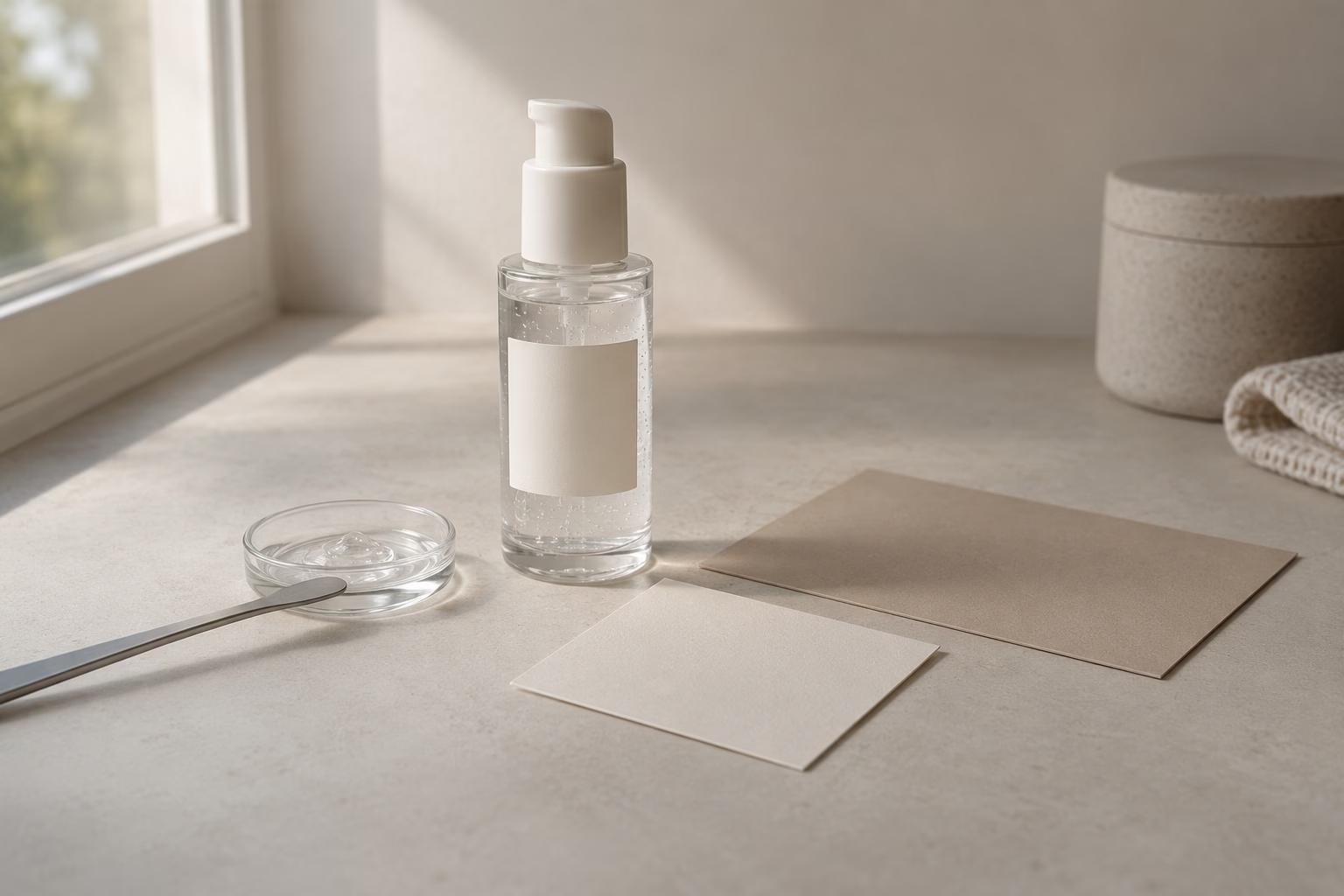
| Review route | Record separately | Keep identifiable |
|---|---|---|
| Broad application | Defined coverage, total applied mass and distribution method | Formula revision, surface condition and next routine step |
| One local application | Zone boundary, local mass, film edge and movement beyond the zone | Applied area and any unmeasured boundary |
| Repeated local application | Each added portion, cumulative mass and elapsed time between portions | Condition before the addition and the added layer’s effect |
Separate dispenser output from the portion applied
A pump actuation, pipette draw or tube squeeze is an output event. Some product may remain on the outlet, transfer tool or sample surface rather than reach the intended zone. Record the collection and application method, balance resolution when weighing is used, and any visible transfer loss. If applied mass cannot be measured reliably, say so instead of assigning the entire dispenser output to the skin.
Keep priming portions and restart portions separate from routine output. A changed dispenser can justify another comparison even when the formula and nominal capacity stay the same. These observations help define a sample brief; they do not establish dose accuracy, a standard test method or an approved instruction.
Keep the second local layer identifiable
Give the first and added portions separate entries. Record the surface condition before the addition, the elapsed interval and whether the second portion changes the visible edge, stringing, tack or residue. Keep the chosen cream, sunscreen or makeup, its amount and application method consistent within the comparison. Record the actual wait before that next step. A repeated local route is a separate review condition, not approval to reapply indefinitely.
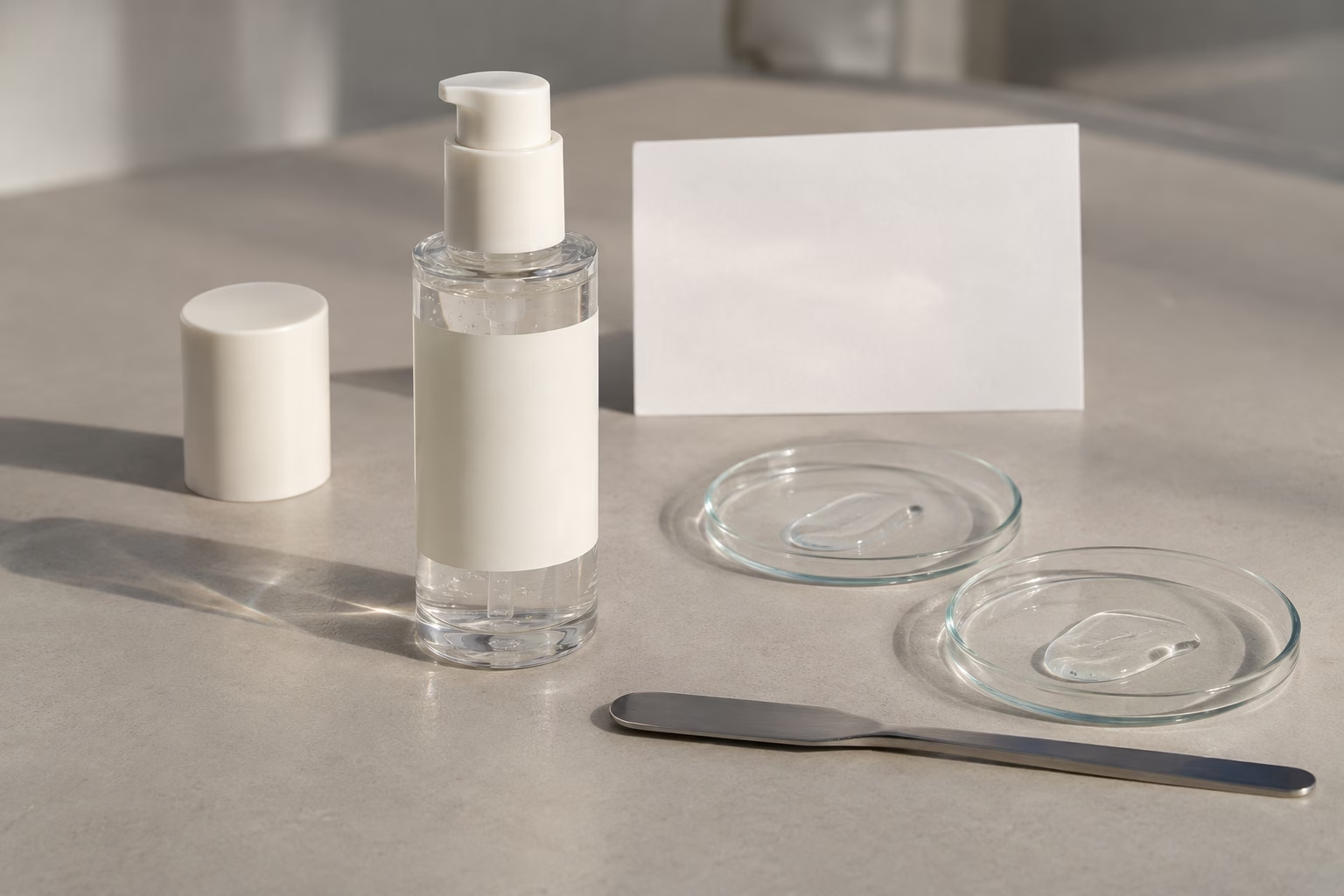
Connect formula options to the intended use map
Clear water-gel and translucent milky routes can be discussed as separate coded samples. Keep the selected hyaluronic-acid raw material and supporting cosmetic ingredient identities in the formula record. If the brief changes polymer blend, oil phase, fragrance position or supporting humectants, record the revision before comparing the new film. No source formula, ingredient concentration or proprietary complex is adopted by this sampling direction.
Choose a small number of useful comparisons. A brand developing one everyday serum may first compare two textures within one broad route. A salon reviewing targeted application may first define the local boundary and transfer method. A travel set should recheck the chosen formula in its compact dispenser. These are project choices, with feasibility and final claims still subject to review.
Bring the use map to packaging and label review
At the sample table, link the formula code, dispenser revision and coverage record. Note whether the outlet contacts the application surface, how product is transferred and how outlet residue is handled. Compare pump or dropper output with the portion actually applied. A clean-looking outlet does not prove microbiological safety or authorize a cleaning method.
Packaging discussions can cover a standard dropper, ordinary pump, airless route or a separately reviewed tube, subject to supply and filled-pack compatibility. Define capacity direction, closure, material, label area, logo position, languages, coding, carton, insert and set arrangement. Keep broad-use, local-use and repeat-use wording aligned across the label, carton and buyer’s channel content. A slim outlet does not itself establish precise dosing or eye-area suitability.
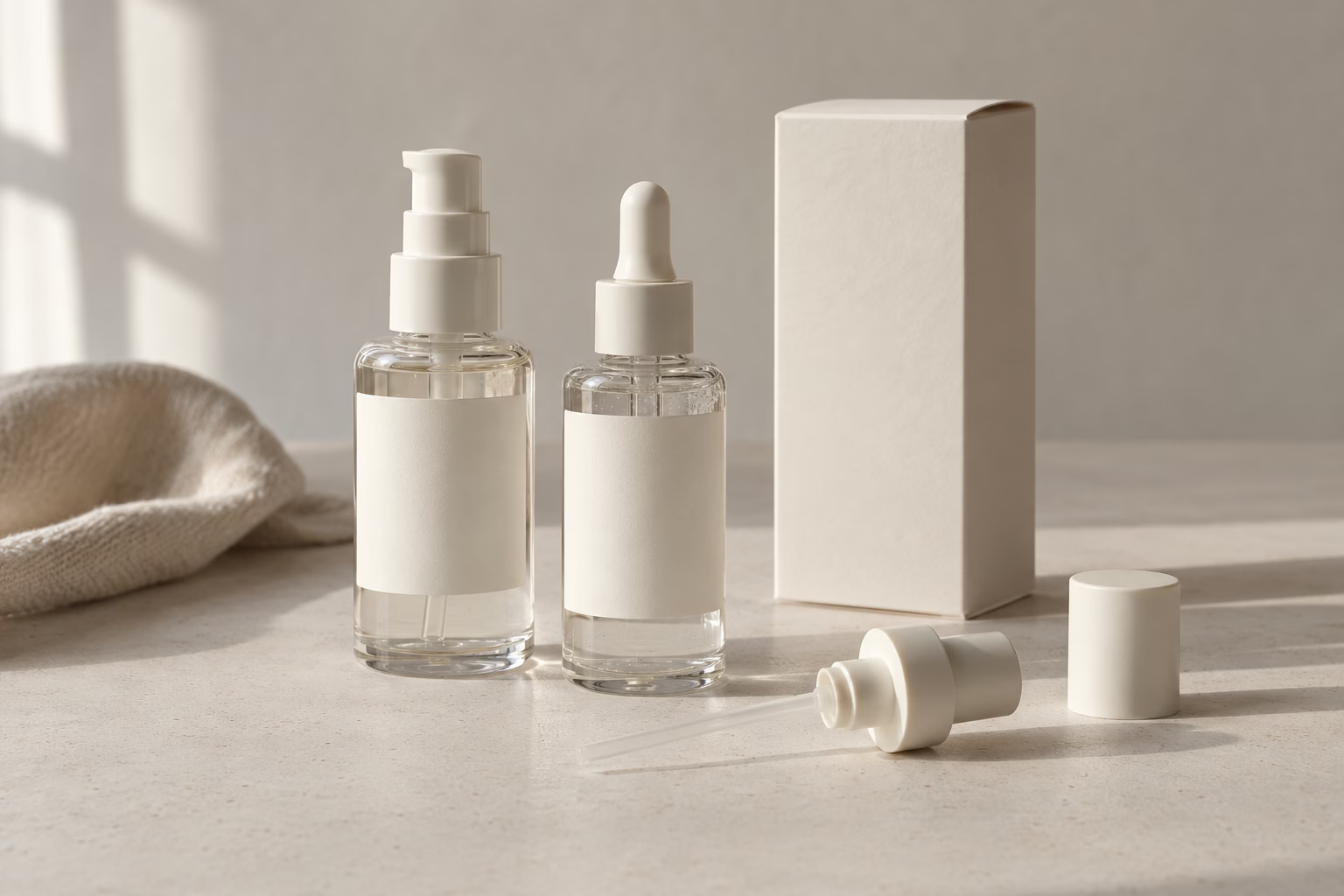
Send one coordinated sampling brief
Send GUOCUI the destination market and channel, proposed use route, defined zone, formula and dispenser codes, portion records, follow-on routine, label languages and component preferences. State the observations you want compared and which safety, claims, compatibility or microbiological questions require qualified assessment. Mark unavailable results and unresolved instructions beside the affected entry.
Quotation depends on formula, packaging, quantity, decoration, artwork, requested review work and shipping plan. MOQ and quotation can be confirmed after formula, packaging and order-plan review. Sample and production timing follows the agreed revision, component availability, evidence plan and artwork approvals. A detailed record improves the discussion; it does not guarantee supply, completed testing or a launch date.
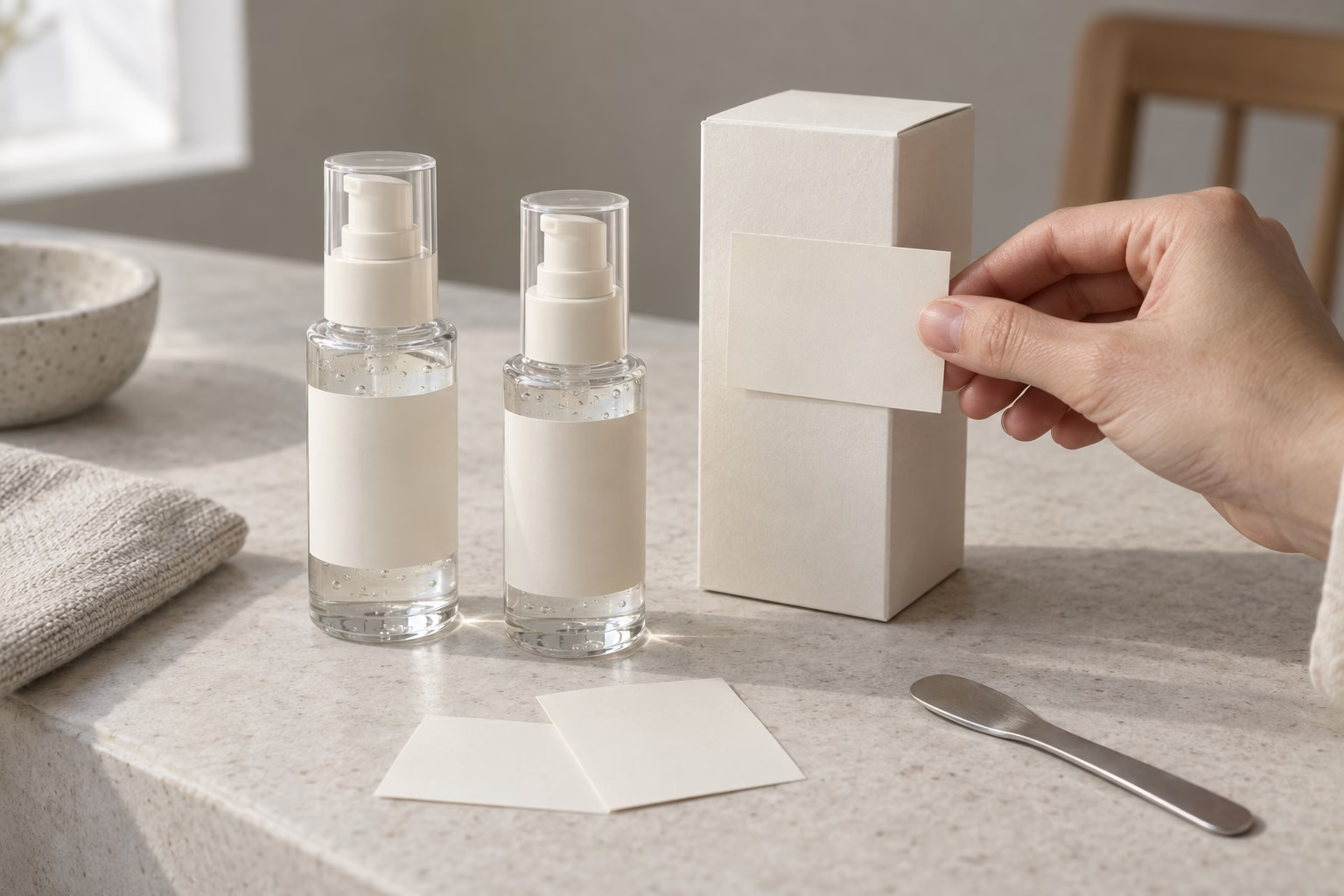
Coverage-review FAQ
Does the same serum mass make both routes equivalent?
No. The area and distribution must also be recorded.
Does a thicker local film prove a stronger result?
No. Sensory observations are separate from substantiated performance.
Can an unmeasured zone support a precise mass-per-area value?
No. Keep the zone description and mark that value unavailable.
How should a second portion be recorded?
Keep its added mass, cumulative mass, surface condition and actual interval identifiable.
Are these consumer directions or an approved test?
No. This is a proposed buyer sampling record. Safety assessment, validated methods, final directions and results require separate review.
Review the serum dispensing buyer guide, Facial Serum category and customization options, or browse Products. Send the hydrating serum use-map brief before formula, packaging and artwork decisions are finalized.
Separate the Decorative Shell from the Serum Contact Path
Direct answer: a wood-look cap, white bottle or clear serum photograph does not identify the materials touching a hyaluronic acid serum. Before choosing the decoration, request a component record that separates the outer appearance from the bottle interior, pipette or pump, seal and closure. GUOCUI BIO TECH can use that record to discuss an ordinary dropper route and a pump route without treating a packaging picture as a material specification.
This is a proposed sampling decision for the existing hydrating-serum program. It adds no confirmed formula, fill capacity, approved component or environmental claim. Skincare brands, salon lines, distributors and online sellers can use it when a visually attractive reference arrives before its technical documents.
Ask for a component map before a color sample
Give each proposed component its own supplier code and revision. Ask which pieces contact the liquid during filling, storage, dispensing and closure, and which are decorative. A visible shell may hide another material; a coating, adhesive or insert also needs identification where relevant. Keep unconfirmed entries open rather than describing the whole pack as one material.
| Part to identify | Record before selection | Buyer decision |
|---|---|---|
| Outer shell or decorative collar | Declared substrate, coating, attachment and removal arrangement | Keep a stock finish or request separately quoted decoration |
| Bottle and neck | Formula-contact material, drawing revision and closure interface | Choose the documented bottle family before artwork sizing |
| Dropper assembly | Pipette, bulb, insert and seal identities; relevant contact path | Review the complete assembly rather than its visible cap |
| Pump alternative | Contact parts, gasket, dip tube and matching bottle reference | Assess a separate filled-pack candidate |
Keep the appearance sample and functional sample linked
A color or finish sample answers a presentation question. The filled sample answers questions about the selected serum and component together. Link both to the component map so a later change to a sleeve, seal or supplier is visible. Record fit, closure engagement, finish movement and accessible label area under an agreed review plan. Do not dismantle or modify a filled commercial pack as an improvised consumer test.
Compare the ordinary dropper and pump as separately identified options. The same-looking bottle can carry a different closure interface or contact assembly. A decorative change should therefore be reviewed for its actual effect before earlier approvals are carried forward. Qualified formula, compatibility, safety and microbiological assessment remain separate requirements; a tidy appearance does not close them.
Approve material wording only after the evidence
Wood grain does not establish bamboo content. Plant-looking decoration does not establish renewable sourcing, recyclability or a lower environmental impact. Request the relevant material declaration and destination-specific claim review before selecting label language. Where removal or separation is proposed, confirm the actual construction and practical instructions. Keep those packaging questions separate from fragrance, preservative and ingredient statements about the serum.
Custom LOGO position, print area, label languages, coding, carton and insert can then follow the documented component route. Ask for separate quotation lines for a stock pack, decorative additions and a different dispenser. MOQ and quotation can be confirmed after formula, packaging, and order plan review. Sample and production timeline can be confirmed after formula and packaging review.
What should the buyer send?
Send the target market and channel, serum texture preference, component references, missing declarations, desired finish, artwork languages, quantity range and launch window. Mark whether the priority is presentation, a documented contact assembly or a different dispenser. Review Products, Facial Serum and Customization, then send the hydrating-serum component brief.


Reviews
There are no reviews yet.