Direct answer: a private label skincare sample should not be approved because the texture feels good in one meeting. Approval should connect one formula code, one filled package, one label version and one written list of open decisions. The buyer and manufacturer then know what is fixed, what still needs testing and what would trigger a new sample.
This guide is for skincare brands, importers, distributors, salon or spa programs, Amazon and TikTok beauty sellers, and wholesale buyers preparing an OEM/ODM handoff. It describes a decision process, not a report that GUOCUI has completed testing for a specific order.
1. Freeze the brief before judging the sample
Begin with the target market, channel, product format, intended cosmetic use, texture, fragrance direction, pack type, quantity range and launch window. A jar sample reviewed for a salon backbar program is not automatically the right reference for a squeeze-tube ecommerce launch. If the buyer changes the use area, fragrance level, pack, fill weight or key claim, the approval record should show that change.
Ask the project team to place a short code and date on every sample container. The code should connect to the formula revision and the buyer’s feedback. Avoid names such as “final formula” while ingredient identity, stability, packaging compatibility, artwork or market wording remains open.
2. Evaluate use, not only appearance
Review the sample under a defined method. For a cleanser, record dose, water level, massage time, rinse effort and after-rinse feel. For a cream or serum, record dose, spread, absorption window, tack, pilling under the intended routine and residue on the packaging neck. For a rinse-off mask, record application thickness, waiting window, dripping, visible texture change and removal method.
A vivid reaction or rich texture is not automatically better. The useful question is whether the experience fits the channel, instructions, pack and claim boundary. Keep observations separate from promises about treatment, clinical performance or universal suitability.
3. Match the formula to the real primary pack
A sample in a laboratory jar proves little about a future pump, airless bottle, tube or sachet. Review the accepted direction in the intended component family. Viscosity can affect pump return, tube dispensing and filling. Fragrance, oils, surfactants, color and gas behavior can affect seals, liners, headspace and decoration.
Useful packaging checks include fill accuracy, closure fit, torque, leakage, product pickup, actuator output, dip-tube reach, neck residue, sachet seal and opening experience. These are proposed checks until the project confirms the actual plan and results. A clean rendering is never compatibility evidence.
4. Separate formula approval from artwork approval
Formula, pack and artwork often move at different speeds. Record them as separate approvals. The buyer can accept a sensory sample while the label remains under review, or approve a bottle shape while the filled-pack compatibility plan remains open. A single “approved” message hides those differences.
For artwork, confirm the authorized LOGO file, product identity, net contents direction, ingredient-list source, responsible-party information, directions, warnings, batch-code space, country or market language and carton hierarchy. The final requirements depend on destination and product classification. FDA guidance, EU cosmetics rules and other market requirements should be checked against the agreed product rather than copied from a generic template.
5. Use one approval table
| Approval layer | Buyer decision | Evidence or record | What reopens it |
|---|---|---|---|
| Formula and use | Texture, fragrance, color, application and rinse or leave-on feel | Formula code, sample code, dated feedback | Ingredient, fragrance, color or use-area change |
| Primary pack | Bottle, jar, tube, pump, sachet and capacity direction | Filled component code and compatibility plan | Pack supplier, material, closure or fill change |
| Artwork | Authorized brand files, languages and allowed claims | Versioned label and carton proof | Copy, market, size or responsible-party change |
| Commercial plan | Quantity range, destination, shipper and timing | Reviewed quotation and project timeline | Quantity, packing or shipping-plan change |
6. Keep an accepted reference and a decision log
Once a direction is accepted, agree which physical sample and digital records become the reference. The set may include a labeled retained sample, formula code, filled-pack code, artwork PDF, color target, fragrance reference and signed or emailed decision log. The factory and buyer should use the same identifiers.
Record conditional approvals clearly. “Texture accepted subject to pump compatibility” is more useful than “looks good.” List every open item, owner and next decision. If a later change could affect safety, stability, microbiological quality, compatibility, labeling or use instructions, reopen the relevant review instead of silently carrying forward the old approval.
7. Define quality checks without inventing results
Before bulk planning, discuss which incoming, in-process, finished-product and packing checks apply. Examples may include appearance, odor, texture, fill, closure, label position, code legibility, carton count and shipper configuration. ISO 22716 provides GMP guidance for production, control, storage and shipment, but a public standard description does not prove a particular factory, batch or order passed any test.
Ask what documents and records will be available for the accepted scope. Avoid turning proposed QC language into a certificate claim. The buyer should know the difference between a check to be performed, a specification to be agreed and a result already recorded.
8. Connect MOQ, quotation and timeline to the approved scope
MOQ and quotation can be confirmed after formula, packaging and order-plan review. Cost changes when formula complexity, component choice, decoration, label languages, carton, set assembly, quantity and shipping plan change. Sample and production timeline can likewise be confirmed after formula and packaging review.
A useful quotation request states the destination market, channel, formula target, pack type, capacity direction, artwork needs, quantity range, language requirements and launch window. Ask for open variables to remain open. A precise-looking price or date that is not tied to an approved scope is not decision-quality information.
9. Prepare the bulk-production handoff
The handoff should reconcile the accepted formula code, component code, fill direction, label version, carton version, packing configuration and buyer contact. Confirm whether pre-production samples, color limits, fragrance references or packed samples are required. Make sure the latest files replace earlier drafts in the working folder without rewriting the evidence trail.
For export projects, include destination, label language, responsible-party details, requested documents and shipping constraints. This is where formula, packaging, quality and export communication meet. Missing information should become an explicit question before production planning.
10. How GUOCUI can structure the discussion
GUOCUI BIO TECH / Guangzhou Guocui Biological Technology Co., Ltd. can discuss Private Label, OEM, ODM and Custom Formula projects through sample feedback, packaging selection, label localization, packing review and export communication. Specific formula, documentation, testing, MOQ, quotation and timing require project review; no certificate, capacity or customer result is implied here.
Browse the B2B product catalog, review the Customization process, and see a current rinsing-mask development direction. The earlier sheet-mask RFQ guide focuses on quotation inputs; this page focuses on the later sample-approval handoff.
FAQ
Is one approved sample enough for bulk production?
Not by itself. Connect the sample to the formula revision, intended primary pack, artwork version, open tests and commercial plan.
Can we approve the formula before packaging is final?
You can accept a sensory direction conditionally, but the filled-pack review and compatibility plan remain separate decisions.
What should trigger a new sample?
Material changes to formula, fragrance, color, use area, package, fill, directions or key claim can reopen relevant checks.
Do generic development images prove factory QC?
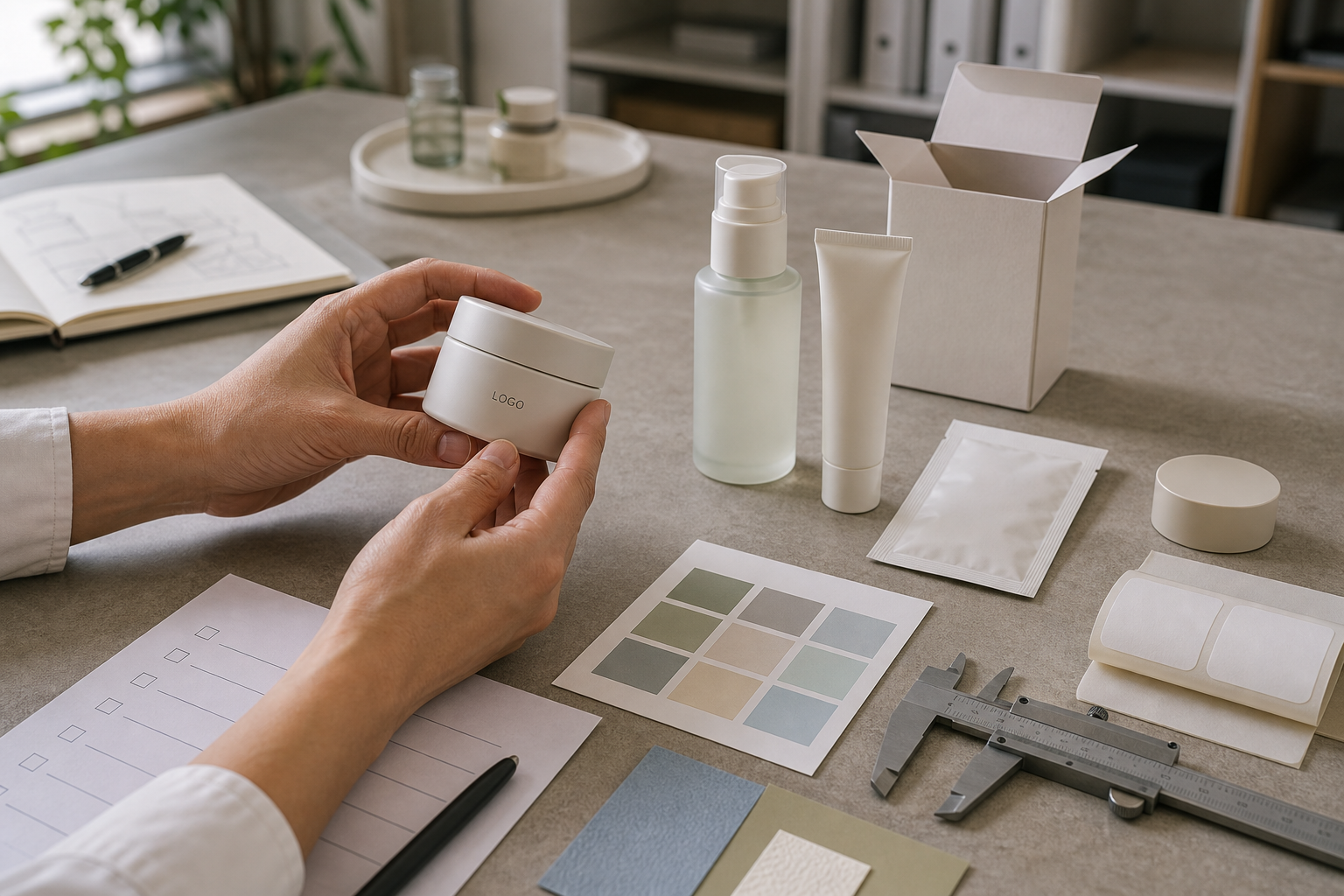
No. The featured image is an AI buyer-education illustration of a review workstation, not GUOCUI premises, employees, an approved formula, completed QC, order or shipment.
What should a buyer send next?
Send the target market, channel, formula and texture direction, pack preference, capacity, authorized artwork needs, quantity range, languages and launch window.
Short conclusion: approve a linked decision set, not a loose sample. Formula code, filled package, artwork version, open checks and quotation scope should tell the same project story.
Discuss a private label skincare sample-approval plan with GUOCUI
Leave a Reply