Direct answer: a facial cleansing bar sample should not be approved from appearance alone. A private label buyer should review the exact sample version, surface and shape, weight, wet-use behaviour, drying behaviour, pack fit, label space and the written acceptance points that will be used again before bulk packing. The purpose is to turn a pleasant sample into a repeatable product and packaging brief.
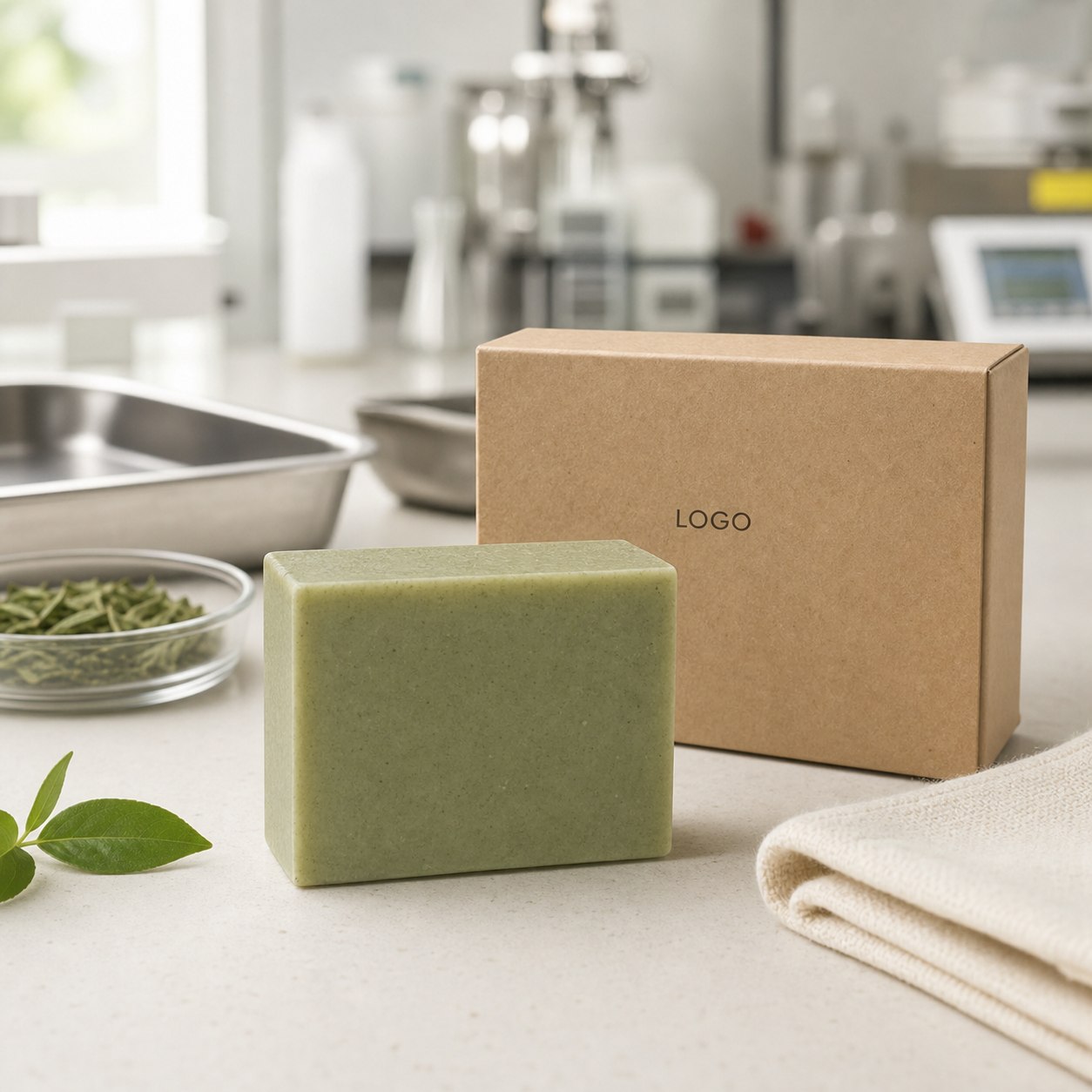
What is a facial cleansing bar sample QC checklist?
A facial cleansing bar sample QC checklist is a buyer-and-factory record of what was reviewed, what was accepted and what still needs adjustment before production. It is not a universal pass certificate. The checklist should identify the formula version, sample date, bar format, intended net content, packaging route and the destination market. Acceptance limits and test methods must be agreed for the actual formula and sales plan.
This matters because a solid facial cleanser has connected decisions. A change in bar dimensions can change paper-band tension and carton clearance. A softer bar may mark more easily during packing. A new fragrance or botanical direction can change colour or odour expectations. Approving each item separately can leave a buyer with a formula and a package that do not work well together.
The eight checks to record before artwork approval
| Check | What the buyer records | Why it affects the project |
|---|---|---|
| Sample identity | Formula code, date, version and reference sample | Prevents feedback from being applied to the wrong revision |
| Shape and surface | Dimensions, edge condition, cracks, chips and visible variation | Controls mould, handling and pack-fit decisions |
| Weight | Agreed measurement point and acceptable variation | Supports net-content planning and carton sizing |
| Colour and odour | Approved direction and normal sample-to-sample range | Creates a practical reference without promising impossible visual uniformity |
| Wet-use review | Wetting, lather character, rinse and after-feel observations | Confirms the intended cosmetic use experience |
| Dry-down | How the bar drains, dries and looks after repeated wetting | Influences consumer instructions, tray advice and package choice |
| Pack fit | Band tension, carton clearance, movement and scuff points | Reduces avoidable packing and transport problems |
| Artwork space | Panel sizes, label position, required copy and barcode ownership | Keeps artwork work aligned with the real component |
Start with version control at the sample table
Give every reviewed sample a clear identifier. A useful record includes the formula or sample code, the date received, requested changes and the buyer who approved the direction. Photograph the sample beside a ruler or approved component when dimensions matter, but do not treat a photograph as the only specification. Keep one agreed reference sample when practical and record how it will be stored.
The US FDA cosmetics GMP inspection checklist discusses written production controls, sampling, packaging-material handling, label examination and retained records. It does not provide one mandatory test list for every cleansing bar. The useful B2B lesson is to define the checks for this product, keep the evidence attached to the right version and avoid informal approvals scattered across chat messages.
Review the bar as a used object, not a studio prop
First inspect the dry bar under ordinary light. Record cracks, chips, rough edges, surface marks and unexpected colour or odour. Then use a consistent wet-use routine agreed with the factory: water conditions, wetting time, hand or accessory, lather observation, rinse and the period allowed for the bar to dry. A buyer can describe the desired foam and after-feel, but public performance wording must wait for formula evidence and destination-market review.
Do not turn a sample preference into a medical or treatment claim. A green tea or botanical direction can support product positioning, but it does not prove acne treatment, antibacterial action or detoxification. The FDA notes that the company marketing a cosmetic remains responsible for product safety, while there is no single FDA-prescribed test list for every cosmetic. Testing plans therefore need to match the formula, intended use and market.
Test drying and package fit together
A facial cleansing bar repeatedly moves from wet use to dry storage. Ask how it drains on a dish, whether the base softens, whether colour transfers to a surface and whether the bar remains comfortable to handle after repeated use. These observations help shape usage instructions and the product brief. They are not a replacement for stability, microbiological, compatibility or other testing selected by the responsible technical team.
Next place the approved bar in the actual paper band, wrap or folding carton. Check clearance on every side, closure pressure, movement, abrasion points and whether the pack still presents well after normal handling. If a lower-plastic or refill-related idea is part of the range, treat it as a packaging-development project rather than a marketing shortcut. Recent beauty-industry refill activity is a useful channel signal, but material reduction or recyclability statements still need component and destination-market evidence.
Convert buyer comments into measurable decisions
Comments such as “make it firmer,” “more premium” or “more foam” are useful starting points but are not production instructions. The factory team should translate them into the next sample action: adjust the formula direction, compare two bar weights, review a different mould edge, test a second paper stock or change carton clearance. The buyer then approves one defined route.
Before bulk production, the agreed record should identify which characteristics are checked again, who reviews artwork, how rejected packaging is controlled and which sample or specification is the comparison point. GUOCUI can discuss sample evaluation, custom formula direction, paper bands, cartons, labels, multilingual artwork and packing preparation. Final controls depend on the approved formula, packaging components, order plan and market requirements.
Information to send before requesting a quotation
- Target market and sales channel, such as salon, spa, wholesale, marketplace or brand website.
- Desired bar format, approximate net content and any mould or shape preference.
- Formula direction, fragrance preference, colour limits and ingredients to include or avoid.
- Expected packaging route: paper band, wrap, folding carton, set box or another component.
- Artwork languages, label responsibility, barcode ownership and required market review.
- Estimated order quantity, launch timing, sample quantity and shipping destination.
MOQ and quotation can be confirmed after formula, packaging, quantity, artwork and order-plan review. Sample and production timing can be confirmed after the same inputs are checked. This avoids presenting an attractive but unreliable fixed number before the real scope is known.
Frequently asked questions
Can I approve a cleansing bar from photos only?
Photos help document appearance and dimensions, but a buyer should also review a physical sample, wet-use behaviour and the intended packaging when possible.
Does every cleansing bar need the same QC tests?
No. The plan depends on the formula, process, intended use, packaging and target market. The factory and responsible technical or regulatory teams should define applicable specifications and methods.
When should carton artwork begin?
Begin layout planning early, but approve final dimensions and print files only after the bar size, wrap route, carton structure, required copy and label responsibility are confirmed.
Can a paper band replace a folding carton?
It can be discussed, but protection, moisture exposure, label space, transport and market requirements must be reviewed for the actual product and channel.
What should a buyer provide for sample revision?
Send the sample code, the exact point to keep, one or two requested changes, the intended packaging route and the business reason for the change. This produces clearer factory action than a general request to “improve” the sample.
When the brief is for a body bar
Keep facial and body projects on separate sample records. For a textured body bar, compare a smooth control with the proposed particle option before approving scent or artwork. Record particle distribution, wet handling, lather, rinse residue and wrapper contact under the same conditions. Do not transfer acceptance between facial and body formulas. The body cleansing bar particle review program provides a separate inquiry brief; final composition, intended use and packaging still need review.

Continue the GUOCUI private label project
Browse GUOCUI Products, compare the Soap category, review the Customization process, or send the sample code, market, packaging route and order plan through Contact GUOCUI.
Source context
- US FDA: Good Manufacturing Practice Guidelines / Inspection Checklist for Cosmetics
- US FDA: Product Testing of Cosmetics
- L’Oréal: 2026 refillable beauty campaign