
Direct answer: a private label fruit-and-tea body care line is a coordinated OEM/ODM program that uses one original sensory direction across selected formats, such as body wash, body cream and a fine-mist body spray. The commercial work is not choosing a fashionable fruit name. It is deciding which format leads the range, how fragrance behaves in each formula, which packages can be tested together, and what information a factory needs before sampling and quotation.
What is a private label fruit-and-tea body care line?
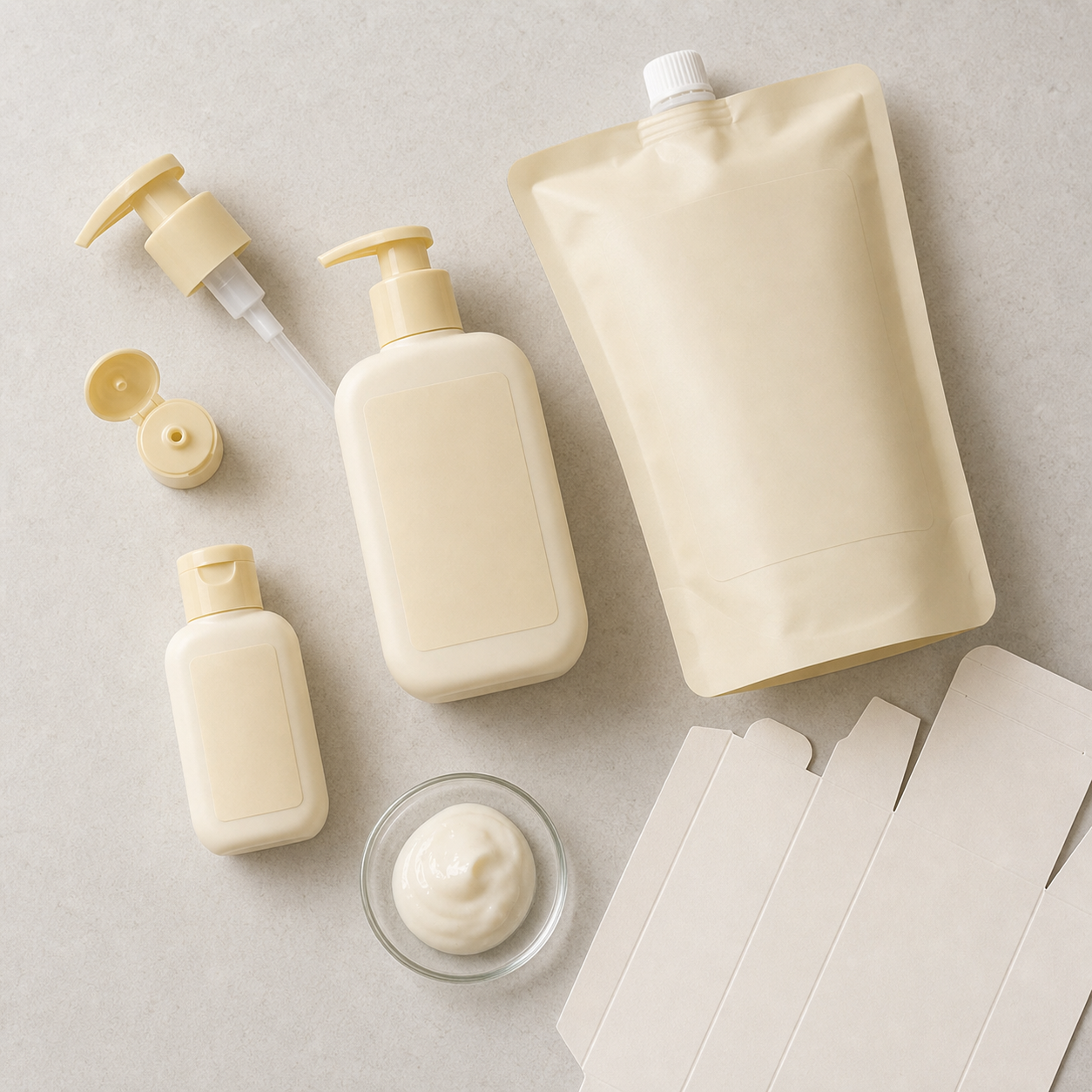
For a buyer, it is a product architecture rather than a copy of a retail launch. A small first program might use a creamy body wash as the daily-use product, a body cream as the richer texture step, and a light spray as the portable fragrance layer. The fruit-and-tea idea can then be developed as an original scent brief—for example, a soft tropical fruit opening with a dry tea finish—without borrowing another company’s name, color system, bottle silhouette or campaign language.
GUOCUI BIO TECH, operated by Guangzhou Guocui Biological Technology Co., Ltd., can discuss custom formula, private label, OEM/ODM, package selection, label localization, sample review and export communication. The practical starting point is a buyer brief. It should state the target market, sales channel, intended retail position, product formats, scent strength, pack sizes, artwork language and expected order structure.
How to turn a sensory trend into an original buyer brief
A coordinated scent range is a development choice, not evidence of future sales. Build the brief around the buyer’s audience and supply plan, remove recognizable competitor elements, and keep the fragrance description separate from the ingredient and packaging records.
Start with the occasion. A salon or spa may want a restrained scent and a cream-led ritual. A social-commerce seller may need a visually clear two-step set that is easy to demonstrate. A distributor may prefer fewer formulas with several pack sizes so inventory is easier to manage. A hospitality buyer may prioritize pump reliability, label clarity and carton efficiency over a large fragrance menu.
Next, define the sensory direction in useful language. “Fruit tea” alone is too broad for a fragrance or formula discussion. Describe the opening, middle and dry-down; whether the impression should be juicy, creamy, green, floral or dry; and whether the scent needs to remain light after rinsing. The brief can also request a low-fragrance feasibility review. Avoid promising extended fragrance duration unless the finished product and claim have been tested for the target market.
Choose the range architecture before choosing every SKU
| Decision | Useful first-round option | What the factory needs to confirm |
|---|---|---|
| Hero format | Creamy body wash or body cream | Texture, rinse feel, fragrance load and pack compatibility |
| Companion format | Fine-mist spray or travel lotion | Viscosity, spray pattern, leakage and dose |
| Pack family | Pump bottle, travel bottle and optional refill pouch | Capacity, neck finish, closure, decoration and carton fit |
| Scent system | One hero scent plus one low-fragrance route | Fragrance documentation, allergen review and formula stability |
| Launch set | Two full sizes or one full size plus travel format | Set tray, outer box, label hierarchy and shipping configuration |
When one lotion base branches into several scents
A buyer may prefer one lotion format with several scent briefs rather than a wash-and-spray routine. Keep a base reference and code each fragrance sample before adding decorative labels. Record the base revision, fragrance supplier code, proposed use level, filled component and intended market together. Compare odor in the emulsion, spread, residue, color and pump output; a blotter preference does not approve the lotion.
Each selected variant needs its own formula-to-artwork match and quantity line. A shared bottle does not establish a shared ingredient list or minimum order across all scents. The body lotion fragrance variant sampling program provides a focused brief for that route. Supplier fragrance documentation remains one input and does not replace assessment of the finished product.

Formula and fragrance questions to settle during sampling
Body wash development should clarify foam level, slip, after-rinse feel, color and scent intensity. Body cream development should clarify richness, absorption speed, drag, residue and performance in the chosen pump or jar. A spray product needs a viscosity range that the selected pump can handle, plus checks for priming, spray pattern, leakage, clogging and storage stability.
Ingredient directions can be discussed as moisturizing or skin-conditioning concepts—for example glycerin, panthenol, botanical emollients or a selected oil phase—subject to formula review. The public description should stay within cosmetic language. Do not convert a sensory story into medical, therapeutic or unverified clinical claims.
Fragrance documentation and destination-market labeling belong in the same discussion as the scent itself. The IFRA explanation of conformity documentation, the U.S. FDA cosmetics labeling guide and the Great Britain cosmetics guidance are useful regulatory starting points; final requirements still depend on the destination, formula, claims and responsible-party plan.
Packaging decisions that affect quotation
A package mood board is not enough for a production quote. Send the preferred capacity, bottle material, pump or cap type, label or direct-print route, outer-carton need, set configuration and shipping market. If a refill pouch is being considered, ask whether the filling, cap, barrier layer and repeated-use instructions fit the formula and target channel. Sustainability language should be reviewed against the actual material and local disposal system, not added as a generic badge.
GUOCUI can review blank-label samples, decoration areas and packing logic before artwork is finalized. The sample and production timeline can be confirmed after formula and packaging review. MOQ and quotation can be confirmed after formula, fragrance, packaging, quantity, artwork and order-plan review.
A practical sample-to-quotation sequence
- Buyer brief: confirm market, channel, target user, formats, scent direction, pack sizes and artwork languages.
- Feasibility review: narrow formula, fragrance and package routes; flag claim or labeling questions.
- Sample evaluation: record scent, texture, application, rinse or absorption feel, and package operation using one score sheet.
- Compatibility checks: review pump function, leakage, closure fit, label area, fill appearance and storage observations.
- Approval inputs: confirm the selected sample, pack components, decoration, outer box and required label content.
- Quotation and production planning: align quantity, order mix, packing, destination and shipping assumptions before commercial confirmation.
Buyers can review current GUOCUI product directions, see the body wash category, read the customization process, or use the inquiry form. The existing banana cream body wash direction shows one possible body-cleanser format; a new range should still be briefed and reviewed as its own program.
Frequently asked questions
Can one scent be used across body wash, cream and spray?
The same scent direction can guide the range, but each formula and use level needs separate review. Rinse-off, leave-on and spray formats do not automatically behave the same way.
Should a first order include many fruit variants?
A focused hero scent and a small format set are usually easier to sample, approve and communicate. Additional variants can follow after the formula-package combination is stable and the channel plan is clearer.
Can GUOCUI confirm a fixed MOQ, price or lead time from the idea alone?
No. Those commercial details depend on formula, fragrance, components, decoration, quantity, pack-out and shipping plan. They are confirmed after review rather than invented on a public page.
What should a buyer send with the first inquiry?
Send the destination market, channel, desired formats and sizes, scent and texture references, packaging route, artwork languages, approximate quantity plan and target timing. If there is an existing package drawing or compliance brief, include it for review.