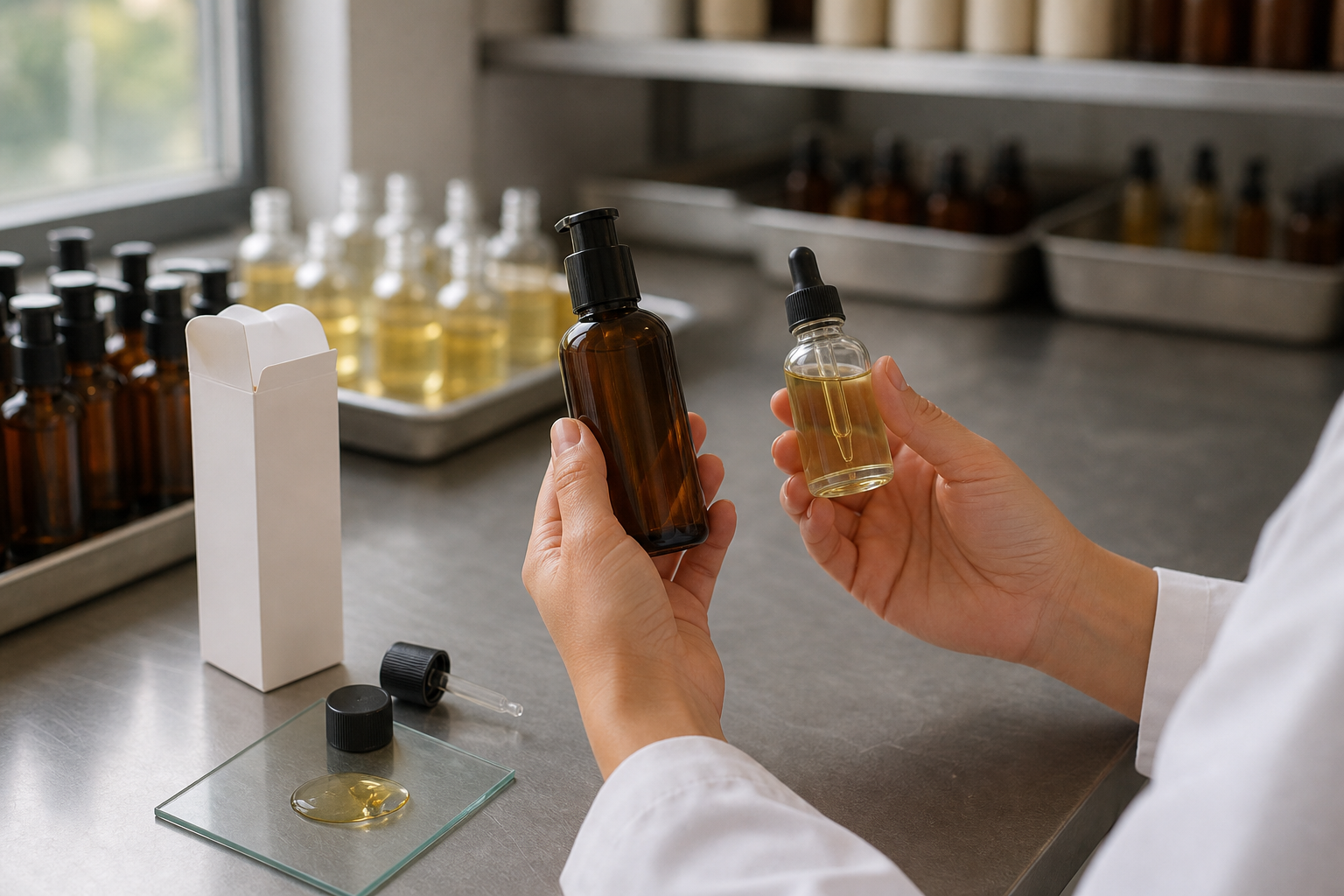
Direct answer: a useful private label massage oil brief starts by fixing the product’s cosmetic job, target channel, sensory profile, pack, claim boundaries and destination market before the factory makes samples. If a buyer wants a warming-feel or comfort-positioned oil, the brief should describe texture, glide, fragrance and after-feel without promising to treat pain, inflammation or injury. That distinction changes the formula conversation, label review, evidence needs and sometimes the regulatory route.
At GUOCUI BIO TECH, the practical question is not “Can you copy this bottle?” It is “What should the label responsibly say, and what must the sample prove?” The answers help Guangzhou Guocui Biological Technology Co., Ltd. prepare a clearer OEM/ODM path for spa brands, distributors, e-commerce sellers and importers.
Cosmetic massage oil or therapeutic product?
The boundary begins with intended use. The U.S. FDA gives a direct massage-oil example: an oil intended to lubricate the skin and add fragrance can be a cosmetic, while therapeutic positioning such as muscle-pain relief can move the product into drug territory. Marketing copy, online listings, labels and supporting imagery can all help establish intended use. Buyers should therefore settle the claim direction before asking for label artwork or a final quotation.
| Brief element | Cosmetic-oriented direction | Higher-risk direction needing specialist review |
|---|---|---|
| Primary job | Massage glide, skin-conditioning feel, fragrance ritual | Treating pain, injury, inflammation or disease |
| Sensory language | Warming-feel, light slip, cushion, non-heavy finish | Guaranteed deep heat, muscle recovery or therapeutic action |
| Evidence question | Does the finished sample match the agreed sensory target? | Does the finished product support a regulated treatment claim? |
| Launch action | Cosmetic safety, label and claim review for the target market | Pause and confirm the correct regulatory route with qualified counsel |
This is a commercial sampling guide, not legal advice. Final wording must match the destination country, responsible-person or importer requirements, sales channel and finished-product evidence. In the EU, cosmetic claims must be truthful and supported by adequate, verifiable evidence. Current UK guidance likewise places safety, product information, notification and claim support with the responsible business.
1. Name the buyer, channel and use moment
A spa treatment-room oil and a marketplace home-massage oil may share a base format, but they do not need the same pack, scent strength, label hierarchy or dispensing control. Start the RFQ with the buyer type: salon or spa, hotel amenity supplier, distributor, pharmacy-style retailer, online beauty seller, or gift-set brand. Then state the use moment—professional massage, after-shower body ritual, travel set, couple-care gift, or fragrance-led body care.
A spa may value controlled slip, back-bar sizes and clean dispensing. An online seller may need a leak-resistant consumer bottle and protective carton. A distributor may need multilingual artwork space and several capacity options.
2. Convert “warming” into a sensory target
“Warming” is too vague for sampling. Describe what the evaluator should feel and when: immediate or gradual sensation, mild or noticeable intensity, short or extended perception, and whether fragrance should reinforce the warm character. Also define glide, absorption speed, cushion, tack, residue, shine and after-feel. The factory can then discuss ingredient directions without promising a medical outcome.
Ask for a reference range rather than a copied formula. For example: a medium-glide body oil with a dry-touch finish, low tack, a soft warming-feel concept, and a restrained aromatic profile suitable for a spa-private-label line. Ingredient preferences and exclusions can be added after the sensory target is clear. The finished formula, not one highlighted ingredient, must support the final cosmetic story.
3. Build a sample scorecard before the sample arrives
Agree on the evaluation method before production starts. A useful scorecard records appearance, odor, dispensing, spread, glide time, absorption, residue, skin feel after a defined interval, package cleanliness and leakage after handling. If several evaluators are involved, use the same amount, application area and review timing. Patch-test and local safety instructions should follow the responsible market plan.
Do not approve only from a fragrance strip or a product photo. Review the oil in the intended pump or dropper, because dispensing changes the buyer experience. Photograph the approved bottle, closure, label position and carton orientation so the bulk-production handoff has a visual reference.
4. Match the oil to the package
Pumps, droppers, reducers and disc-top closures handle oil differently. The buyer should provide target capacity, material preference, finish, closure type, label area, carton requirement and shipping method. The factory and packaging team can then check viscosity fit, dose control, neck and closure compatibility, decoration area, leakage risk and transit protection.
- Pump: useful for controlled consumer or professional dispensing; confirm dose and lock design.
- Dropper: supports a precise ritual, but bulb, pipette and closure fit need review.
- Reducer or pour cap: simple, but flow can become messy if the orifice and viscosity do not match.
- Carton or set box: provides artwork space and shipping protection; confirm insert and bottle movement.
5. Prepare label and export information early
Before label confirmation, send the target country, sales channel, brand name, language set, responsible-party details, intended claims and required documents. The final label plan may need product identity, net contents, ingredient list, batch information, precautions, responsible-party details and origin information depending on the market. Keep placeholder copy out of mass production.
Claims should be checked against the finished formula and available support. Avoid carrying over treatment wording, clinical-sounding icons, competitor terminology or unsupported ingredient benefits from a reference image. GUOCUI can help organize cosmetic wording and artwork questions, while the buyer and its market-qualified reviewer retain responsibility for destination-market approval.
6. Give the factory enough information to quote
MOQ and quotation can be confirmed after formula, packaging and order-plan review. The useful RFQ inputs are formula route, fragrance direction, pack capacity, bottle and closure, decoration method, label and carton status, quantity range, target market, sample deadline and requested shipment timing. A low-MOQ ready-formula route and a custom formula with special packaging are different projects, so one fixed price without those inputs is rarely meaningful.
Sample and production timeline can be confirmed after formula and packaging review. Artwork revisions, custom components, testing needs and multilingual labels can add decision steps. A realistic schedule separates formula sample, packaging sample, artwork approval, pre-production confirmation, filling and packing, QC check, and export preparation.
Factory handoff checklist
- Buyer type, sales channel and destination market.
- Cosmetic use and claim boundary, including wording to avoid.
- Texture, glide, absorption, finish and fragrance target.
- Ingredient preferences, exclusions and market restrictions.
- Bottle capacity, material, closure, label and carton direction.
- Quantity range, sample window and launch timing.
- Artwork status, language set and required support documents.
Browse the GUOCUI B2B catalog, compare the massage oil category, and review private label and custom formula options. When the brief is ready, use the product-specific inquiry path.
FAQ
Can GUOCUI make a warming-feel private label massage oil?
GUOCUI can discuss a cosmetic warming-feel direction after the buyer defines the target sensation, market, channel, ingredient limits, pack and claim boundaries. Final wording and formula suitability require finished-product and destination-market review.
Can the label say “muscle pain relief”?
Do not assume that wording belongs on a cosmetic label. In the United States, the FDA specifically uses therapeutic muscle-pain relief for massage oil as an example that can make the intended use a drug use. Confirm the correct regulatory route before formula or artwork approval.
What packaging works for massage oil?
Pumps, droppers and reducer closures can all work, but the decision depends on viscosity, dose, use setting, leak resistance, decoration and shipment. Review the actual formula in the intended package before bulk production.
What should I send for a quotation?
Send the product use, target market, formula route, fragrance, pack capacity, closure, decoration, carton, quantity range, artwork status and timing. Quotation depends on formula, packaging, quantity, label requirements and shipping plan.
Does GUOCUI offer ready formula and custom formula routes?
Yes. Buyers can discuss ready-formula private label, design-based customization or custom formula development. The sampling plan should match the amount of formula, sensory and packaging change required.
Sources used for the buyer guide
- U.S. FDA: Is It a Cosmetic, a Drug, or Both?
- European Commission Regulation (EU) No 655/2013 on cosmetic claims
- UK guidance: Making cosmetic products available to consumers in Great Britain
Leave a Reply