Category: Skincare Industry Trends

Dated, source-linked skincare launch, packaging, ingredient and regulation briefs translated into practical private label and OEM/ODM buyer decisions.

  • Skincare Industry Trend Brief: Two-Phase Hydration, Fast-Rinse Cleansing, and Packaging Proof

    Skincare Industry Trend Brief: Two-Phase Hydration, Fast-Rinse Cleansing, and Packaging Proof

    Evidence boundary: This brief was checked on 20 August 2026 against dated public sources. It separates product launches and channel events from GUOCUI factory-side interpretation. It does not report a measured change in sales or search volume, formula equivalence, or category dominance.

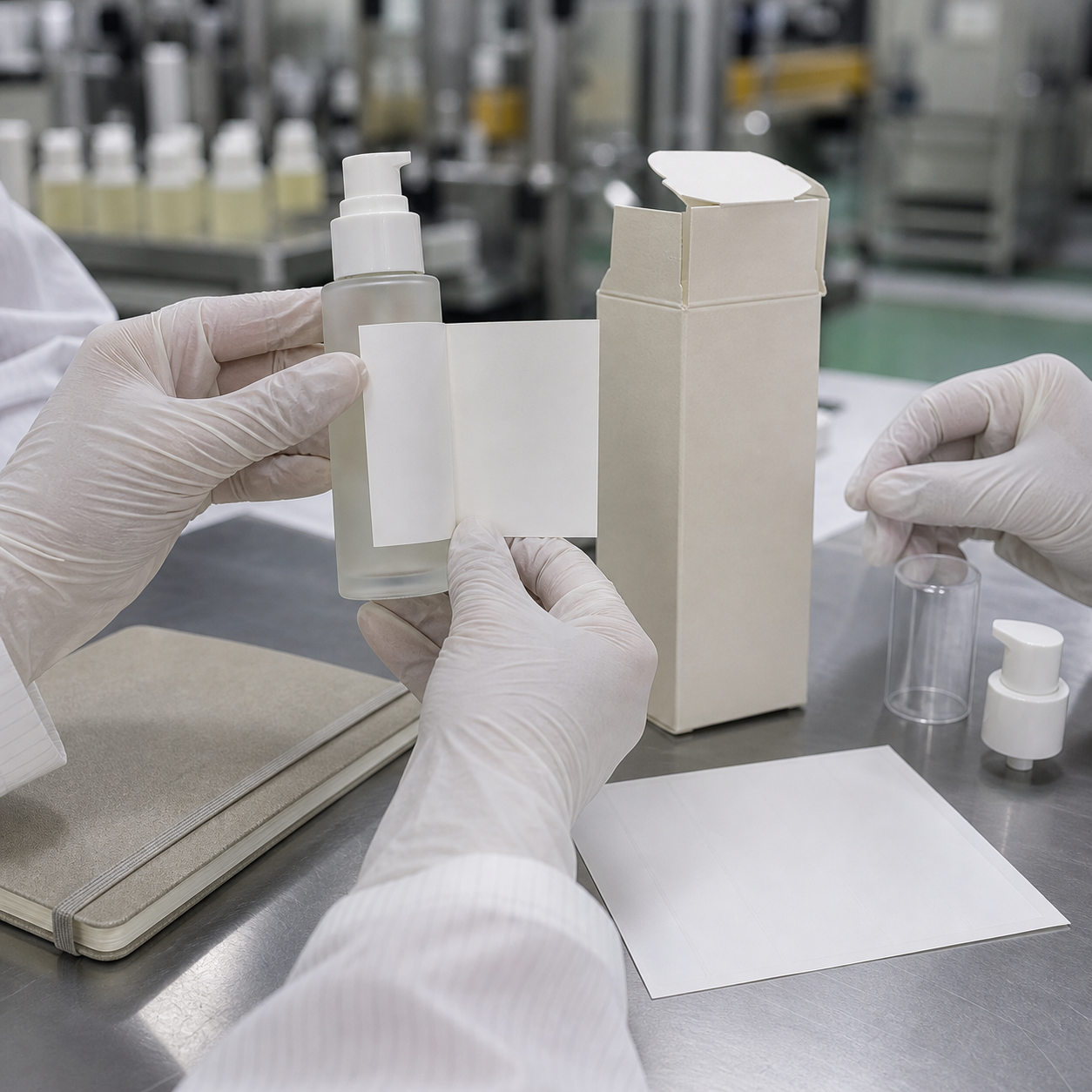
    Gloved sample review of a neutral two-phase toner, cleansing oil pump and packaging components on a cosmetics QC table
    A clean-room GUOCUI development question: can the formula, pump, label and shipment plan survive the buyer’s real channel requirements?

    Direct answer: what changed on 20 August 2026?

    Three buyer-relevant signals moved at the same time. A dated Japanese launch put a visibly separated toner-and-emulsion format into a simple shake-and-use routine. A second dated launch made cleansing-oil speed, rinse residue and pump handling easy to inspect. Separately, Sephora and CJ Olive Young began a curated K-beauty rollout across more than 500 US stores and Sephora.com. For a private-label buyer, the useful conclusion is not “copy these products.” It is to ask for better sample evidence: remix behavior, low-temperature stability, pump leakage, rinse residue, component records and channel-ready labels.

    Verified facts, factory inference, and what is not claimed

    Evidence layer What can be said Buyer action
    Verified facts BCL dated a two-phase 180 mL toner launch for 20 August; ALBION lists a cleansing oil launched on 18 August with a full ingredient list; Sephora describes a 19-brand US assortment in 500-plus stores and online. Record exact dates, formats, source URLs and the market where each fact applies.
    GUOCUI factory-side inference Visible remix, rinse and pump checks can become a clearer B2B sample-review program than an ingredient-only pitch. Define pass/fail checks before formula and component quotations are compared.
    Not claimed No source proves that these formats are best sellers, that one SKU is driving the channel event, or that a GUOCUI sample will perform like a referenced retail product. Do not convert “new,” store count or brand statements into demand, efficacy or sales claims.

    Signal one: two-phase hydration needs a remix specification

    The useful part of the BCL release is the product structure: an emulsion layer and a lotion layer are intentionally combined before use. That makes separation visible, but it also creates practical questions. How long should the bottle be shaken? How quickly may the layers separate again? Does the formula remix consistently after cold storage and transport vibration? Does the bottle dispense cleanly without dribble or uneven phase pickup?

    A GUOCUI custom formula project should use an original phase ratio, ingredient direction, color system, bottle geometry and artwork. The buyer can request three bench samples with different remix and after-feel targets. Review them at room temperature and after a defined low-temperature check, then record remix time, appearance, pour or pump behavior, residue and sensory notes. This is a development program, not a promise of a finished performance claim.

    Signal two: cleansing oil should be judged at the sink and in transit

    The ALBION product page provides a dated exact SKU and ingredient disclosure. GUOCUI does not reuse that formula, name, pink package or product photography. The factory-side lesson is narrower: cleansing-oil decisions can be made with observable tests. A buyer can compare makeup lift, emulsification time, white-plate rinse residue, eye-area caution wording, pump recovery, cap or lock security, and leakage after a simulated shipping orientation check.

    For sampling, start with two original oil-phase directions and at least two pump or closure routes. An unscented option may be useful where fragrance or allergen review is a concern. Packaging capacity, label stock and travel-size requirements should be confirmed before the quotation because component availability and decoration can change both cost and timeline.

    Signal three: channel expansion is not single-SKU demand proof

    The Sephora Newsroom announcement states that 19 Olive Young-curated Korean beauty brands entered more than 500 US Sephora stores and Sephora.com beginning 20 August. This is verified distribution evidence. It does not establish sales, rankings or review velocity for any individual item.

    For Amazon, TikTok Shop, salon, spa or wholesale buyers, the practical response is a tighter channel brief. Identify the hero format, target retail price logic, language and label requirements, claim restrictions, carton size, tester or mini need, and the evidence the channel expects. A curated retail event is a reason to watch exact SKU pages and customer feedback; it is not permission to copy trade dress or launch a look-alike.

    Packaging proof now belongs in the RFQ

    The EU Packaging and Packaging Waste Regulation applies from 12 August 2026, while individual duties and transition points still depend on the article, role, material and timing. Buyers should read the official EUR-Lex text and obtain market-specific advice rather than treating one generic statement as compliance approval.

    For GUOCUI sampling, a useful starting record includes the bottle, pump, cap, label and carton material descriptions; empty component weights where available; decoration and label routes; refill or replacement options; destination market; and the party responsible for the final regulatory review. This record supports a better packaging conversation. It does not by itself certify a product or package.

    A seven-day OEM/ODM validation checklist

    1. Choose one hero format and one travel or tester format; do not open a full line before the hero brief is stable.
    2. Request two or three original formula directions with written sensory and use targets.
    3. List the exact observations: remix time, cold appearance, pump recovery, leakage, emulsification, rinse residue and label adhesion.
    4. Separate ingredient stories from claims that require finished-product evidence or market review.
    5. Review neutral sample photography, component drawings and artwork as separate approval steps.
    6. Confirm quotation variables: formula, packaging, decoration, quantity range, carton plan, destination and requested checks.
    7. Keep a signed version or approval record before bulk production preparation.

    What GUOCUI needs before a sample discussion

    Send your target market and sales channel, product format, texture and after-feel, fragrance preference, capacity, pump or closure preference, artwork status, quantity range, destination, launch window and any retailer checklist. MOQ and quotation can be confirmed after formula, packaging and order-plan review. Sample and production timing can be confirmed after the same brief is reviewed.

    Start with the GUOCUI B2B product catalog, review the current texture and rinse review program, see packaging component review questions, or read the Skincare Industry Trends center. For a buyer-specific route, use Customization and then send the project brief.

    FAQ for private-label buyers

    Does a two-phase appearance prove formula stability?

    No. Intentional separation still needs a defined remix target, appearance checks and suitable stability, compatibility and microbiological review for the finished brief.

    Can GUOCUI copy the referenced Japanese launches?

    No. Public sources are research evidence only. A GUOCUI project uses a new formula brief, separately sourced components, original artwork, original images and conservative claims.

    What is the minimum useful cleansing-oil sample test?

    Compare makeup lift, emulsification, rinse residue, pump behavior and leakage using the exact filled sample and component route proposed for the project.

    Does 500-plus stores prove a product is selling quickly?

    No. It verifies distribution reach for a curated assortment, not sales, ranking, inventory velocity or review growth for an individual SKU.

    Can GUOCUI guarantee PPWR compliance?

    No. Responsibilities depend on the exact package, role, market and applicable provisions. GUOCUI can help organize component and artwork information for the buyer’s final review.

    How are MOQ, price and lead time confirmed?

    Quotation and timing depend on formula, components, capacity, decoration, quantity range, requested checks, carton plan and shipping destination. They are confirmed after the brief is reviewed.

  • Precision-Dispensing Serum Packaging: What OEM Buyers Should Validate Before Sampling

    Precision-Dispensing Serum Packaging: What OEM Buyers Should Validate Before Sampling

    Coverage window: 20 July–17 August 2026. Evidence last checked: 17 August 2026, China Standard Time. This brief is for private label, OEM/ODM, importer, distributor, salon/spa, and online beauty buyers comparing serum packaging before sampling.

    Direct answer: precision-dispensing packaging is not a formula claim. A new controlled-dose or auto-loading dropper creates a useful sampling question: can the selected dispenser repeatedly load and deliver the buyer’s actual serum while keeping the outlet, closure, label, carton, and transport plan practical? Buyers should compare the mechanism with an ordinary dropper, an airless pump, and a trial vial before locking artwork or quotation.

    GUOCUI factory sample table comparing a serum dropper, airless pump and vial during packaging QC review
    Original GUOCUI clean-room visual: generic serum samples, a QC hand, and neutral components. It is not a source-product image or proof that a specific package passed testing.

    What changed, and why it matters to OEM buyers

    On 20 July 2026, packaging supplier Aptar Beauty announced the first commercial use of its NeoDropper Autoload technology on Dermalogica’s FutureCode Booster. Aptar describes a twist-and-push system, automatic applicator loading, a short applicator, and a dip tube intended to support controlled dispensing and formula use. The retail product page separately confirms that the commercial pack uses a glass bottle, mixed-material pump/dropper, and paper carton.

    Those are verifiable facts about one commercial launch. They do not prove that the mechanism fits another serum, that every dose is identical under every condition, that the complete pack is recyclable, that product residue is eliminated, or that the package meets a buyer’s market requirements. For a private label project, the useful development signal is the need for a more disciplined dispenser comparison—not a reason to copy the source formula, claims, name, colors, images, or package geometry.

    Verified facts

    A dated supplier announcement records a first commercial auto-loading dropper launch. The supplier explains the intended loading and dispensing sequence. The brand’s public product page confirms commercial use and identifies broad package materials.

    GUOCUI factory-side inference

    OEM buyers can turn the event into a filled-sample comparison covering viscosity, loading, dose preference, residue, closure fit, assembly, label area, carton protection, and supplier documentation.

    Not claimed

    GUOCUI does not claim demand growth, sales performance, clinical superiority, formula preservation, hygiene, dose accuracy, low waste, recyclability, legal compliance, or availability from a particular component supplier.

    A practical precision-dispensing sample matrix

    Decision What the buyer should specify What the sample team should observe
    Formula flow Watery essence, light gel serum, cushion serum, or light emulsion; appearance and fragrance direction Loading behavior, interrupted flow, visible bubbles, outlet residue, and changes after repeated handling
    Dose experience Drop-by-drop control, one actuation, mixing with another product, or direct facial application Repeatability across filled samples, user force, drip-back, stray drops, and whether the use instructions remain simple
    Container and closure Bottle material, fill range, closure style, applicator length, cap profile, and decoration area Assembly fit, cap engagement, leakage observation, contact points, and pack stability during normal use
    Artwork and secondary pack Logo file, label languages, carton structure, inserts, channel requirements, and shipping country Label alignment, rubbing risk, required text area, carton fit, movement protection, and packing sequence
    Evidence boundary Requested component specification, material description, supplier declarations, and market-review checklist Which exact files are available, which claims remain unsupported, and which questions need a qualified local reviewer

    Formula positioning should remain separate from the packaging signal

    The commercial launch is tied to a branded longevity serum with proprietary naming, detailed actives, DNA-related language, in-vitro performance wording, a fixed price, and retail claims. None of that transfers automatically to an OEM brief. A GUOCUI project can instead begin with a conservative hydration-support, antioxidant-positioned, peptide-positioned, fermented-ingredient, niacinamide-care, or fragrance-free direction. The exact formula, percentages, INCI list, claims, test plan, and destination-market language must be confirmed later.

    The buyer can still use skin longevity as a high-level product-planning term when the public wording stays cosmetic and evidence-led. It should guide questions about comfortable long-term routine use, barrier-supportive positioning, packaging usability, and consistent sample evaluation. It should not become a promise to repair DNA, reverse aging, regenerate tissue, or reproduce another company’s proprietary complex.

    Clean-room design-around: what GUOCUI removed

    The public GUOCUI direction removes the supplier and retail brand names from the product page, the proprietary mechanism and formula names, the source bottle shape, grey campaign styling, advertising images, exact ingredients, percentages, price, clinical and DNA-related claims, consumer-review totals, and every source pixel. The original article keeps the companies only as linked news subjects so readers can audit the event.

    The development direction is intentionally neutral: compare generic controlled-dose, standard dropper, compact airless, and sample-vial routes. Change the formula concept, component family, color system, artwork, carton, channel, and QC plan around the buyer’s brief. A component supplier’s own intellectual-property and availability terms must still be checked before selection.

    What to send before GUOCUI requests components

    • Target market, sales channel, and responsible party for final label and legal review.
    • Serum positioning, texture, appearance, fragrance preference, and ingredient restrictions.
    • Preferred dose experience, fill range, bottle material, dropper or pump route, and trial quantity.
    • Logo status, label languages, decoration preference, carton structure, and set-box needs.
    • Estimated order quantity range, target sample window, launch timing, and shipping country.
    • Any required component specification, material, compatibility, transport, or supplier-document checklist.

    Quotation depends on formula, packaging components, quantity, decoration, label, carton, requested checks, and shipping plan. Sample and production timing can be confirmed only after the formula and component route are reviewed.

    FAQ

    Does a self-loading dropper guarantee a consistent dose?

    No. A supplier may describe an intended mechanism, but the buyer should review the exact filled sample, formula flow, use sequence, component tolerances, and repeatability before making a claim.

    Is a controlled-dose dropper better than an airless pump?

    Not universally. A dropper may support a visible ritual and adjustable amount; an airless pump may offer a different handling and outlet experience. The right route depends on texture, channel, dose preference, artwork, cost, component availability, and testing.

    Can GUOCUI copy the commercial launch?

    No. The source launch is research evidence. A GUOCUI project must use a different formula brief, generic or separately sourced components, original visuals, new artwork, conservative claims, and a buyer-specific QC plan.

    Does PPWR make this package EU compliant?

    No. Regulation (EU) 2025/40 generally applies from 12 August 2026, but obligations and dates vary. Exact responsibilities and claims depend on the package, role, market, and supporting documentation.

    Which GUOCUI product page should buyers use as a starting point?

    Use the Facial Serum Packaging Component Review Program, then send the formula, dose preference, component, artwork, quantity, and market details through the inquiry path.

    Sources and evidence boundary

    Short conclusion: the defensible trend is not a promise that one dispenser is superior. It is a better OEM sampling discipline: lock the buyer’s use case first, compare filled components, record open evidence, and connect formula, dispenser, artwork, carton, QC, quotation, and destination-market review before publication.

  • Skincare Industry Trend Brief: Body-Care Layering, Hot-Humid Routines, and Refill Readiness

    Skincare Industry Trend Brief: Body-Care Layering, Hot-Humid Routines, and Refill Readiness

    GUOCUI Skincare Industry Trends — Daily Brief

    A dated, source-linked view of current product structures for overseas private label and OEM/ODM buyers. This brief separates verified public facts from manufacturing inference and does not claim sales growth where no reliable time series exists.

    Published: August 14, 2026
    Evidence window: July 16-August 14, 2026
    Evidence checked through: August 14, 2026, 09:15 China Standard Time
    Coverage note: No same-day launch met the strongest standard of a precise product, a primary source, a second independent source, and a clear OEM/ODM adaptation path. That is a coverage result, not a claim that the market had no launches.

    Direct answer: The most useful signals today are not a single “viral” ingredient. They are product-system decisions: coordinating body wash with body mist and gift formats; designing lightweight routines for hot and humid markets; pairing toner pads with gel cream; and treating refill and packaging data as an active development requirement. A private label buyer should turn these structures into an original brief, then validate formula, component, sample, QC, label, quotation, and destination-market requirements.

    Unbranded skincare samples, pump and refill components reviewed on a clean product-development worktable
    Original GUOCUI trend-review illustration. The blank samples and QC setting represent a generic development workflow, not proof of a specific formula, buyer order, certification, or factory event.

    What the evidence supports today

    Signal Verified public fact Factory-side inference Not claimed
    Layered body care Current official pages show body mist and body-cream families with full size, mini, and trio structures; another official set combines wash, bath, and mist. Buyers can test a coordinated scent and packaging architecture across rinse-off and leave-on formats. No claim of category growth, sell-through, or “viral” demand.
    Hot-humid routines Current Singapore pages and independent launch coverage show a cleanser, peel-off format, lightweight moisturizer, and a separate toner-pad plus gel-cream pairing. Market-specific routines may be briefed around light finish, residue, makeup compatibility, pad moisture, and pack sealing. No transfer of brand clinical figures, proprietary names, or inventory trends.
    Packaging readiness The European Commission states that Regulation (EU) 2025/40 generally applies from August 12, 2026. Buyers and factories should build a packaging-component ledger before quotation and artwork lock. No page-level statement that a proposed pack is compliant without exact legal and technical review.

    1. Body care is becoming a coordinated scent system

    The current Summer Fridays body collection publicly shows three body-fragrance mists and three body-butter balms, with full-size and mini options plus mini trios. The useful observation is the architecture: one scent idea can be carried through more than one texture, capacity, and gift format. The current Fenty Skin Body Start’r set adds a different structure by combining shower, bath, and mist products in one full-size trio.

    For an OEM/ODM buyer, this does not mean copying names, colors, bottle silhouettes, campaign language, or fragrance descriptions. The practical question is whether the planned line should include a rinse-off cleanser, a leave-on fine mist, a cream or balm, a mini format, and a gift set. Each format needs separate formula, fragrance, pump or closure, leakage, label, carton, and sample review. The scent sequence should also be checked across formats: the wash may rinse cleanly while the mist remains noticeable, and the cream may change how the fragrance develops on skin.

    GUOCUI’s clean-room starting point is a body wash and body mist scent-layering sampling program. It uses conventional blank components, variable commercial terms, and independent QC questions rather than source trade dress.

    2. Hot-humid routines are a product-line problem, not one ingredient

    Current Singapore evidence shows two useful structures. LANEIGE’s Balance Mode collection presents a cleanser, a peel-off mask, and a lightweight moisturizer. INNISFREE’s current New Arrivals page, together with independent Singapore launch coverage, presents a green-tea and panthenol toner-pad plus gel-cream pairing. These examples support the existence and structure of the products. They do not prove sustained demand, sales acceleration, or inventory movement.

    A buyer building for hot and humid markets can use the signal to define a test plan: cleansing without an overly tight after-feel, a lightweight moisturizer that layers under makeup, a pad with controlled liquid loading and low lint, and a gel cream with a quick-set finish. “Cooling,” “oil control,” and “soothing” also need market-appropriate cosmetic wording and evidence; they should not become treatment claims.

    Relevant original GUOCUI directions include a humid-climate lightweight face-care sampling set and a green-tea and panthenol pad plus gel-cream sampling duo. The buyer still needs to confirm target country, channel, skin-feel goal, pack family, capacity, label language, order range, and testing expectations.

    3. Refill and packaging data now belong in the development brief

    The European Commission’s packaging-waste page states that the Packaging and Packaging Waste Regulation 2025/40 entered into force on February 11, 2025 and generally applies from August 12, 2026. It covers packaging placed on the EU market and introduces requirements across manufacturing, composition, recyclability, reuse, and waste prevention. Exact obligations and dates vary, so a web brief cannot replace legal or market-specific review.

    The operational lesson is immediate: formula and packaging should not be discussed as separate late-stage purchases. Before quotation, build a component ledger containing the primary container, pump or closure, refill fitment, label and decoration layers, carton, insert, material type, empty-pack weight, destination, and alternative route. Then test filled-pack compatibility, leakage, residue, consumer transfer, transport, and artwork space before calling a refill direction ready.

    Questions a buyer should send before requesting a trend-based quotation

    • Which market, channel, buyer type, and launch window are you planning for?
    • Which product formats belong in the first sample round, and which are later extensions?
    • What texture, scent intensity, after-feel, and use sequence should the samples explore?
    • Which bottle, jar, pouch, pump, sprayer, capacity, label language, and carton direction should be compared?
    • What quantity range, documentation questions, transport conditions, and destination-market checks affect the quotation?

    Evidence boundaries and editorial policy

    GUOCUI records source date, region, and evidence type. A “New” badge, a current price, a review total, a stock state, or one social post is not described as growth. Conflicting prices or availability are retained as conflicts. Competitor brands may be named only as cited news subjects; their pixels, trademarks, proprietary language, package trade dress, formulas, and claims are not transferred into GUOCUI product pages or sample briefs.

    Read the evergreen Skincare Industry Trends hub for the full method, or visit Products and Customization to turn a signal into an original development direction.

    FAQ

    Does GUOCUI call every new launch a trend?

    No. A new listing confirms existence, not growth. The daily brief records whether there is a primary source, a second source, a time series, and a practical B2B adaptation path.

    Can a buyer ask GUOCUI to copy a product shown in the report?

    No. The report is research context. A public development direction must change positioning, formula concept, texture, packaging, naming, claims, artwork, and visual language, and must not reuse source pixels or protected trade dress.

    Does the PPWR application date prove a package is compliant?

    No. It means packaging data and current regulatory review should enter the project earlier. Exact compliance depends on the package, role, market, timing, and applicable provisions.

    How often will this section publish?

    The source report is reviewed daily, but a public URL is created only when the evidence adds a new dated fact, a changed interpretation, or a useful buyer decision. Thin rewrites and unchanged summaries are not published.

    What should a buyer send GUOCUI first?

    Send the target market and channel, product formats, formula and sensory direction, packaging idea, label languages, expected quantity range, test needs, destination, and launch timeline. MOQ, quotation, sample timing, and production timing can be confirmed after that review.

    Turn a trend signal into an original brief.

    Share the product system, market, channel, packaging idea, quantity range, and sample goal. The GUOCUI export team can help organize the next formula, component, label, QC, and quotation questions.

    Discuss a trend-based OEM/ODM project

    Sources checked