
Direct answer: a private label facial cleansing bar project should be briefed as a complete product system, not just a bar color and an ingredient name. The useful brief covers the cleansing direction, after-rinse feel, bar dimensions, fragrance choice, packaging structure, label market, sample checks, and the information needed for quotation. Those decisions determine what the factory can sample, what the packaging supplier must prepare, and what the buyer still needs to confirm before production.
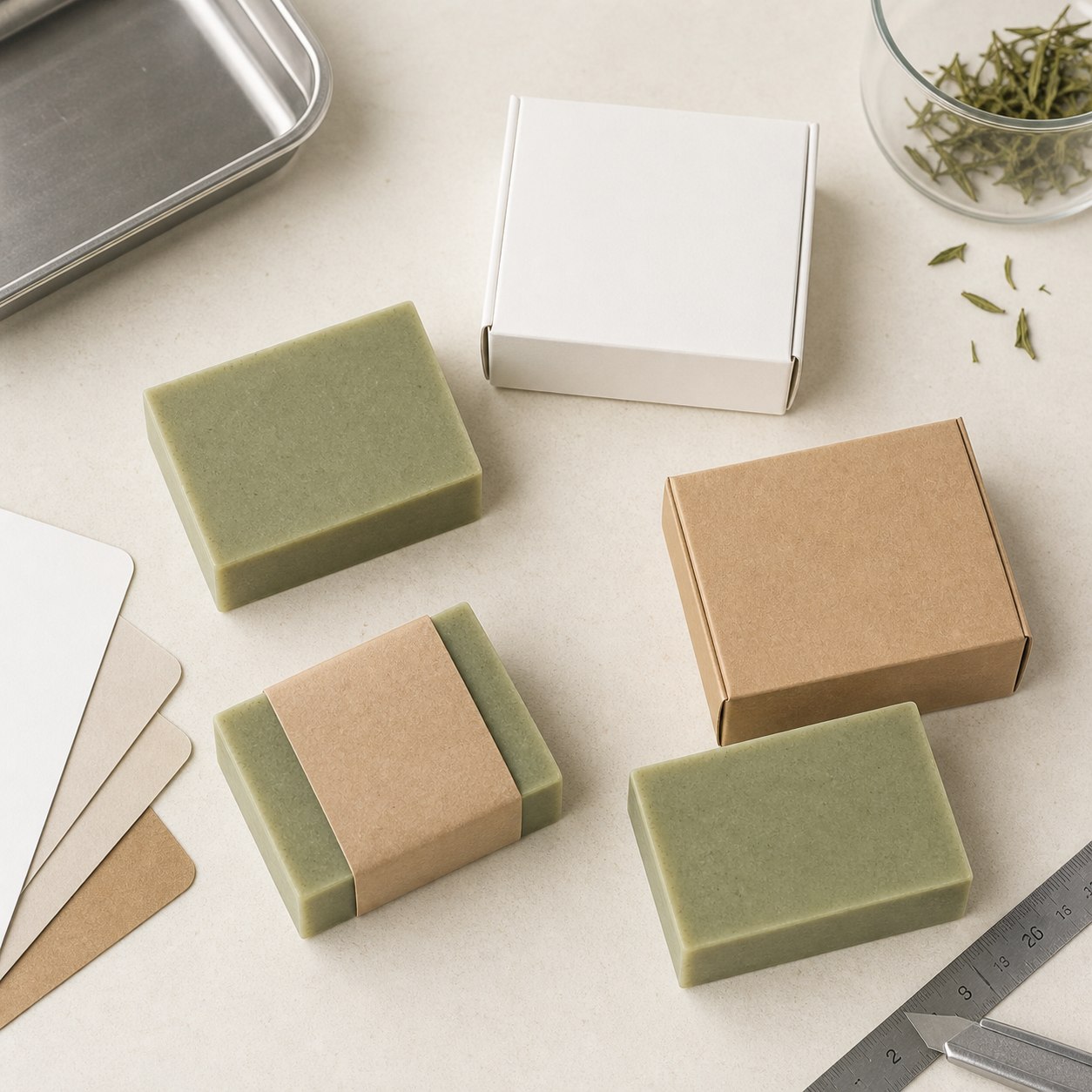
For a brand buyer, distributor, salon group or marketplace seller, the fastest route to a useful quotation is to make the product decisions visible. A short brief lets the formulation, packaging and export teams review the same project instead of solving different versions of it.
What is a private label facial cleansing bar?
A private label facial cleansing bar is a solid facial-cleansing format developed for a buyer’s brand, channel and target market. The factory may work from an available base direction, adjust an existing formula concept, or develop a custom formula after technical review. It should not automatically be described as traditional soap, syndet, pH-balanced or suitable for a particular skin condition unless the actual formula and supporting tests justify that language.
That distinction matters at the first sample meeting. “Green tea bar” is a visual or ingredient direction; it does not define the cleansing system, fragrance, foam, rinse profile, skin feel or permitted claims. The buyer should describe the experience they want and let the technical team confirm which route is feasible.
Decisions to make before the first sample
| Buyer decision | Examples to discuss | Why the factory needs it |
|---|---|---|
| Target customer and channel | Beauty brand, spa, travel retail, Amazon, TikTok Shop or wholesale | Sets the pack, content and presentation priorities |
| Cleansing experience | Light or rich foam, quick rinse, low-fragrance or fragrance-free direction | Guides formula and sensory sample work |
| Appearance | Muted botanical color, plain bar, embossed logo direction or paper band | Affects tooling, artwork and pack-fit review |
| Pack structure | Bare bar with band, folding carton, inner wrap, travel case or set box | Changes material, size, assembly and quotation inputs |
| Sales market | Country, language, channel and responsible-party details | Defines the label information that must be reviewed |
Brief the formula by experience, not by trend words
A useful formula brief starts with what the buyer wants a user to notice during and after washing. Describe the preferred foam level, slip, rinse speed, fragrance strength, color range and after-rinse feel. If a botanical direction such as green tea, centella or oat is important, identify whether it is part of the ingredient story, the visual concept, or both. The factory can then confirm the available raw-material documentation and the wording that is supportable for the target market.
Avoid asking the supplier to place detox, antibacterial, acne treatment, whitening or guaranteed “natural percentage” statements on the pack without evidence and market review. Cosmetic wording can describe cleansing, a fresh feel, a comfortable after-rinse feel or support for a simple routine when those statements match the formula. Patch-test guidance and directions should also be reviewed for the finished product and destination market.
Choose packaging around handling and channel reality
Solid formats can simplify the visual story, but the packaging still has work to do. A paper band gives buyers a low-component presentation for samples or selected channels. A folding carton gives more room for ingredient, warning, responsible-party and multilingual information. An inner wrap or other moisture-management layer may be considered after compatibility, storage and transport review. A travel case or set box changes the buyer decision again because fit, drainage, insert material and assembly must be checked.
Recent beauty and personal-care packaging programs have kept refill, material reduction and usability in the same conversation. That does not mean every cleansing bar should make a sustainability claim. It means buyers should ask for the material specification, pack weight, recyclability basis, print finish and market-specific claim review before putting an environmental message on the carton. A simple uncoated kraft look is a design choice; it is not proof of a lower-impact pack by itself.
What to inspect at the sample and QC table
The sample review should begin with the real bar and the real pack components. Check the bar dimensions, weight target, edge condition, surface uniformity, color consistency and fragrance against the approved reference. During use testing, note foam, handling, rinse and after-feel instead of relying only on a marketing description.
Next, place the sample into the intended paper band, inner wrap, carton or tray. Confirm fit without crushing, excess movement or difficult removal. Review label placement, barcode quiet space if applicable, artwork margins, readable type size and the order of multilingual information. A final production specification should define what the approved sample looks like and which checks will be repeated before packing.
For export preparation, the buyer and supplier should also confirm the destination market, product identity, nominal content, ingredient list format, warnings, batch or traceability information, responsible-party details and any channel-required fields. Requirements differ by market, so the final label should be reviewed against the applicable rules rather than copied from a competitor package.
How MOQ, quotation and timing are confirmed
There is no responsible single MOQ or price for every facial cleansing bar project. Quotation depends on the formula route, bar size, tooling or embossing, packaging components, print method, quantity, label languages, testing needs and shipping plan. A stock carton with a label may have a different commercial structure from a custom-size printed carton or a multi-piece set.
Sample and production timing can be confirmed after formula and packaging review. A buyer can shorten the first round by supplying the sales market, target quantity range, desired bar weight, pack reference, artwork status, fragrance direction and required launch date in one RFQ.
RFQ checklist for a facial cleansing bar
- Target country, sales channel and buyer type.
- Desired cleansing and after-rinse experience.
- Ingredient or botanical directions that need technical review.
- Bar weight, dimensions, color and logo or embossing preference.
- Paper band, carton, inner wrap, travel case or set-box direction.
- Target quantity range and whether a lower-MOQ packaging route is needed.
- Label language, artwork status and responsible-party information.
- Sample deadline, launch window and shipping destination.
GUOCUI BIO TECH can review these inputs with buyers before formula, packaging and quotation confirmation. Explore the B2B product catalog, see cleansing bar and soap directions, review the private label customization process, or send a project brief to the export team.
Frequently asked questions
Can a buyer start with a generic LOGO carton?
Yes. A generic LOGO or blank carton can be used as a private label sample placeholder. Final public artwork still needs the buyer’s brand files, required label information and market review.
Can the bar use a botanical color without a strong claim?
Yes. Color, fragrance and ingredient-story directions can be discussed separately from efficacy claims. The finished formula, stability, compatibility and permitted wording still need review.
Is a paper band enough for every market?
No. The correct structure depends on handling, moisture exposure, transport, label space, retail protection and local requirements. A carton or inner layer may be needed after package-fit review.
What should the buyer approve before mass production?
The buyer should approve the formula sample, sensory reference, bar dimensions, pack components, artwork proof, label text and the agreed production specification.
How is the final MOQ confirmed?
MOQ and quotation can be confirmed after formula, packaging, quantity, artwork and order-plan review. Custom cartons, tooling and multi-piece sets may have different minimums from simpler stock-pack routes.
Source context
- U.S. FDA Cosmetics Labeling Guide — background for label-information review; destination-market requirements still need project-specific confirmation.
- Official 2026 beauty packaging program — current context for packaging-system and material discussions, not a template to copy.
- Official 2026 personal-care packaging research — current context on usability and packaging-system decisions; the reported data is not used as a claim for this product direction.