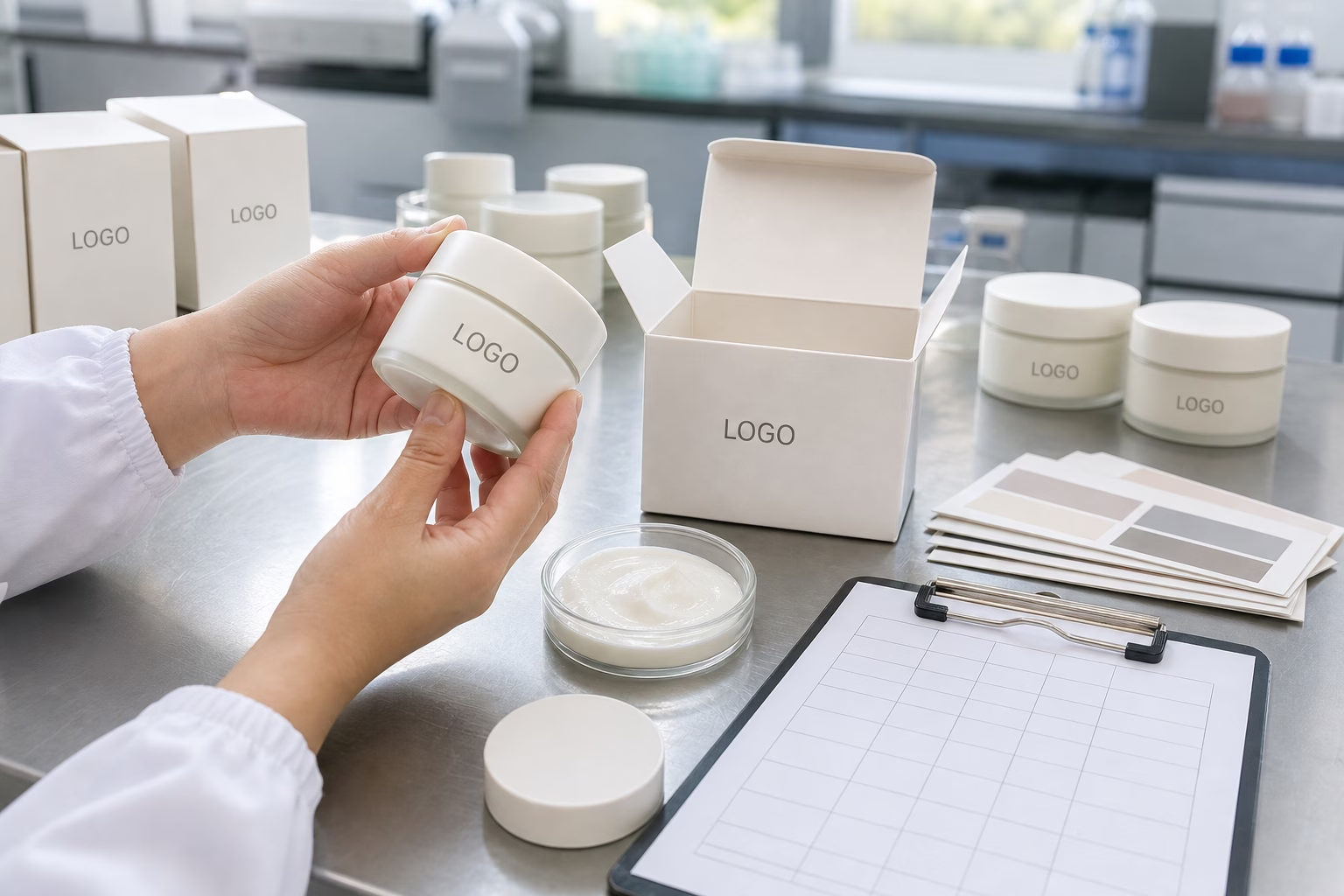
Direct Answer For Private Label Buyers
A lightweight moisture cream OEM brief should tell the factory what the product should feel like, where it will be sold, which packaging direction is preferred, what label language must be reviewed, and how the first sample will be judged. The brief does not need to be complicated, but it should be concrete enough for the factory team to discuss texture, component fit, artwork, QC checks, and quotation logic before sample work begins.
GUOCUI BIO TECH treats this type of project as a practical B2B product-development conversation. The buyer may be preparing a simple daily moisturizer for an online beauty store, a salon/spa retail shelf, a distributor catalog, or a starter private label skincare range. The useful starting point is not a long ingredient wish list. It is a clear commercial brief that connects product texture, target buyer, packaging, label requirements, and first order planning.
Why Lightweight Moisture Creams Are A Useful OEM Direction
Many skincare buyers are moving toward simpler daily routines, softer textures, and formulas that are easier to explain. Public 2026 skincare coverage continues to emphasize gentler routines, barrier-support positioning, microbiome-aware language, and long-term skin comfort rather than harsh or overcomplicated product stories. For an OEM buyer, that does not mean copying a trend phrase. It means building a product page, sample plan, and label review around credible cosmetic language.
A lightweight daily moisture cream can sit in several B2B channels. It can be the first moisturizer in a starter line, a soft daily cream in a spa retail set, a simple face cream for a distributor catalog, or a moisturizer paired with cleanser and serum in a cross-border beauty seller launch. The product should be easy to sample, easy to package, and easy to explain without unsupported performance promises.
The Minimum Brief A Factory Needs
A practical lightweight cream brief should start with the sales channel. A TikTok Shop seller may need fast visual explanation, compact packaging, and a simple routine story. A salon buyer may care more about texture, hand feel, back-bar sampling, and label clarity. A distributor may need neutral packaging, multilingual label planning, and enough flexibility to serve several retail accounts. These decisions change formula texture and packaging more than many new buyers expect.
The second part is texture. Do you need a gel-cream, lotion-cream, soft cream, or richer cream for dry-weather markets? Should the finish feel dewy, fast-absorbing, soft-touch, or low-residue? These words are more useful than asking for a generic moisturizer because the sample team can compare the brief against real touch points.
The third part is packaging. A jar can feel familiar and premium, but it may not fit every channel. A tube is practical for travel and online bundles. An airless pump can support a cleaner presentation, while a carton gives more room for label information and brand story. The buyer should tell the factory which component type is preferred, whether a set box is needed, and whether artwork is ready.
Formula Direction Without Overclaiming
Ingredient direction should be written as a discussion point, not as a final public claim. Buyers can ask about humectant-led hydration, hyaluronic acid moisture feel, panthenol comfort feel, ceramide-positioned barrier support, low-percentage niacinamide tone-care positioning, or fermented skincare ingredient storytelling. The factory can then review feasibility, texture, cost, label wording, and local market compliance.
For public product pages and retail packaging, keep wording cosmetic and support-oriented. Avoid turning a daily moisturizer into a medical or problem-solving product unless the claim has been reviewed for the target market. A B2B OEM page should help buyers decide what to ask for, not promise outcomes that have not been tested or approved.
Packaging And Label Details To Prepare Early
Packaging can delay a launch if it is treated as an afterthought. Before sampling, prepare a short packaging note that covers preferred component, color direction, cap style, label area, outer carton, and whether the product will be sold alone or in a set. If the launch needs multilingual packaging, tell the factory before artwork starts so the label area and carton structure can be reviewed.
Label language should also be checked early. The front label can stay simple: product name, brand mark, and product type. The back label needs more care: ingredient list, directions, warning language, batch information, company details, barcode needs, and destination-market requirements. If the buyer has not prepared final artwork, GUOCUI can still discuss component and label-area options before quotation.
Sample Review Checklist
| Review Item | What To Check | Why It Matters |
|---|---|---|
| Texture | Gel-cream, lotion-cream, soft cream, or richer cream direction | Helps align product feel with sales channel |
| Finish | Fast-absorbing, dewy-feel, soft-touch, or low-residue finish | Gives the factory a clear sample target |
| Packaging | Jar, tube, airless pump, carton, label space, cap color | Connects formula viscosity with component choice |
| Artwork | LOGO, front label, back label, carton, multilingual needs | Prevents late label and packaging rework |
| QC | Appearance, fill, label placement, carton fit, shipment preparation | Creates a cleaner path from sample approval to bulk planning |
Quotation Information Buyers Should Send
Quotation depends on formula direction, packaging, quantity, label requirements, and shipping plan. A useful inquiry should include target market, sales channel, preferred texture, packaging style, estimated first order quantity, artwork readiness, and launch timing. If the buyer has ingredient restrictions, fragrance preferences, vegan or cruelty-free positioning, or specific label-language limits, those should be shared before the quotation is finalized.
For a first discussion, it is acceptable to provide a range or target plan rather than a perfect specification. The important point is to give enough information for the factory to review sampling path, component options, and practical order planning.
FAQ
Can a lightweight moisture cream be customized for private label?
Yes. Texture, ingredient direction, packaging component, LOGO label, carton, and set presentation can be reviewed for private label, OEM, or ODM projects.
Should the buyer choose packaging before formula sampling?
The buyer does not need final packaging before the first discussion, but the preferred packaging direction should be shared early because component choice can affect texture, fill, label space, and quotation.
Can this direction fit salon, spa, distributor, and online seller channels?
Yes, but the brief should name the target channel. A salon/spa product may need a different texture and presentation than an online seller bundle or distributor catalog item.
What is the safest way to write product claims?
Use cosmetic, sourcing-first language and review local market rules before final packaging. Describe texture, packaging, routine fit, and sample review instead of unsupported performance claims.
Next Step For GUOCUI Buyers
If you are preparing a lightweight daily moisture cream, send GUOCUI BIO TECH your target market, channel, texture preference, packaging idea, estimated quantity, artwork status, and launch timing. The team can then discuss formula direction, sample review, packaging options, QC points, and quotation logic before you commit to a final private label plan.
Related product page: Private Label Lightweight Daily Moisture Cream.
Leave a Reply