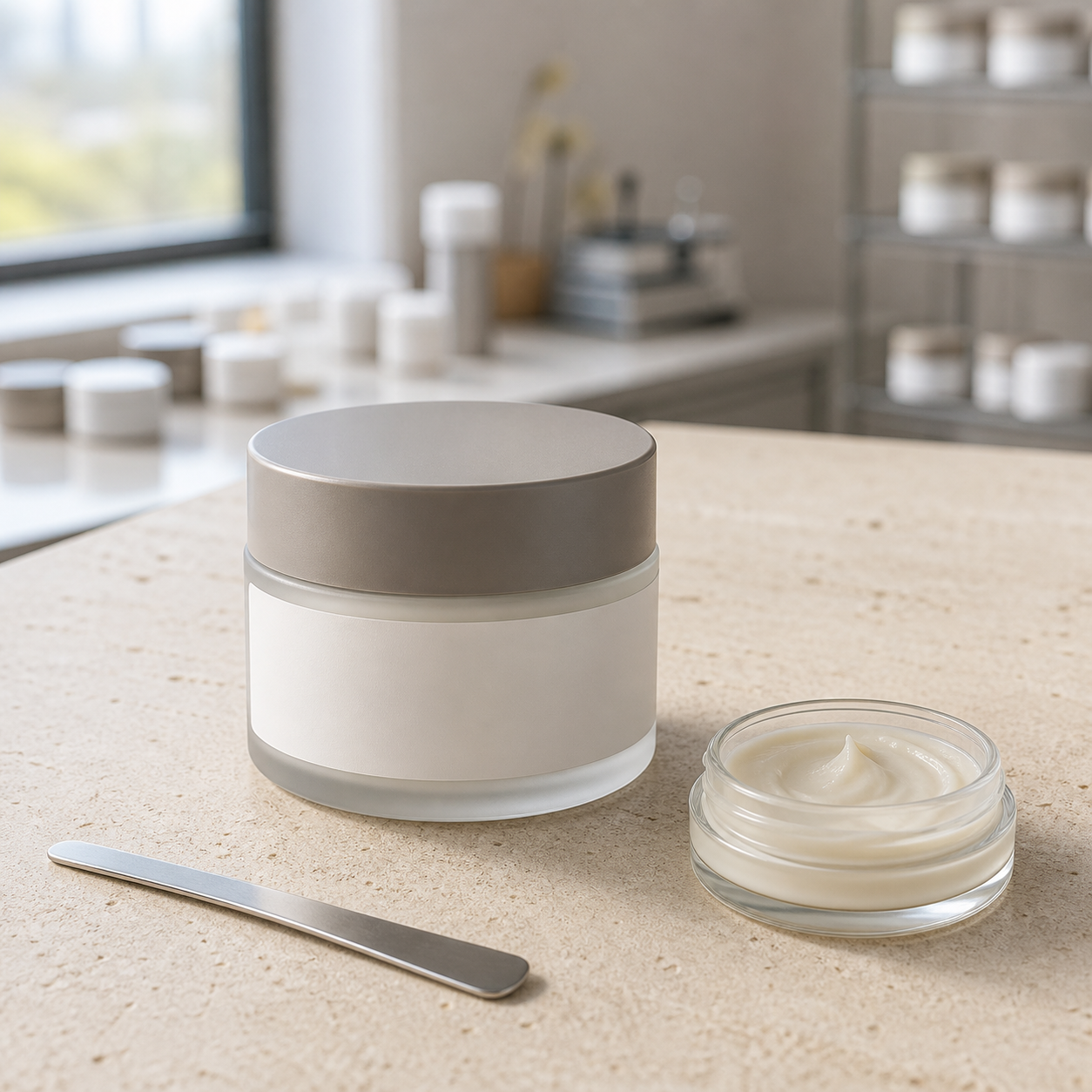
Direct answer: A useful pre-makeup moisturizer primer OEM brief should define the desired skin feel, makeup-preparation finish, formula boundaries, package route, target channel, order plan and destination market before samples are made. This gives the factory a practical basis for texture trials, package-fit checks, label review and quotation. It also prevents a hybrid product from becoming a vague promise that is difficult to sample, explain or approve.
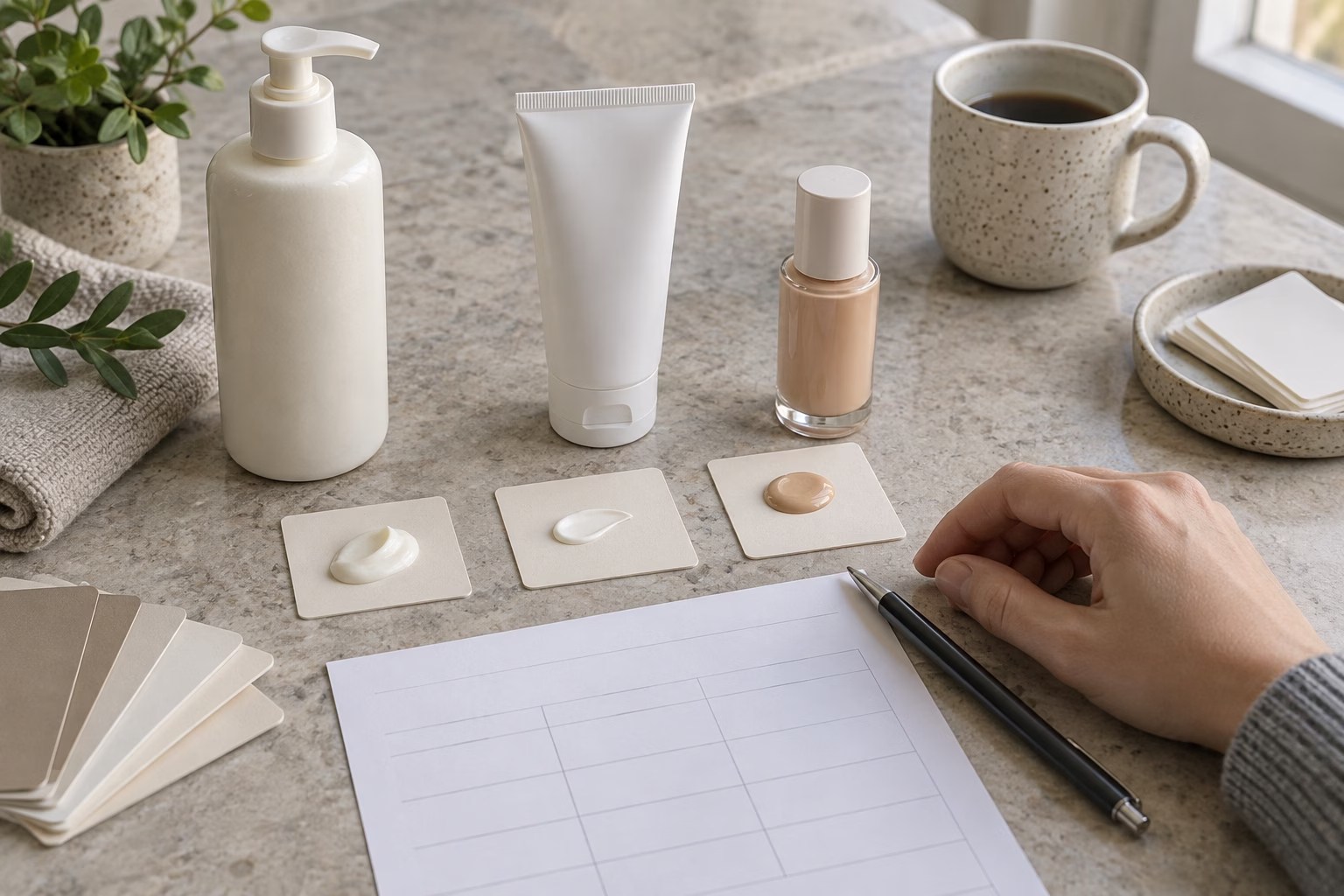
A moisturizer-primer hybrid is a cosmetic skincare direction that combines a moisturized after-feel with a surface finish intended to prepare skin for makeup. For private-label buyers, the important question is not whether two retail category names can be placed on one label. The useful question is which texture, finish, package and claim set will make sense for the intended customer and channel.
Moisturizer, primer or one makeup-prep step?
A daily moisturizer brief often starts with hydration feel, comfort and routine position. A makeup primer brief may focus more on slip, finish, pilling behavior and how makeup applies over the surface. A hybrid project must decide which job leads. If the buyer wants a skincare-first product, the sample may prioritize a comfortable cream and a natural-looking finish. If the project is makeup-led, faster absorption and controlled surface slip may be more important.
Short conclusion: choose one lead function and one supporting function. “Moisturizer with a makeup-ready finish” is usually clearer for sampling than a long list of unsupported performance promises.
What the factory needs before the first texture trial
GUOCUI BIO TECH / Guangzhou Guocui Biological Technology Co., Ltd. can use a structured buyer brief to compare feasible formula and packaging routes. Before a sample discussion, the buyer should answer the following questions:
- Is the target feel buttery and cushioned, light and fast-absorbing, or balanced between the two?
- Should the finish look softly dewy, natural, or less shiny?
- Which makeup products will normally be used after it?
- Is the main channel skincare retail, makeup retail, salon, spa, Amazon, TikTok, wholesale or a starter set?
- Are there preferred ingredients, exclusions, scent limits or destination-market claim restrictions?
- Does the project need a jar, airless jar, pump, tube, mini size or coordinated set?
Formula direction should describe a result, not borrow a campaign
A buyer may discuss humectant, emollient and barrier-supporting cosmetic directions, including hyaluronic-acid-positioned hydration, panthenol, niacinamide or ceramide-positioned care. Those are starting points, not a finished public claim set. Exact ingredients, percentages and label language should follow feasibility, sample and destination-market review.
It is also useful to describe what the product should not do. A very rich film may conflict with a humid-market brief. A quick-dry texture may not suit buyers who want a cushioned massage step. A strong scent may be unsuitable for a makeup artist or sensitive-skin-positioned channel. These tradeoffs are easier to resolve on a sample table than after artwork is printed.
Sample evaluation: test the routine, not only the cream
During sample review, check spread, absorption time, surface feel and scent. Then evaluate the sample under representative makeup products rather than assuming universal compatibility. Observe visible pilling, patchiness, excessive slip and how the finish changes after a normal waiting period. Record the amount used and the order of application so feedback is repeatable.
This is a cosmetic-use assessment, not a clinical performance test. If a buyer wants a specific wear, hydration or measured claim, the evidence and wording route must be discussed separately. A factory should not turn an informal sample impression into an unsupported numerical promise.
Choose packaging after texture direction is credible
| Package route | Why a buyer may choose it | What to verify |
|---|---|---|
| Compact airless jar | Premium cream presentation with controlled dispensing | Fill compatibility, evacuation, cap fit, decoration and refill availability |
| Airless pump | Familiar skincare format and cleaner dose handling | Viscosity, pump output, dip tube or airless system and label area |
| Soft tube | Travel, salon kit or online-channel convenience | Tube material, closure, crimp, print route and carton fit |
| Conventional jar | Direct access to a richer cream texture | Inner lid, spatula option, closure, label and handling instructions |
Capacity, component material, color, decoration, label stock, carton and shipping protection can affect MOQ, quotation and timeline. A stock component with custom label work is a different project from a custom-colored package or a multi-size range.
Channel decisions change the brief
An Amazon or TikTok seller may need a texture that can be demonstrated clearly on camera, a compact information hierarchy and a package that survives parcel delivery. A makeup artist program may prioritize pump hygiene, kit size and compatibility with several complexion routines. A salon or spa may want a professional back-bar size plus a retail take-home unit. A distributor may care more about multilingual artwork, carton marks and a coordinated range that can be explained across several markets.
The formula does not need to become completely different for every channel, but the buyer should identify the lead channel before finalizing texture, capacity and claims. That decision reduces late artwork changes and makes quotation comparisons more meaningful.
Factory workflow from brief to packing preparation
- Brief review: target buyer, channel, texture, finish, formula limits, package, quantity range and market.
- Feasibility discussion: formula direction, component availability, label boundary and sampling route.
- Sample evaluation: application, after-feel, scent and makeup-preparation behavior are recorded.
- Package-fit check: closure, dispensing, label position and carton structure are reviewed with the selected texture.
- Artwork confirmation: logo, multilingual copy, barcode, carton marks and required buyer information are checked before printing.
- QC and packing preparation: approved appearance, fill, closure, label placement, carton and shipment instructions are used as checkpoints.
MOQ, quotation and timeline: what changes the answer?
MOQ and quotation can be confirmed after formula, packaging and order-plan review. The main variables include formula route, component availability, decoration, label and carton work, quantity, testing or document requests, set assembly and shipping plan. Sample and production timeline can be confirmed after formula and packaging review. Publishing an invented fixed number before these inputs are known would make the buyer decision less reliable, not more convenient.
Buyer handoff checklist
- Target country, channel and intended retail position.
- Lead function: skincare-first moisture or makeup-first preparation.
- Desired texture, finish, scent and ingredient direction.
- Reference capacity and preferred jar, pump or tube route.
- Logo, label languages, carton, barcode and set requirements.
- Estimated quantity range, sample deadline and launch date.
- Testing, documentation, packing and shipping requirements.
Give the factory a control and two separate waits
Compare the same sunscreen and foundation routine with and without the candidate cream. The control omits only that cream. Keep sunscreen use consistent with its directions. Record each product and variant, batch where available, applied amount, tool and application pattern. Record cream-to-next-layer and sunscreen-to-foundation elapsed times separately.
Use neutral cream codes and collect evaluator feedback before revealing the formula key where practical. Rotate presentation order across repeats. Keep particles, patchiness, drag and excess slip as separate observations. If the control also shows particles, review the base routine before changing the cream. Agree the next formula or package question from those records. This development comparison supports no universal compatibility or wear claim.
Prepare the detailed matrix on the pre-makeup moisturizer primer product page.
FAQ
Can a private-label moisturizer also be positioned for makeup preparation?
Yes, if the approved texture, sensory result and public wording support that position. The brief should state which function leads and how the buyer will evaluate the sample.
Can GUOCUI discuss both cream and gel-cream samples?
Different sensory directions can be reviewed based on channel, climate, finish and package. Final feasibility and sample scope are confirmed after the buyer brief.
Should packaging be selected before the formula?
A preliminary package route helps sourcing, but final component confirmation should follow texture and compatibility review. Viscosity, dispensing and decoration can change the practical choice.
Does a low-MOQ direction mean one fixed quantity?
No. MOQ depends on formula, stock or custom components, decoration, label and carton work, SKU count and order plan. Send the quantity range so the factory can compare feasible routes.
What must remain in a no-cream control?
The same preceding skincare, sunscreen and foundation. Omit only the candidate cream, and record applied amounts, actual waits and application method.
Explore the GUOCUI product catalog, Face collection, Facial Cream collection and Customization service. To prepare a factory review, send the checklist through Contact GUOCUI.
Leave a Reply