Direct answer: An anhydrous body balm OEM project should be approved against a temperature-and-use test plan, not only a pleasant first-touch sample. Before quotation, the buyer and factory should define the target firmness, pickup, melt speed, graininess limit, after-feel, fill format, climate route, and cosmetic claim boundary. Those decisions make it possible to compare formula samples and jar-or-stick packaging without inventing a fixed MOQ, price, or production time.
A current precision-fermented lipid launch has renewed supplier discussion around soft-solid balm and stick textures. That is a formulation signal, not proof of demand or a finished GUOCUI formula. GUOCUI BIO TECH uses it to turn desired melt and glide into measurable sample checks.
What is an anhydrous body balm OEM project?
An anhydrous body balm is a water-free or very-low-water cosmetic format built mainly from oils, butters, waxes, structuring materials, and compatible ingredients. It may use a jar, tin, or twist-up pack. “Anhydrous” does not automatically mean stable, preservative-free, sustainable, or suitable for every climate; those points require documents and testing.
For a private label buyer, the useful question is: “Which firmness, pickup, melt, residue, climate, package, and claim combination should the sample prove?” A spa jar and a marketplace stick may need different scorecards.
Lock the target profile before the first sample
| Decision | What the buyer should define | What the sample review should record |
|---|---|---|
| Firmness | Soft scoop, medium balm, or stick-supporting structure | Surface resistance, scoop or twist-up behavior, and recovery after use |
| Melt | Fast melt, controlled melt, or longer massage glide | Pickup, liquefaction speed, spread area, and warm-room behavior |
| Finish | Dry-touch, cushioned, glossy, or massage-oriented finish | Slip, tack, residue, clothing transfer, and observation at fixed times |
| Climate route | Expected storage, transit, warehouse, and consumer temperatures | Softening, oil separation, sweating, graininess, odor, and package leakage |
| Channel | Spa, salon, marketplace, wholesale, hotel, travel, or gift set | Hygiene, dose, label space, demonstration, and secondary-pack needs |
Five tests that separate a useful balm sample from a mood board
1. Firmness and pickup
At a controlled room condition, record surface appearance, spatula resistance, pickup amount, and whether the surface recovers or tunnels. For a stick, check advance, payoff, drag, edge chipping, and retraction. Use language a formulation team can reproduce.
2. Melt, spread, and after-feel
Use a fixed amount on a defined area and record the passes needed to melt and spread. Compare immediate glide with the finish after several minutes. A fast, low-tack melt and a slower massage format are different sensory targets, not medical claims.
3. Graininess and recrystallization
After heating, cooling, transport, or cycling, look for grains, crystals, bloom, sweating, sinkholes, color shift, and uneven pickup. One smooth fresh sample does not prove the texture will survive the buyer’s shipping route.
4. Odor and oxidation control
Record initial odor and color, then compare retained samples through the agreed stability plan. Ingredient quality, headspace, light, component choice, and opening pattern may matter. Never promise shelf life from a trend page or an untested sample.
5. Filled-pack behavior
Test the balm in the intended jar, tin, or stick. Check fill appearance, cooling pattern, closure cleanliness, liner compatibility, leakage, staining, label scuffing, and repeated opening. A premium-looking jar may still fail a warm shipping route.
Jar, tin, or stick: compare the complete buyer experience
- Jar: shows texture and allows larger pickup, but needs hygiene, thread, and temperature decisions.
- Metal tin: can suit travel or gifts; confirm lining, dent risk, closure fit, and opening force.
- Twist-up stick: supports direct use, but requires payoff, advance/retraction, heat, drop, and cap checks.
- Mini: helps channel evaluation only when fill, seal, directions, and full-size relationship are clear.
Quotation depends on formula route, ingredient documents, fill weight, component availability, decoration, label or carton work, quantity, and shipping plan. MOQ, sample timing, and production timing can be confirmed after those variables are reviewed. GUOCUI does not use a generic online purchase flow for this decision.
How to use a new lipid or butter signal without copying a supplier
A supplier page may show body balm, stick, or lip formats to explain an ingredient. Keep the public GUOCUI direction independent. Ask for INCI identity, origin, TDS, SDS, CoA availability, recommended use, storage, compatibility, oxidation information, regulatory status, supply terms, and any intellectual-property boundary. Then compare a documented option with a conventional control formula. Do not copy the supplier’s trademark, formula number, photography, claims, or exact ingredient story into the buyer-facing page.
Public copy should stay within cosmetic use and available evidence. Moisturized feel, softer feel, smooth application, glide, comfort, and appearance-focused language may be discussed after review. Healing, pain relief, anti-inflammatory action, disease treatment, cell regeneration, or guaranteed repair are outside this page’s cosmetic scope. In the United States, treatment or body-structure claims can change the regulatory category; EU cosmetic claims also need adequate support and must not create competitor confusion.
Factory handoff: what happens after the brief
- The export team confirms market, channel, user moment, target texture, pack format, fill weight, fragrance direction, and claims to review.
- The formulation discussion converts “melting” and “non-greasy” into sample controls, observation times, and climate conditions.
- Samples are reviewed for firmness, pickup, melt, spread, graininess, odor, residue, and package behavior.
- The selected formula is checked in the selected component before artwork, label localization, carton, and shipping details are locked.
- QC points, retained-sample expectations, batch information, and final commercial variables are confirmed before bulk planning.
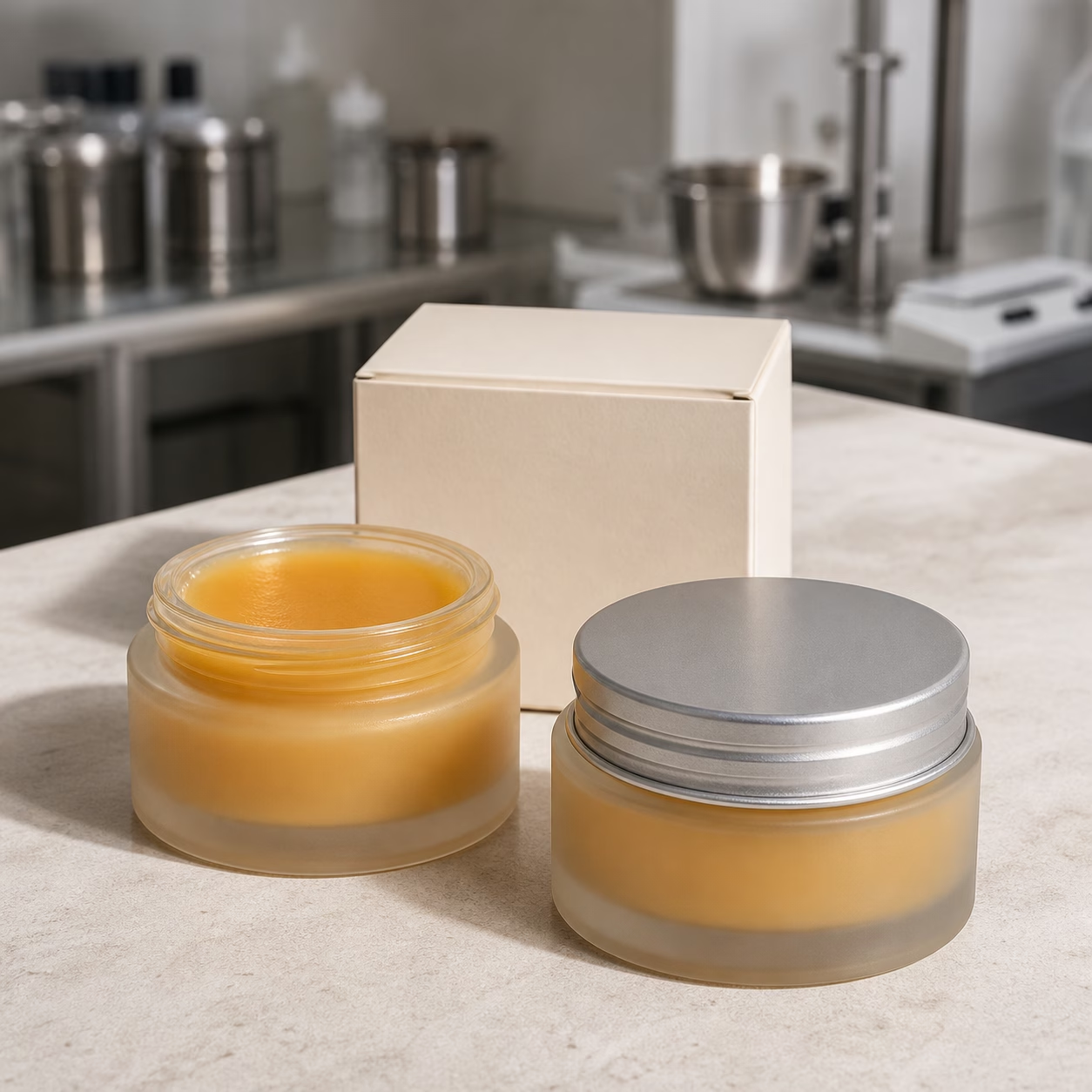
The featured image is a previously reviewed GUOCUI-owned semi-solid balm sample photograph. It shows blank jars and a generic factory sample setting. It is a workflow and texture-format example, not the exact final anhydrous formula, trend ingredient, buyer artwork, current production batch, or performance proof.
Information to send with an anhydrous body balm RFQ
- Target country, sales channel, consumer use moment, and expected climate or shipping route.
- Preferred firmness, pickup, melt speed, glide, finish, color, and fragrance direction.
- Ingredient directions to include or avoid, plus required supplier or regulatory documents.
- Jar, tin, stick, mini, fill weight, LOGO, label, carton, set, and multilingual requirements.
- Expected quantity, target launch window, sample destination, and shipping plan.
- Claims or label phrases that need destination-market review.
Explore GUOCUI’s B2B product catalog, body-care category, the related multi-zone cosmetic balm direction, and the customization process. For a claim-aware oil-to-balm line plan, review the massage oil OEM brief. When the variables are ready, send them through the Contact page.
FAQ
Does anhydrous mean the balm needs no stability testing?
No. Water-free formats can still change in firmness, crystal structure, color, odor, oil separation, and package behavior during storage and transport.
Can the same formula be filled into a jar and a stick?
Sometimes, but not by assumption. Jar pickup and stick advance, payoff, heat resistance, retraction, and cap clearance place different demands on the formula.
How should a buyer define a melting texture?
Define the starting firmness, pickup amount, melt speed, spread area, glide, residue, room condition, and observation time. A measurable brief is more useful than the word “melting” alone.
Can a supplier ingredient claim be used on the finished product?
Not automatically. Ingredient identity, use level, finished-formula evidence, target-market rules, and the exact wording must be reviewed before any finished-product claim is used.
What is the MOQ for a private label body balm?
MOQ and quotation depend on formula, fill weight, package, decoration, label or carton requirements, quantity, and shipping plan. They can be confirmed after review.
What should be approved before bulk production?
Approve the formula sample, filled package, stability plan, sensory target, claims, artwork, label and carton information, QC points, quantity, and logistics plan.
Sources and scope
The current Melt&Marble product page was used only as a recent supplier-side signal that soft-solid lipids are being discussed for body balm and stick formats. Claim boundaries were checked against FDA cosmetics labeling-claim guidance and the in-force EU common criteria for cosmetic claims. No supplier trademark, formula, formula number, image, package, performance statement, price, MOQ, or sales result was copied.
Leave a Reply