Evidence boundary, checked 8 September 2026: a company-issued release dated 5 September 2026 and its current product page confirm one new Japanese 50 mL body oil built around a visible water-and-oil system that is shaken before use. This is a product-definition signal. It does not establish category growth, sales velocity, review growth, stock pressure or demand for a GUOCUI product.
For private-label buyers, the useful question is not whether to reproduce that item. It is whether a body-care brief can use controlled phase separation to make the preparation step visible while still delivering repeatable dispensing, preservation and a practical post-shower routine. That question creates a distinct dual-phase body serum OEM sourcing path.
Verified Facts, Factory-Side Inference and What Is Not Claimed
Verified facts: Churacos announced the ULRUB body oil on 5 September 2026. The company release identifies a 50 mL product with equal water and oil layers, and the current official page instructs the user to shake until the layers mix. Both pages were readable on 8 September. These facts belong to that company’s product.
Factory-side inference: a private-label version would need the water-containing phase, emollient phase, remix window, dispenser and filled package reviewed together. The most useful early work is a comparison of phase behaviour and packaging, followed by the evidence plan for the selected formula.
Not claimed: the official launch does not show retail sell-through, natural review velocity, multi-market adoption or a proven buyer order. GUOCUI has not adopted the reference formula, ratio, colour, scent, botanical story, bottle, artwork, images or claims. No finished test, MOQ, price, capacity or production timing is established by this brief.
Why This Is a Distinct Catalogue Question
GUOCUI already presents facial dual-phase routes, uniform body serum-lotions and conventional body oils. The body serum-oil instead connects deliberate remixing with water-phase preservation and filled-pack dispensing. Refresh the existing direction when a useful sample decision changes; another scent or colour does not justify a duplicate catalogue page.
Decision 1: Define the Job of Each Phase
Brief the desired body finish, spread, tack, residue and fragrance. Discuss a humectant-led water phase and a separately selected emollient direction. Ratios and ingredients follow the buyer’s requirements and qualified formula review. A copied percentage or botanical list cannot replace that work.
Decision 2: Set a Reproducible Shake and Return Protocol
Record resting position, defined agitation, mixed appearance, visible return, foam, sediment and closure residue under consistent conditions. Keep observations tied to sample codes. An attractive swirl remains a visual observation; it cannot replace formula stability or safety evidence.

Decision 3: Measure the Dispensed Dose
Development update, checked 8 October 2026: a current Rituals dual-phase body-oil page describes a shake-and-spray body-use routine. That product definition supports a preparation question; it does not establish demand or a GUOCUI result.
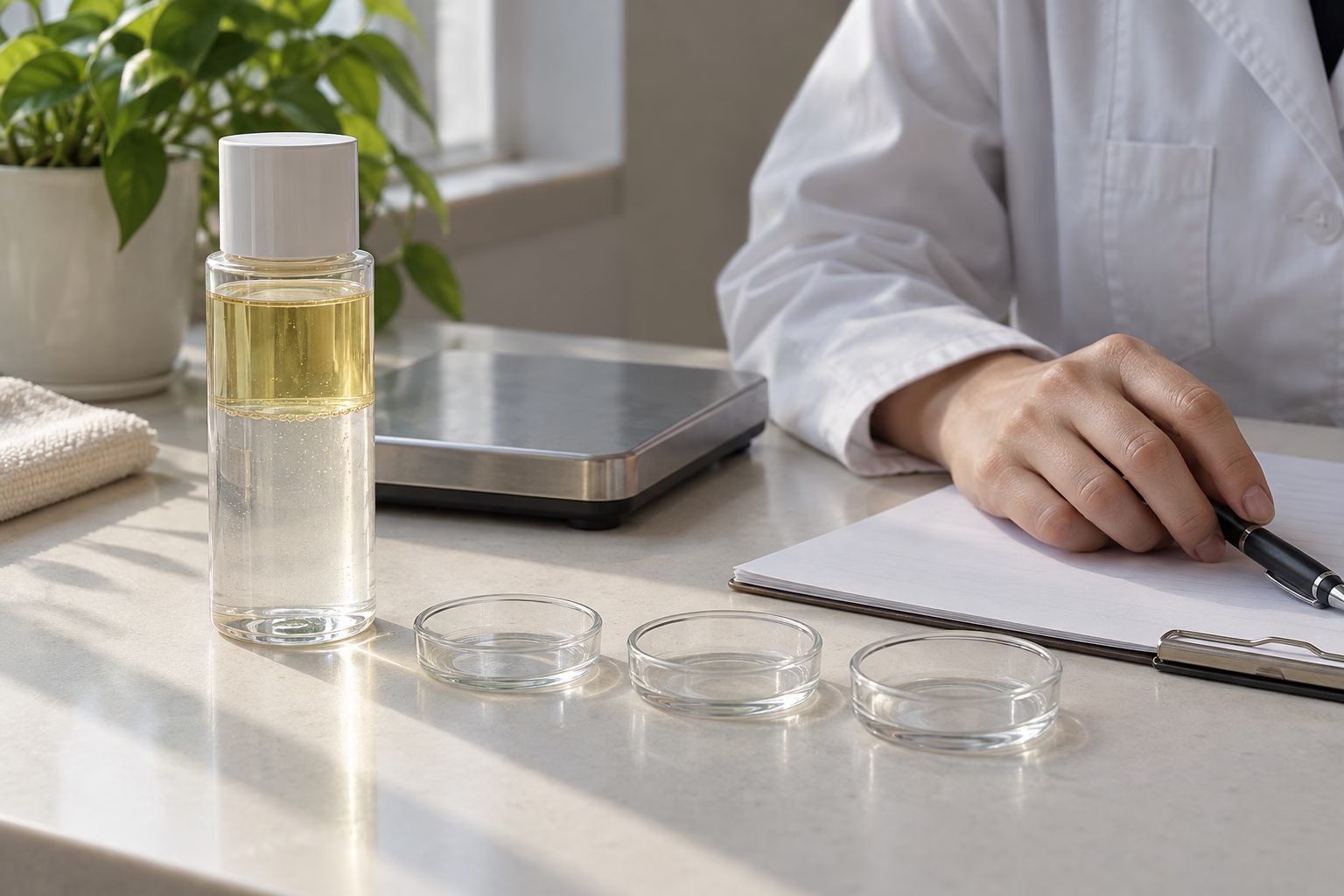
The factory-side action is to retain a pause-and-resume sequence. Connect formula revision, bottle, closure, dip tube, actual fill and prior dispensing. Keep a directly filled lower-level bottle separate from one emptied through earlier use. Record the first output, actual time since the last shake, planned and actual pause, first resumed output and later outputs individually. Reshaking starts a new sequence; it does not remove the earlier observation.
Collected mass tells the team how much material was collected. It does not prove phase composition or ingredient delivery. Visual similarity and a pooled average cannot resolve that question. If composition evidence is required, the qualified formula team should justify an appropriate measurement approach, collection procedure and interpretation. No marker assay, passing limit, output uniformity or completed GUOCUI test is established here.
The Cosmetics Europe packaging-information document is 2019 background for supplier-to-assessor information exchange. It does not prescribe this sequence or certify package performance.
Decision 4: Treat Preservation as a Core Requirement
The formula contains water, so the preservation system and microbiological protection require qualified review. The FDA microbiological-safety overview identifies raw materials, water, manufacturing, ineffective preservation, packaging, storage and consumer use as possible contamination routes. That background does not prescribe a formula or certify a GUOCUI sample.
Do not call the product anhydrous because one layer is oil-rich. Ingredient documentation, manufacturing controls, package protection and the required finished-product evidence remain tied to the actual formula and destination market.
Decision 5: Approve the Filled Package
Review bottle material, closure, gasket, dip tube, headspace, leakage and orientation using the actual filled sample. Transparency can help the user see the phases, but light exposure may affect colour or formula condition. The FDA shelf-life overview notes that water-and-oil emulsions can separate and that temperature, sunlight, air and storage affect cosmetic condition. It does not supply a ready-made duration or test temperature.
Keep formula code, component code, fill quantity and carton orientation connected in the approval record. Empty-pack fit and a one-time leak check are incomplete evidence.
Decision 6: Separate Sensory Approval, Safety and Claims
A buyer may approve the spread and after-feel while the formula or evidence review remains open. Use separate approval fields for sensory feedback, phase behaviour, package performance, safety substantiation and label wording. The FDA product-testing page explains that manufacturers can use available safety information and may need further testing to fill gaps; natural origin alone does not establish safety.
Keep public wording within cosmetic body-care use after the required review. Avoid borrowed clinical figures, retinoid equivalence, universal multi-area suitability, guaranteed absorption or fixed hydration duration. A launch article is evidence that a product exists, not permission to transfer its evidence.
A Practical RFQ for the First Sample Round
Send the market, channel, body-use setting, feel, fragrance and ingredient restrictions, preferred pack, approximate capacity, label languages, quantity range and timing. Include the intended pause between applications. MOQ, quotation and sample or production timing follow formula, components, documentation, testing and shipping review.
Frequently Asked Questions
Does the September launch prove demand for dual-phase body oil?
No. It verifies one dated product launch and product definition. Sell-through, review velocity and multi-channel growth were not established.
Why not add this direction to an existing body oil page?
The water-containing phase, defined remix step, preservation route and dose consistency create different filled-pack decisions from a conventional single-phase oil.
Should the two phases use an equal ratio?
Not by default. A buyer-owned ratio should follow the target feel, remix behaviour, preservation plan and dispenser results.
Can an attractive separation pattern count as stability evidence?
No. It is one visual observation. The actual formula and pack need the agreed stability, compatibility, safety and microbiological evidence.
What is the safest first commercial action?
Prepare a formula-and-package brief and a bounded sample comparison. Do not lock artwork, public claims or production terms before the filled-pack route is reviewed.
Sources and Next Step
- Churacos company release, 5 September 2026: confirms the dated launch, capacity and reference product’s phase structure.
- ULRUB official product page, read 8 September 2026: confirms the current exact product, shake instruction and full ingredient list.
- FDA microbiological-safety overview, read 8 September 2026: background for water, preservation, packaging and storage risks.
- FDA shelf-life overview, read 8 September 2026: background for separation and environmental exposure.
- FDA product-testing overview, read 8 September 2026: background for safety data and additional testing.
Compare the proposed Private Label Dual-Phase Body Serum-Oil with current post-shower body serum and single-phase cosmetic oil routes. Browse the Trend Center, Products and Customization, then send a dual-phase sample brief if the filled-pack questions match the project.
Leave a Reply