
Direct answer: a private label skincare line can use one packaging family without making every SKU identical. Keep a shared visual and component logic—such as related bottle finishes, closure colours, label grids and carton materials—while choosing the actual bottle, pump, tube or jar around each formula. The factory should review fill compatibility, dosage, decoration space, pack protection and order quantities for every SKU before the buyer approves a range.
What is a private label skincare packaging family?
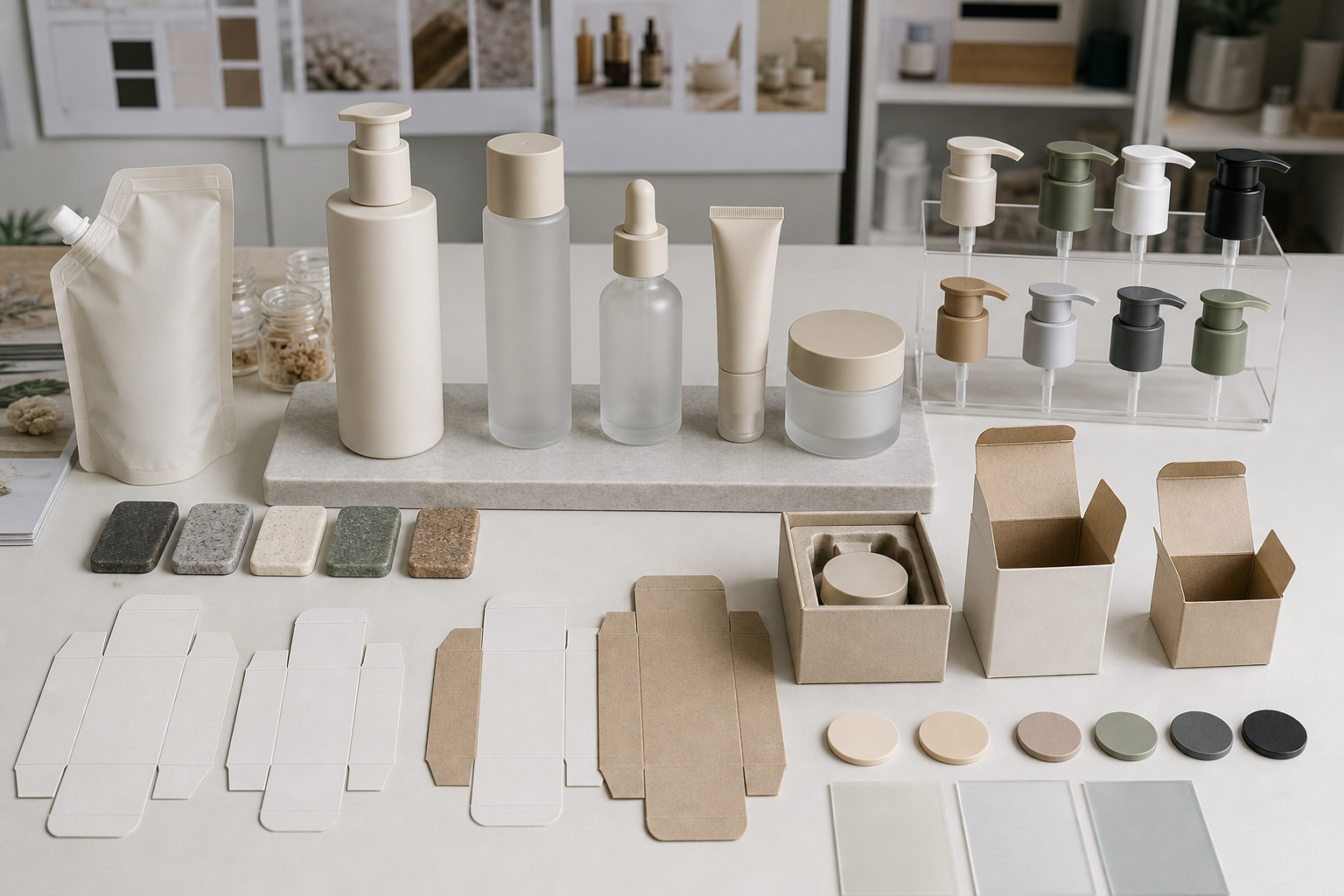
A packaging family is a planned group of components that makes several products look related and keeps factory decisions organized. A cleanser, serum and cream may use different containers, but the range can share a finish, cap colour, label structure, carton stock and artwork hierarchy. This gives the buyer a consistent shelf story while leaving room for the technical needs of each formula.
The useful distinction is between shared design rules and shared components. Design rules can often carry across the full range. Components should be shared only when the formula, fill process, dosage, capacity and use experience support them. A thick cream may need a different pump path from a fluid serum. A cleanser for the shower needs a closure and label route that can handle wet handling. A travel item may need additional leakage and pack-protection review.
Give each SKU one job in the line
Before choosing bottles, define what each product contributes to the buyer’s channel. A clear three-SKU range is often easier to sample, quote and explain than a long list of loosely related items. The roles below are planning examples, not fixed product claims.
| SKU role | Buyer decision | Packaging question |
|---|---|---|
| Hero product | Which texture or routine step should introduce the range? | Does the primary pack show the intended positioning and dosage clearly? |
| Companion product | What second format makes the routine more useful? | Can it share finishes, labels or cartons without forcing the wrong closure? |
| Travel or trial format | How will buyers sample, bundle or launch the line? | Is the smaller pack fillable, sealable, label-ready and protected for transport? |
A salon range may prioritize backbar and retail sizes. An online seller may prioritize a hero SKU, a bundle and a compact trial size. A distributor may need multilingual cartons and a clearer case-pack plan. These channel choices should be part of the first packaging discussion because they affect components, artwork, sampling and quotation.
Build the component matrix before requesting samples
Use one row per SKU and record formula format, target capacity, dispensing method, bottle or jar material direction, closure, decoration, carton and shipping protection. The matrix does not need final engineering data on day one. Its purpose is to make missing decisions visible before separate suppliers and factory teams begin working from different assumptions.
- Formula and viscosity direction: fluid serum, emulsion, cream, gel, oil, cleanser or another cosmetic format.
- Dispensing route: pump, dropper, cap, nozzle, jar opening or sachet, subject to compatibility review.
- Capacity and fill plan: target net content, sample size, travel size and full-size relationship.
- Decoration: direct print, label, sleeve or other approved route, including usable artwork area.
- Secondary pack: folding carton, insert, set box or no carton after protection and label needs are reviewed.
- Export preparation: label languages, carton marks, barcode ownership and buyer-side market review.
Do not approve a component from a catalogue image alone. The factory-side path should include physical samples or reliable component specifications, formula contact review, fill and dispensing checks, closure fit, decoration proofing and packing review. The exact checks depend on the formula, component and destination market.
Standardize the parts that reduce confusion
Standardization is most useful when it reduces artwork versions, colour mismatches or unnecessary component changes. A range may share one neutral bottle finish, two closure colours and one carton material. The artwork can then distinguish the SKU by product name, routine step and a controlled accent system. This is different from copying a competitor’s distinctive bottle, colour code or trade dress.
Keep the visual system original. GUOCUI buyers can provide a mood board, logo, market, channel and price-position direction, but reference images should be translated into a new component and artwork brief. Remove competitor names, proprietary series terms, signature shapes, famous colour combinations and copied advertising lines. A useful reference explains the buyer’s preference; it does not become a relabelled public asset.
Separate the parts that carry technical risk
Some components should remain SKU-specific even when the range looks coordinated. A pump selected for a lotion may not give the same dose or priming behaviour with a thicker cream. A dropper may suit one oil or serum direction but not another formula. A refill pouch, airless bottle or treatment-style applicator introduces its own filling, sealing, residue, cleaning and user-instruction questions.
Ask the packaging and formula teams to flag these differences early. The buyer should know which visual decisions are flexible and which technical decisions still need samples or tests. This prevents a late artwork change from being treated as a simple graphic edit when it actually changes a component, label area, carton size or filling plan.
Review the range at one sample table
A multi-SKU line should be reviewed together at least once before final artwork. Place the approved formula samples, primary packs, closures, labels, cartons and set structure in one view. Compare fill levels, cap and pump colours, label alignment, product names, routine order and the amount of visual variation across the range. Photograph the agreed direction for internal reference, but keep the component codes and written approvals attached to the project record.
The sample review should also identify what is still provisional. A bottle colour may be accepted while the pump output is still under review. A carton layout may be approved in principle while local label copy remains with the buyer’s regulatory team. Separating approved and pending decisions gives the factory, designer and buyer a cleaner handoff.
How the packaging family affects MOQ, quotation and timing
One packaging family does not create one universal MOQ or price. Quotation depends on the formula, component route, decoration, quantity, label and carton work, set assembly, sample plan and shipping requirements for each SKU. Shared materials or finishes may simplify some work, but a custom colour, mould, pump, refill part or low-volume travel pack can create a separate requirement.
For the same reason, sample and production timing should be confirmed after the formula and packaging matrix is reviewed. Buyers should avoid announcing a fixed launch date before the critical components, artwork responsibilities and approval steps are mapped. GUOCUI can discuss low-MOQ directions, but the final minimum and quotation should be confirmed from the actual range plan rather than guessed from a title.
Buyer checklist for a three-SKU RFQ
- List the three product formats and explain the role of each SKU.
- Provide the target market, sales channel and expected launch order.
- Give the preferred full-size and trial-size capacities.
- Mark which colours, finishes, closures and carton materials should be shared.
- State which formula, fragrance, texture and ingredient directions are still open.
- Provide logo files, label languages, barcode responsibility and any buyer-side review requirements.
- Share the estimated quantity per SKU, sample quantity, shipping destination and target timing.
Frequently asked questions
Must every SKU use the same bottle?
No. A coordinated range can share finishes, label rules and carton materials while using different containers selected for each formula.
Can one pump be used for serum, lotion and cream?
It should not be assumed. Formula viscosity, priming, output, residue and compatibility need to be checked for the actual component and formula.
Does shared packaging always lower MOQ?
No. It may simplify some sourcing or artwork work, but each component, colour, decoration and quantity still has its own commercial requirements.
When should final artwork begin?
Layout planning can start early, but final files should follow confirmed component dimensions, decoration areas, required copy and buyer-side market review.
What should a buyer send GUOCUI first?
Send the SKU roles, formula formats, capacities, packaging preferences, target market, quantity range, label languages and launch timing. The export team can then identify the missing sample and quotation inputs.
Continue the GUOCUI project
Browse GUOCUI Products, review the Customization process, compare the related three-product body care planning guide, or send the SKU matrix through Contact GUOCUI.
Source context
Leave a Reply