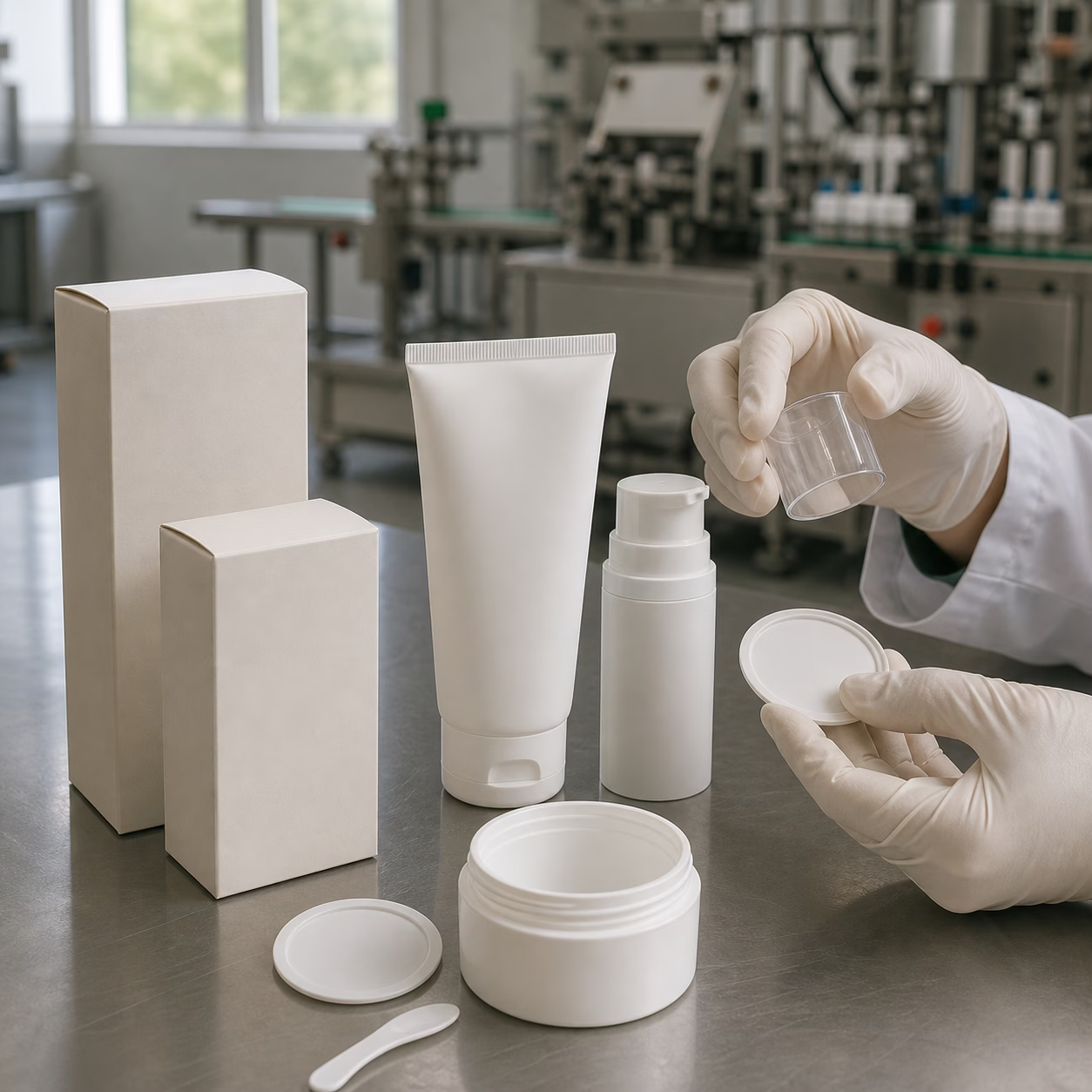
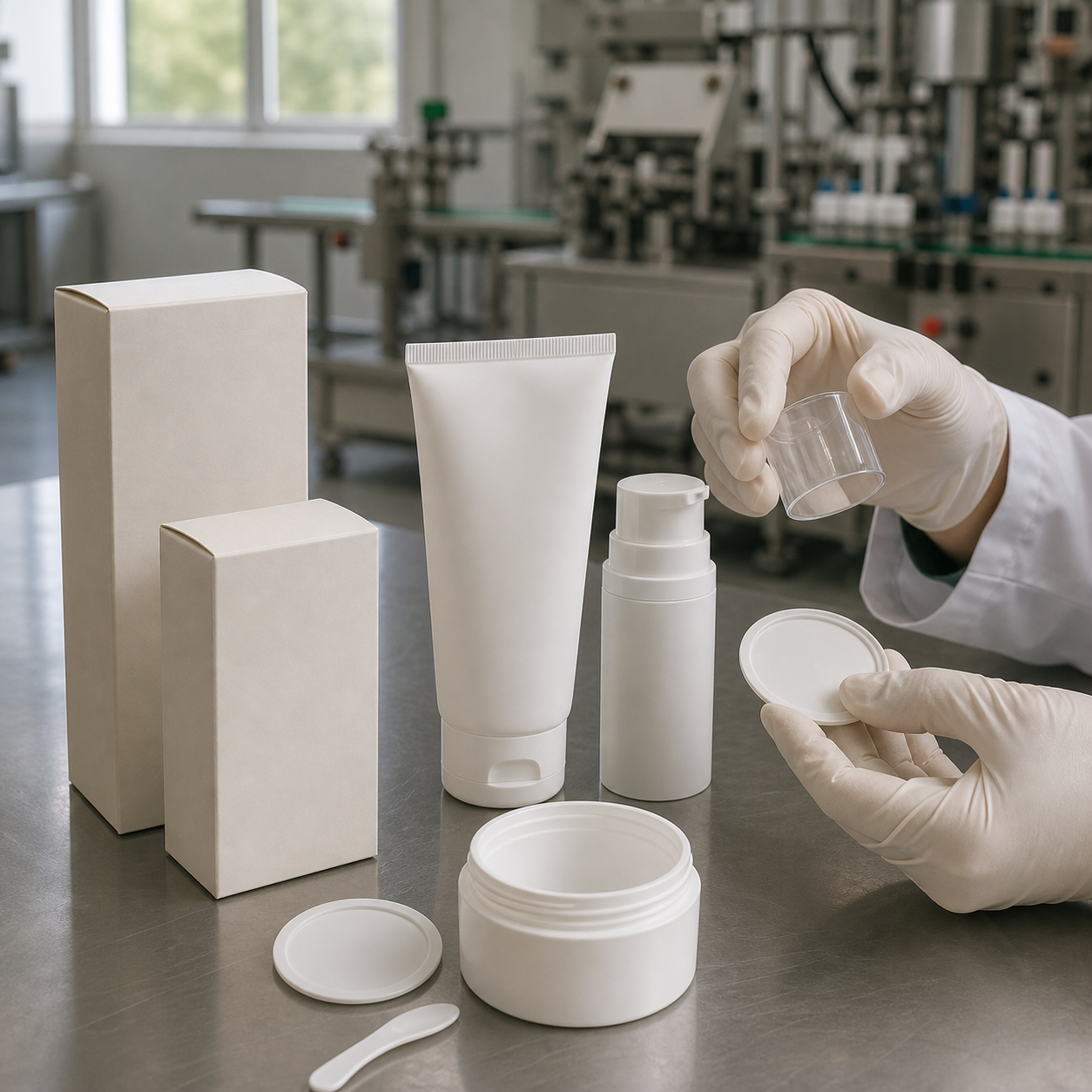
Direct answer: cleansing balm packaging should be selected after the formula direction is defined, not before it. A jar is usually the simplest route for a firm or scoopable balm. A soft tube can suit a cleaner dispensing story if the balm can move through the shoulder and orifice at the intended temperature. An airless pump may support controlled dosing, but only when viscosity, priming, evacuation, seal compatibility and filling method are proven with the actual formula. For an OEM buyer, the right first step is a small component-and-formula compatibility matrix rather than choosing the most attractive pack from a catalogue.
A recent public development note dated 10 August 2026 described a “Double Cleanser” concept combining an oil makeup-removal step with a foaming cleanser. GUOCUI treats that as a product-development signal, not proof of sales, market growth or a finished formula. The practical B2B question is what happens next: how should a buyer compare jar, tube and pump routes before artwork, quotation and production planning?
What “cleansing balm packaging compatibility” means
Cleansing balm packaging compatibility is the fit between the final formula and every component that touches, dispenses or protects it. The review includes the bulk container, inner lid, gasket, pump pathway, tube shoulder, cap, decoration, carton and shipping configuration. It also includes how the balm behaves after filling: surface sweating, crystallization, viscosity shift, fragrance interaction, leakage, priming, dose consistency and residue around the closure.
This is why a generic “airless is better” or “jars are cheaper” answer is incomplete. Aptar’s current airless-packaging pages describe systems for different viscosity ranges and formula-protection needs, while also noting that transport-test results vary by container shape, size and sample formula. The useful lesson for a private-label project is not to copy a specific supplier pack. It is to verify the selected component with the selected formula and route-to-market.
Jar, tube or airless pump: a buyer comparison
| Format | Useful starting direction | Checks before approval | Buyer decision affected |
|---|---|---|---|
| Wide-mouth jar | Firm, scoopable or slow-melting balm | Inner-lid fit, spatula storage, closure torque, surface sweating, liner contact, decoration area | Sampling experience, hygiene instructions, carton size, set architecture |
| Soft tube | More mobile balm or cream-cleanser texture | Cold and warm extrusion, shoulder blockage, orifice size, cap seal, panel feel, tail-seal stability | Travel use, dose control, filling route, label or direct-print plan |
| Airless pump | Pumpable balm, cream cleanser or first-step gel-oil direction | Priming, viscosity window, pump pathway, dose, evacuation, cap retention, leakage and compatibility | Component cost, filling method, e-commerce pack, premium positioning |
The second cleanser should be reviewed at the same time. A low-foam gel may use a tube or pump, while a cream wash or mousse route needs different dispensing work. If the pair is sold as a set, height, footprint, carton insert and use-sequence communication should be compared together.
Seven checks for the first OEM sample round
1. Define texture before requesting the final pack
Tell the factory whether the first step should be firm, buttery, sorbet-like, creamier or fluid. Include the intended climate, storage conditions and residue target. A component selected for a room-temperature sample may behave differently after warm transport or cold storage.
2. Review closure and product-contact parts
For a jar, inspect the inner lid, liner, thread engagement and torque. For a pump, identify the product pathway and check whether the formula contacts metal, elastomer or multiple resin types. For a tube, review the shoulder, cap seal and tail seal. These are engineering questions, not marketing claims.
3. Check the dose through the full pack life
A good first actuation is not enough. Record priming strokes, approximate dose consistency, evacuation and the amount left around the pump, tube shoulder or jar wall. If the product is a two-step routine, compare whether buyers can understand a practical amount for each step without inventing performance guarantees.
4. Test warm, cool and transport conditions
Ask which compatibility, stability, leakage and transport checks are appropriate for the chosen formula and destination. The exact plan depends on the project. A carton that looks correct on a sample table may still need insert, cap-retention or shipper changes for online fulfilment.
5. Keep blank samples separate from artwork approval
Approve component function first. Then review label size, direct print, colour tolerance, folding-carton structure and multilingual copy. This sequence reduces the chance that a buyer pays for decorated components before formula and pack fit are stable.
6. Review the balm and gel as one launch system
Put the two components side by side. Check shelf footprint, travel-set options, carton hierarchy and the order in which the buyer should read the labels. A coordinated routine does not require identical packs, but it does require clear roles and a consistent quotation brief.
7. Freeze one approved version before quotation
Record the formula direction, component codes or approved samples, decoration route, capacity range, carton structure and testing scope. A version lock makes later quotation changes visible. Without it, a lower price may simply reflect a different pump, resin, decoration or carton.
What GUOCUI needs before a packaging quotation
- Destination market and sales channel.
- First-step and second-step formula directions.
- Preferred jar, tube, pump or travel-set route.
- Capacity range and estimated quantity.
- Decoration, label and folding-carton requirements.
- Artwork languages and shipping destination.
- Testing, documentation and claim-review scope.
- Target cost plan and any component restrictions.
MOQ and quotation can be confirmed after formula, packaging and order-plan review. Sample and production timing can be confirmed after the formula direction and component shortlist are agreed. GUOCUI does not use one fixed public MOQ, price or timeline for every balm-and-gel project because the selected formulas, components, decoration and testing scope change the work.
Factory-side workflow for a double-cleanse packaging review
- Receive the buyer brief and clarify the two formula roles.
- Shortlist blank components that match texture and channel requirements.
- Prepare directional samples and check melt, spread, foam, rinse and after-feel in sequence.
- Run the agreed formula/component, dispensing, leakage and stability checks.
- Review blank mockups, label areas, carton structure and use-sequence copy.
- Freeze the approved version and confirm quotation variables, next sample round and production plan.
For the routine-level sample brief, read Double-Cleanse Sampling for Private Label Buyers. Buyers can also review GUOCUI products, the melting balm cleanser direction, the gel cleanser direction and customization workflow.
FAQ
Is a jar always the best pack for cleansing balm?
No. A jar is a practical starting point for many scoopable balms, but a tube or pump may be feasible after texture, filling, dispensing and compatibility review.
Can an airless pump handle a balm?
Possibly, if the balm is pumpable and the selected system is compatible with its viscosity and product-contact requirements. The actual formula and component must be tested together.
Should the balm and gel use matching packaging?
Not necessarily. Matching colour, decoration and carton hierarchy can create a family while each formula uses the component that works best.
Can packaging be quoted before the formula is selected?
A provisional component range can be discussed, but a reliable quotation needs formula direction, pack route, quantity, decoration and testing scope.
What is the next step?
Send the formula roles, component preferences, quantity, artwork languages and destination through the GUOCUI inquiry form. No online payment is required.
Sources and evidence boundary
- SCI Cosmetics Lab Notebook, 10 August 2026 “Double Cleanser” development entry; used only as a current product-development signal.
- Aptar Beauty airless packaging overview; used for general packaging-function context, not as a GUOCUI component claim.
- Aptar Macro airless page; used to illustrate why viscosity, cap retention, transport and sample-formula conditions must be checked.
Short conclusion: choose a cleansing balm pack by proving formula-to-component fit, dispensing and transport behaviour. Appearance matters after the jar, tube or pump works with the real sample.
Leave a Reply