
Private label eye patch packaging is the combined review of the sachet, artwork, cosmetic claims, patch count, seal area, label language and sample condition before an OEM/ODM order moves into production. A polished front panel is not enough. The buyer and factory need to confirm that the wording can be supported, the pack matches the actual product, the artwork leaves room for reliable sealing, and the final sample still looks right after filling and handling.
For GUOCUI BIO TECH, this is a practical pre-production gate. Guangzhou Guocui Biological Technology Co., Ltd. can discuss hydrogel eye patch format, custom formula direction, patch color, sachet style, LOGO placement, carton or set structure and export-facing label needs. MOQ, quotation, sample timing and production timing are confirmed only after formula, packaging, quantity, artwork and shipping-plan review.
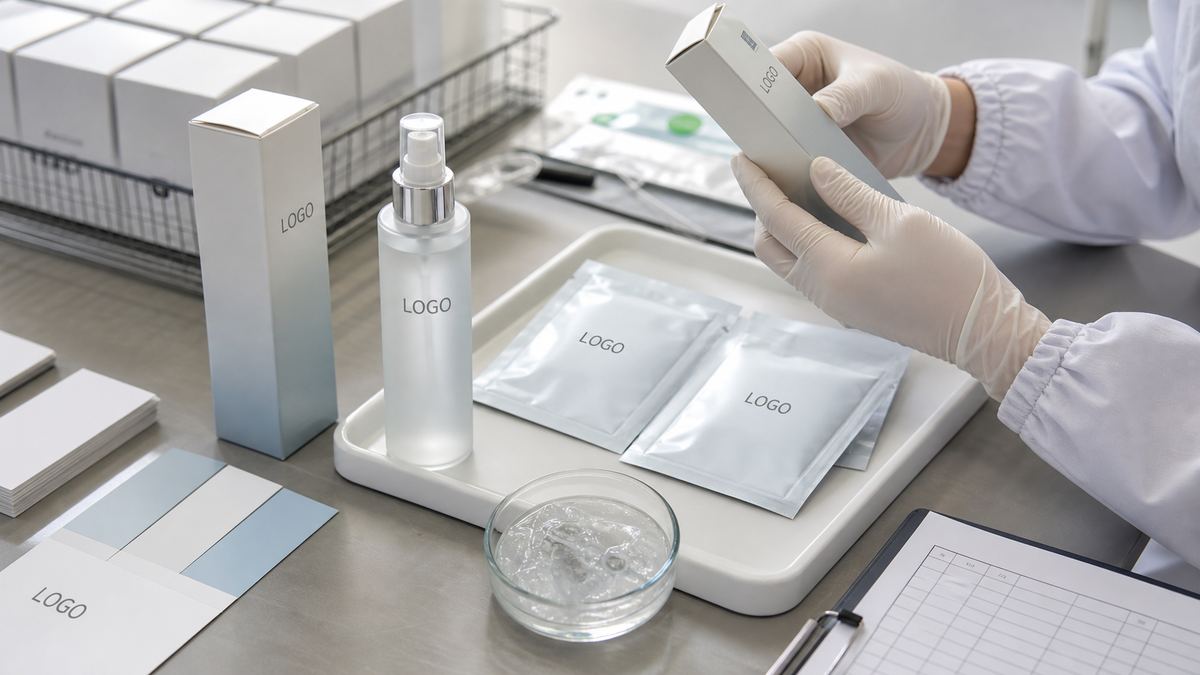
Direct answer: what should be approved before production?
Approve the product format, patch count per sachet, formula direction, patch shape and color, sachet material, front and back artwork, ingredient list source, directions, warnings, responsible-party details, batch or date marking plan, barcode, carton plan and target-market language. Then review a physical or production-representative sample for seal quality, leakage, artwork position, text legibility and product appearance.
Why an eye patch sachet needs a separate review gate
Eye patches combine a moist cosmetic format with a small flexible package. That creates decisions that are easy to miss in a standard skincare brief. The front panel has limited space. The back panel may need directions, warnings and multilingual information. A design that looks spacious on a screen can become crowded after the seal margin, tear notch, barcode and required copy are placed.
Claims also need disciplined handling. A buyer may bring a mood board containing percentages, test-result language, origin claims, treatment-style promises or a competitor package. Those references can explain a market direction, but they should not be copied into public artwork without evidence and a target-market review. GUOCUI uses the reference to clarify the desired product and channel, then develops a separate custom-label route.
Artwork and claim review table
| Review item | Buyer should provide | Factory-side check | Release condition |
|---|---|---|---|
| Product identity | Hydrogel eye patch name, patch count and intended cosmetic use. | Name matches the filled format and does not imply an unverified treatment. | Front, back, carton and specification use one consistent identity. |
| Claims | Proposed cosmetic wording and evidence available to the buyer. | Remove unsupported numbers, medical language and borrowed competitor phrases. | Wording is supportable, market-appropriate and consistent with the formula brief. |
| Artwork | Editable logo, color references, barcode and language files. | Check trim, seal margin, tear notch, contrast, small text and version control. | Approved proof identifies the correct size, material and revision. |
| Formula and patch | Ingredient direction, exclusions, patch color, scent preference and skin-feel target. | Confirm feasibility, sample route and compatibility with the chosen pack. | Approved sample or signed specification records the final direction. |
| Pack-out | Single sachet, carton quantity, set configuration and shipping destination. | Review carton, label, outer-case marking and handling needs. | Quotation and packing plan reflect the same approved components. |
Build the claim hierarchy from the evidence backward
Start with what the product is, how it is used and what the buyer can substantiate. A safe hierarchy normally begins with a descriptive product identity, followed by texture, format, cosmetic positioning and use instructions. Quantified performance, clinical-sounding language, medical outcomes and certification-style badges require a separate evidence and regulatory review. They should not be added only because they appeared on a supplier image or a marketplace listing.
The same principle applies to ingredient storytelling. Cucumber, caffeine, peptides, fermented ingredients or other cosmetic directions can be discussed during custom-formula development, but the final ingredient list and public wording must follow the formula that will actually be supplied. A concept title is not a substitute for the approved formula record.
Sachet artwork details buyers often overlook
- Seal margin: keep important text and visual elements away from the sealing area and tear notch.
- Patch count: specify whether the sachet contains one pair, multiple pairs or another format.
- Front-to-back consistency: product name, color direction, quantity and formula version should agree.
- Language ownership: identify who supplies and approves translations for the destination market.
- Barcode and batch information: reserve usable space before visual design is considered final.
- Finish and contrast: metallic or reflective areas can reduce legibility even when the screen proof looks clear.
- Carton relationship: the outer box, sachet and product specification should use the same version.
What a production-representative sample should check
Sample review is not only a formula evaluation. The buyer should inspect patch shape, color consistency, serum level, handling, sachet condition, opening experience and whether the printed pack matches the agreed concept. The factory team can also check fill, seal, label or print position, carton fit and packing preparation. Any change after approval should be recorded as a new revision rather than handled through an informal message alone.
For channel planning, an Amazon or TikTok beauty seller may prioritize a clear front panel and image-friendly color system. A salon or spa buyer may need professional pack-out and easy stock handling. A distributor may need multilingual copy and a carton structure that supports several markets. These are packaging and communication decisions, not proof of product performance.
MOQ, quotation and timing logic
There is no responsible universal MOQ or fixed quotation for every private label eye patch project. Cost and minimums depend on formula, hydrogel format, sachet material and size, print method, carton or set configuration, number of artwork versions, quantity, label requirements and shipping plan. Sample and production timing can be confirmed after the formula and packaging route is reviewed. Buyers receive a more useful answer when they send those variables with the first inquiry.
Buyer brief to send GUOCUI
- Target market and sales channel.
- Hydrogel eye patch positioning and preferred patch count.
- Formula direction, ingredient exclusions, texture and patch color.
- Sachet size, finish, LOGO file, carton or set requirement.
- Proposed claims and the evidence available for them.
- Label languages, barcode ownership and required market information.
- Estimated order quantity, launch window and shipping destination.
Factory-side release sequence
- Brief review: the buyer provides channel, market, formula, packaging, artwork and order-plan information.
- Risk removal: unsupported claims, copied marks, proprietary phrases and confusing visual references are removed from the public concept.
- Sample route: formula direction, patch format, color, sachet and available packaging route are agreed.
- Artwork proof: the buyer checks the exact file revision, languages, count, barcode, LOGO and carton relationship.
- QC and packing check: fill, seal, print position, appearance, carton fit and shipment preparation are reviewed against the approved specification.
Useful next pages
Browse the GUOCUI B2B product catalog, review the Eye Care category, see the Customization / Private Label service, or read how sample review supports private label production. For a project discussion, use the eye patch artwork and OEM inquiry link.
FAQ
Can GUOCUI develop a custom formula hydrogel eye patch?
GUOCUI can review custom formula, patch color, sachet, LOGO, label, carton and set directions. Final feasibility, MOQ, quotation and timing depend on the approved formula, components, quantity and market requirements.
Can a competitor sachet be used as the production artwork?
No. It may be used internally to explain a format or channel, but the public product should have separately developed naming, wording, color system, layout and artwork. Competitor trademarks, proprietary copy, images and distinctive trade dress should be removed.
When should claims be approved?
Claims should be reviewed before artwork release and checked again against the final formula and destination-market requirements. Unsupported numbers, treatment promises and evidence-style badges should not be carried forward from a reference image.
What happens if final artwork is not ready?
A neutral sample or generic LOGO placeholder may support early packaging discussion. Mass-production artwork still needs a controlled proof and buyer approval before release.
Source and compliance context
This guide uses public regulatory context for claim discipline: the U.S. FDA cosmetics labeling claims guidance, the FDA cosmetics labeling overview, and EU Regulation (EU) No 655/2013 on common criteria for cosmetic claims. The article is a B2B preparation guide, not legal advice; buyers should confirm requirements for their destination market.
Short conclusion: approve evidence, artwork and the physical pack as one controlled eye patch specification. This reduces avoidable revisions and gives the factory a clearer basis for sampling, quotation, QC and packing.
Leave a Reply