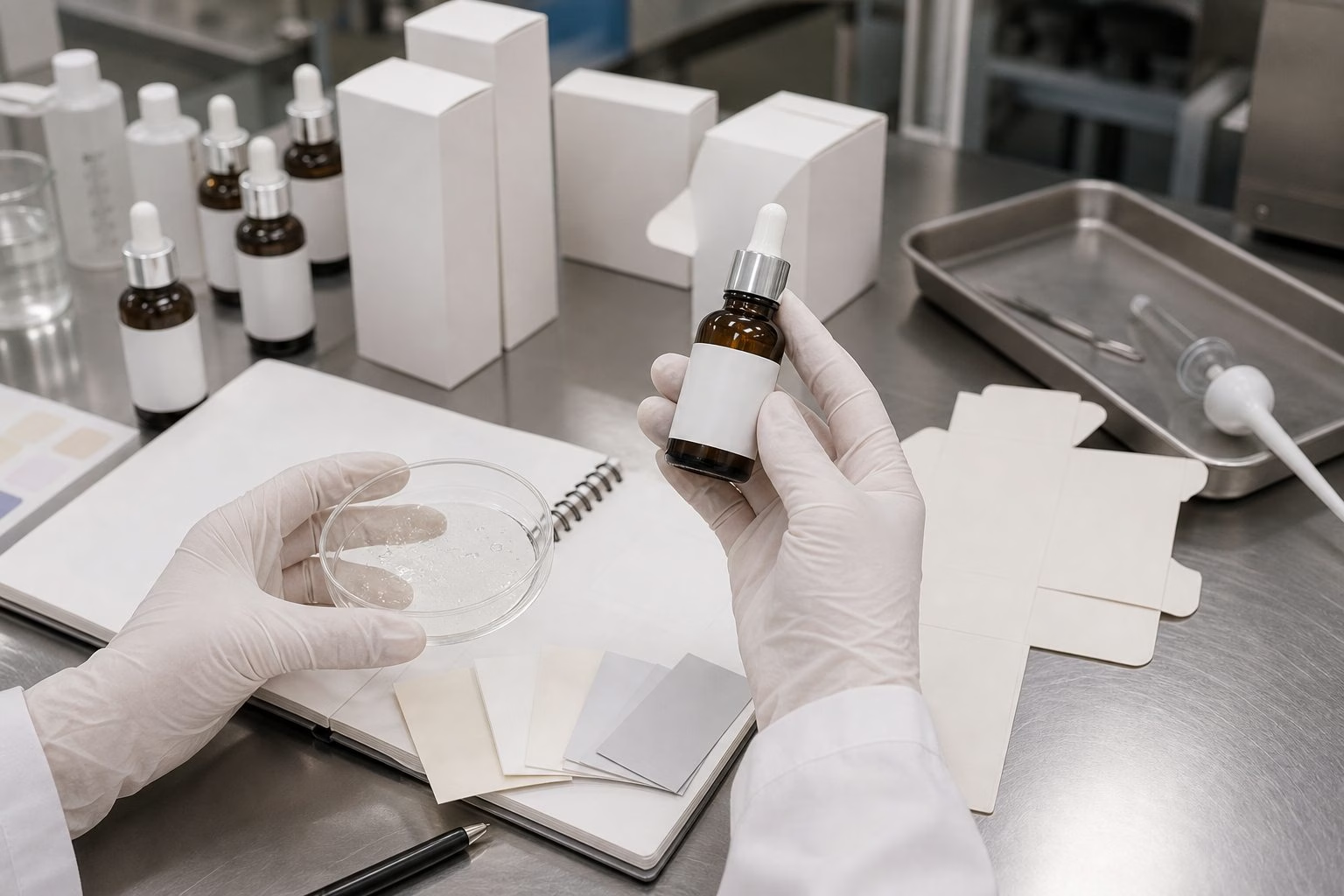
Direct answer: A gentle peel serum OEM brief should not treat daily dropper use and weekly cotton-pad use as one approval test. The same formula may feel comfortable when pressed onto the face but become too wet, too draggy, or too intensive when loaded onto a pad. GUOCUI BIO TECH therefore recommends two separate sample protocols before quotation: one for daily spread, layering, pack dose, and leave-on feel; another for pad loading, local contact time, glide, residue, and clear use directions.
This approach is useful for overseas brands planning a mild exfoliating serum, a texture-refining cosmetic, or a two-way facial serum for DTC, marketplace, salon, spa, and wholesale channels. It starts with how buyers and end users will handle the product, then works backward into formula, pH, bottle, label, carton, sample review, and claim evidence. It does not assume a fixed acid system, concentration, frequency, result, MOQ, price, or production time.
Write two use cases before discussing ingredients
The first sample route is a daily leave-on serum. Define whether it is applied with fingertips after cleansing, how many drops or pump strokes are expected, what follows it in the routine, and whether the target feel is watery, cushioned, silky, or lightly emollient. Review spread, absorption, tack, pilling, fragrance level, color, and comfort under a moisturizer.
The second route is an occasional cotton-pad protocol. Specify the pad type, loading amount, whether the pad is used for a gentle pass or a short local hold, and which areas are excluded. A formula that performs well in a dropper trial may soak a pad unevenly, evaporate quickly, create friction, or leave more material than expected. Those are product-development questions, not copywriting details.
| Approval point | Daily dropper or pump | Weekly cotton-pad protocol |
|---|---|---|
| Dose | Record drops or pump output and full-face spread. | Record pad loading, retained liquid, and local contact area. |
| Skin feel | Check slip, absorption, tack, and layering. | Check glide, drag, wetness, evaporation, and residue. |
| Package | Check priming, dose repeatability, closure, and leakage. | Check whether the opening supports controlled pad loading without over-dispensing. |
| Directions | State routine order and compatible follow-on products. | State frequency, local-use boundary, rinse or leave-on decision, and stop-use wording. |
| Evidence | Approve appearance and sensory language only after sample review. | Do not turn a stronger handling method into a stronger public result claim. |
Formula decisions that belong in the buyer brief
The buyer does not need to arrive with a finished ingredient list, but the brief should define the risk level. A hydration-first direction can be discussed with buyer-approved humectants and comfort-feel ingredients. A mild exfoliation route needs a separate review of ingredient identity, supplier documents, intended amount, finished-formula pH, compatibility, warnings, and target-market rules. Do not use a supplier blend percentage as if it were the pure active level.
Ask whether the same formula must support both use cases. Sometimes one formula can pass both protocols. In other projects, the daily serum should remain the core SKU while the pad-based method is removed from the label. That is a valid outcome. A two-way story is useful only when the finished sample, directions, evidence, and destination-market review support it.
Set a pH and compatibility handoff, not a marketing number
Finished pH affects formula behavior, preservative strategy, packaging compatibility, user instructions, and the evidence plan. The buyer brief should request the proposed pH range and tolerance, how it will be measured, and what changes would trigger a sample revision. It should also record color, odor, clarity, viscosity, sediment, and package interaction at the start of testing.
GUOCUI can discuss stability and compatibility work after the formula route and package are selected. The exact program depends on the project. A useful handoff identifies the bottle material, closure, liner, dropper bulb or pump actuator, label stock, carton, storage orientation, and transport plan. A bottle that looks premium in an empty sample is not approved until the filled pack behaves consistently.
Choose the dispensing system from the protocol
Dropper
A dropper makes dose visible and can suit fluid serums, but the team should check fill pickup, dose variation, neck wiping, leakage, label staining, and user contact with the pipette. Record the practical dose rather than assuming a full pipette.
Pump
A pump can make repeatable daily dosing easier. Review priming strokes, output per actuation, tail-off, clogging, actuator return, cap security, and low-fill performance. For a pad protocol, confirm that one or two strokes load the pad without uncontrolled splash.
Controlled orifice bottle
A small orifice can support direct pad loading, but flow rate changes with viscosity, opening size, bottle squeeze, and temperature. Test upright storage, side storage, carton protection, and repeated opening. Do not choose the opening from appearance alone.
Build sample acceptance around observable decisions
Send each evaluator the same instructions, pad specification, moisturizer, room conditions, dose guide, and evaluation form. Photograph the approved bottle and record the sample code. A practical scorecard can cover spread, glide, absorption, tack, residue, visible pilling, fragrance strength, pad drag, dispensing control, and package cleanliness. Separate observations from public claims.
Patch testing, tolerance evaluation, stability work, compatibility review, and claim support must match the formula and destination market. FDA explains that intended use helps determine whether a product is regulated as a cosmetic, a drug, or both. EU cosmetic claim criteria also require legal compliance, truthfulness, evidential support, honesty, fairness, and informed decision-making. These are reasons to write cautious, supportable label language before artwork approval.
What GUOCUI needs before quotation
- Target market, buyer channel, and desired launch position.
- Daily-only or daily-plus-weekly use plan.
- Preferred texture, finish, fragrance route, and color boundary.
- Ingredient direction and any ingredients or claims to avoid.
- Dropper, pump, or controlled-orifice preference and target capacity.
- LOGO, label, carton, multilingual artwork, and set-pack requirements.
- Estimated quantity, sample needs, shipping country, and target schedule.
MOQ and quotation can be confirmed after formula, packaging, quantity, label requirements, and shipping plan review. Sample and production timing can be confirmed after the formula and filled-pack direction are agreed. Review GUOCUI Products, Face Care, Facial Serum, a related custom serum direction, the serum stability and packaging handoff, and Customization. To start a brief, use the GUOCUI inquiry form.
FAQ
Can one gentle peel serum be used both ways?
Possibly, but both protocols should pass separately. The pad method changes dose, friction, local contact, evaporation, and residue, so a daily fingertip test is not enough.
Should the public page list a fixed acid percentage?
Only when ingredient identity, actual active level, finished formula, target-market rules, evidence, and label review support it. A supplier blend input should not be presented as a pure-active percentage.
Which package is best for pad use?
There is no universal answer. A controlled orifice or repeatable pump may help, but viscosity, dose, cap fit, leakage, label staining, and user handling must be tested with the final filled pack.
What can be customized?
Buyers can discuss formula direction, texture, fragrance, color, capacity, bottle, closure, LOGO, label, carton, multilingual artwork, and set packaging. Final options depend on the approved brief and technical review.
What should a buyer send first?
Send the market, channel, use protocol, texture target, ingredient preferences, pack direction, estimated quantity, artwork needs, and shipping country. GUOCUI can then organize the sample and quotation questions.
Leave a Reply