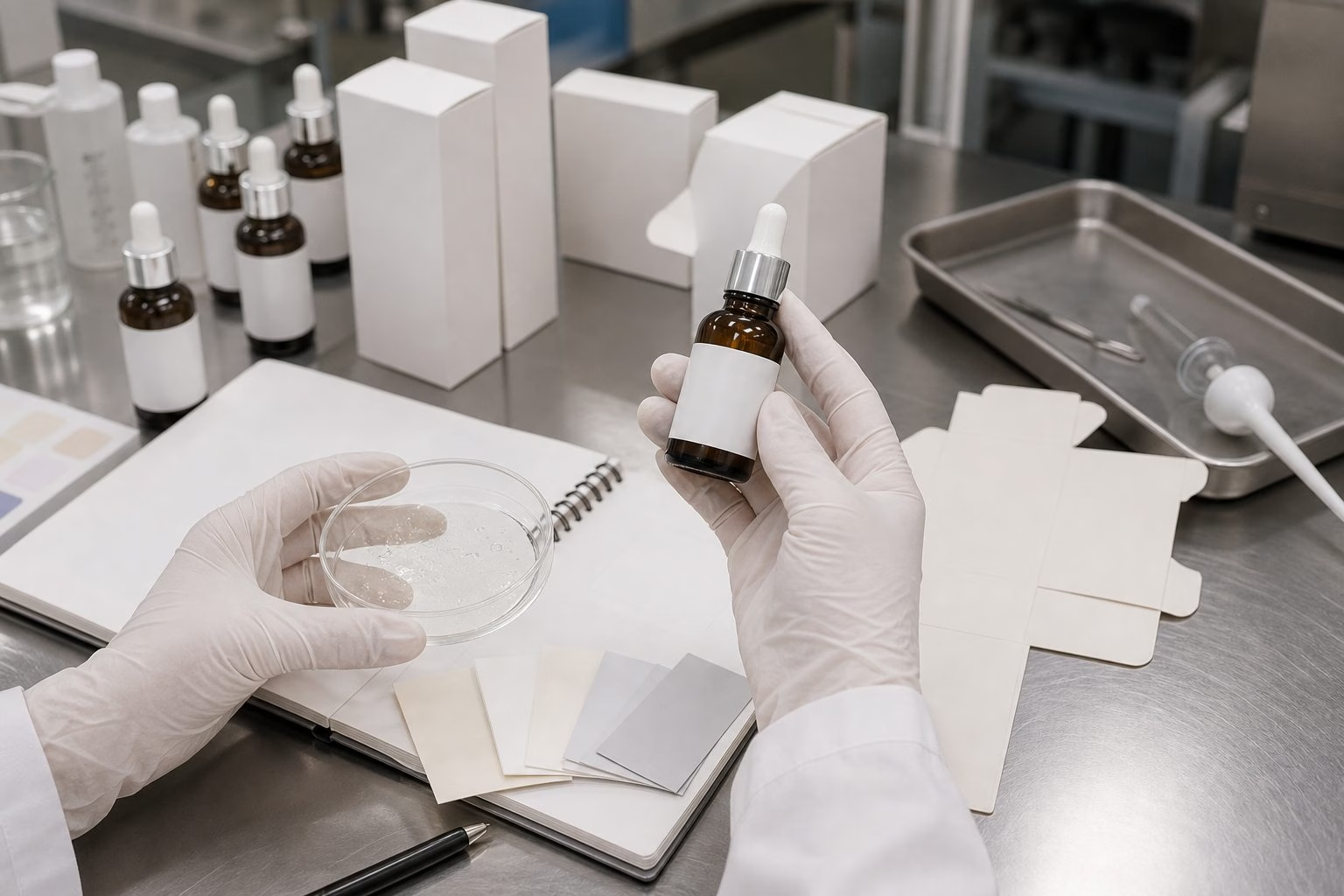
Direct answer: An antioxidant serum OEM brief is not ready when it contains only an ingredient wish list. Before sampling, the buyer and factory should agree on the target user, cosmetic claim boundary, color and odor acceptance, primary pack, dispensing system, label market, sample checkpoints and quotation variables. Those decisions turn a trend direction into a testable private-label project without copying another brand’s formula story or package identity.
Recent antioxidant-serum activity is a useful sourcing signal, but GUOCUI BIO TECH treats it as a reason to improve the handoff process rather than reproduce a branded product. Guangzhou Guocui Biological Technology Co., Ltd. can discuss a custom formula, standard or custom packaging, label localization and sample review for overseas brands, distributors, salons, spas and online beauty sellers. Final ingredient levels, claims, pack materials, MOQ, quotation and timing are confirmed after the project brief is reviewed.
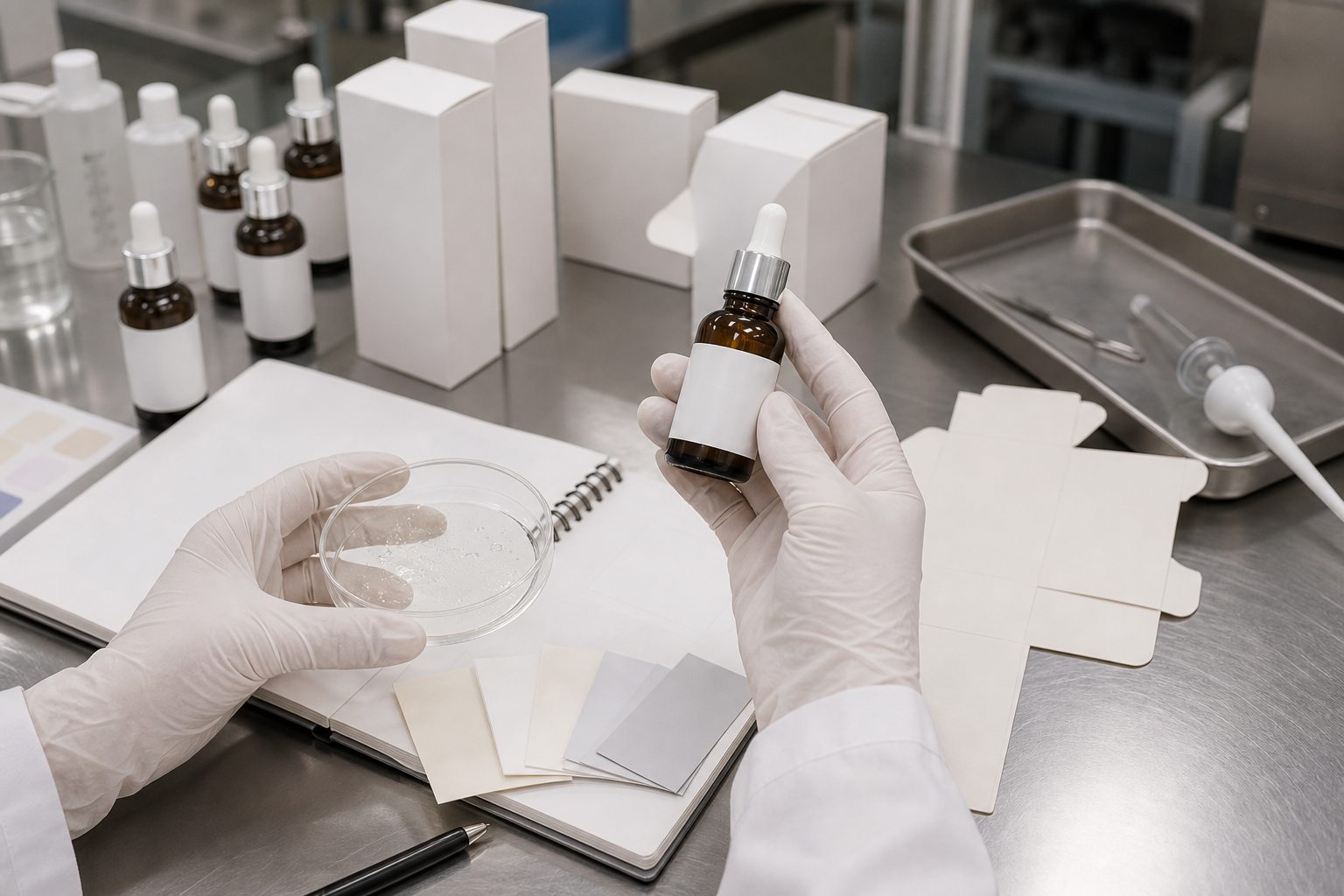
What is an antioxidant serum OEM stability handoff?
It is a short decision record connecting the buyer’s market idea to the factory’s sample and packaging work. It does not promise shelf life or performance before testing. Instead, it states what the sample should look and feel like, which variables must be monitored, how the pack will be used, and what evidence the buyer needs before approving the next round.
This matters because a serum can change when the formula, headspace, bottle color, closure, dispensing parts, filling process or storage exposure changes. A pack that looks premium in a rendering may dispense poorly, leak during transport or make visual change harder to assess. GUOCUI therefore recommends evaluating formula and package as one project rather than approving them in separate conversations.
Choose the channel before choosing the serum story
A clinic-adjacent line, a salon retail shelf, an Amazon listing and a social-commerce launch do not need the same brief. A professional channel may prioritize controlled dispensing and restrained artwork. A marketplace seller may need a compact shipper, durable closure and clear variation control. A distributor may need multilingual label space and a packaging family that can expand to toner, cream or mask later.
Tell the factory the intended countries, sales channel, target retail position, planned bottle size, expected routine position and whether the launch is one hero SKU or part of a set. This helps the team propose realistic bottle, carton, label and sample options without inventing a fixed MOQ or lead time too early.
Eight checkpoints to put into the first sample brief
| Checkpoint | Buyer decision | Factory review |
|---|---|---|
| Formula direction | Water-light, cushiony or richer serum; fragrance preference; target routine step | Feasible ingredient system, texture route and cosmetic claim wording |
| Appearance baseline | Acceptable initial color, clarity and natural odor range | Record sample observations and flag visible drift for review |
| Skin-feel target | Slip, absorption, residue and layering expectation | Compare agreed sensory checkpoints rather than retail slogans |
| Primary packaging | Dropper, treatment pump or airless direction; bottle size and finish | Check component compatibility, closure fit and dispensing behavior |
| Artwork space | Front-panel hierarchy, languages, responsible-party and market fields | Review dieline, label stock, print area and carton fit |
| Sample acceptance | Who approves formula, pack and artwork, and by what date | Keep each approved version traceable before production planning |
| Transport scenario | Parcel, wholesale carton, hot route or long transit concern | Discuss protective packing and project-specific test needs |
| Quotation inputs | Quantity range, pack option, decoration, market and shipping plan | Quote only after variables are sufficiently defined |
Keep the public claim narrower than the development ambition
For a cosmetic private-label project, safer early language includes antioxidant formula direction, radiance-looking care, smoother-looking texture, moisturizing feel and daily serum positioning. Avoid turning a trend signal into an unverified medical, treatment, reversal, clinical or guaranteed-performance claim. The label and marketing copy should be reviewed for the destination market before printing.
The same rule applies to ingredient storytelling. A buyer may ask about vitamin C derivatives, tocopherol, ferulic-acid positioning, botanical antioxidants, peptides or barrier-support ingredients. The factory can discuss compatible directions, but the final combination and level should follow formula feasibility, stability work, raw-material documentation, claim support and market requirements. A competitor’s exact ratio, proprietary complex, patent story or recognizable product name is not a valid shortcut.
Package-fit questions that prevent late rework
Ask whether the buyer wants a dropper ritual or controlled-dose pump, whether the bottle must fit a standard shipper, and whether the label needs several languages. Confirm whether the chosen decoration will tolerate handling and whether the carton leaves enough room for required copy. For every shortlisted component, review fill volume, closure engagement, dispensing consistency, leakage risk, label adhesion and visible appearance after handling.
Pharmaceutical packaging standards are not a substitute for cosmetic product testing, but they reinforce a useful general principle: the container-closure system and its materials can affect product quality. The practical OEM action is to define a cosmetic-appropriate compatibility and observation plan for the actual formula and actual pack instead of assuming that a supplier catalog image proves fitness.
How GUOCUI moves from request to an approvable sample
- Brief review: the export team checks channel, market, formula direction, pack, artwork and missing quotation inputs.
- Option alignment: the team narrows texture, ingredient and packaging directions that fit the project.
- Sample preparation: formula and pack samples are identified so feedback is tied to the correct version.
- QC and pack-fit discussion: appearance, sensory targets, dispensing, closure and artwork placement are reviewed.
- Buyer confirmation: requested changes are recorded before quotation and production planning move forward.
- Label and packing handoff: final market copy, decoration files, carton structure and shipment preparation are coordinated.
MOQ and quotation depend on formula, packaging, quantity, decoration, label requirements and shipping plan. Sample and production timing can be confirmed after formula and packaging review. This variable-based approach is more useful than a generic low-MOQ promise because it shows the buyer which choices actually change cost and timing.
Buyer handoff checklist
- Target countries and buyer channel
- Desired serum texture, finish and routine position
- Preferred ingredient directions and excluded ingredients
- Cosmetic benefit wording the buyer wants to explore
- Bottle type, size, color, pump or dropper preference
- Logo, label languages, carton and set requirements
- Estimated quantity range and target launch window
- Sample quantity, review owner and acceptance method
- Shipping destination and transport concerns
Start with the GUOCUI B2B product catalog, review the Face Care category or Facial Serum category, and see the Private Label Vitamin C Radiance-Look Facial Serum as one customizable catalog direction. The Customization service explains how formula and packaging decisions can be coordinated. For a project-specific review, use the inquiry form without placing an online order.
FAQ
Can GUOCUI copy a branded antioxidant serum formula?
No. A market example may identify a category need, but the public product, formula brief, packaging, artwork, name and claims should be developed as an original GUOCUI OEM/ODM direction.
Which package is best for an antioxidant serum?
There is no universal answer. The choice depends on the formula, dispensing target, fill size, decoration, market, user experience and compatibility review. Dropper, treatment-pump and airless directions can be discussed during sampling.
Can GUOCUI confirm MOQ and price before the package is selected?
A preliminary discussion is possible, but a useful quotation needs the formula direction, quantity range, primary pack, decoration, carton, label and shipping requirements.
What should the buyer approve in a serum sample?
Approve the identified formula version, appearance range, odor, texture, absorption, residue, dispensing behavior, pack fit and any artwork mockup. Record change requests against that exact version.
Does a sample review prove shelf life?
No. A sample review is an early decision gate. Shelf-life and market claims require the appropriate project-specific testing, documentation and market review.
Leave a Reply