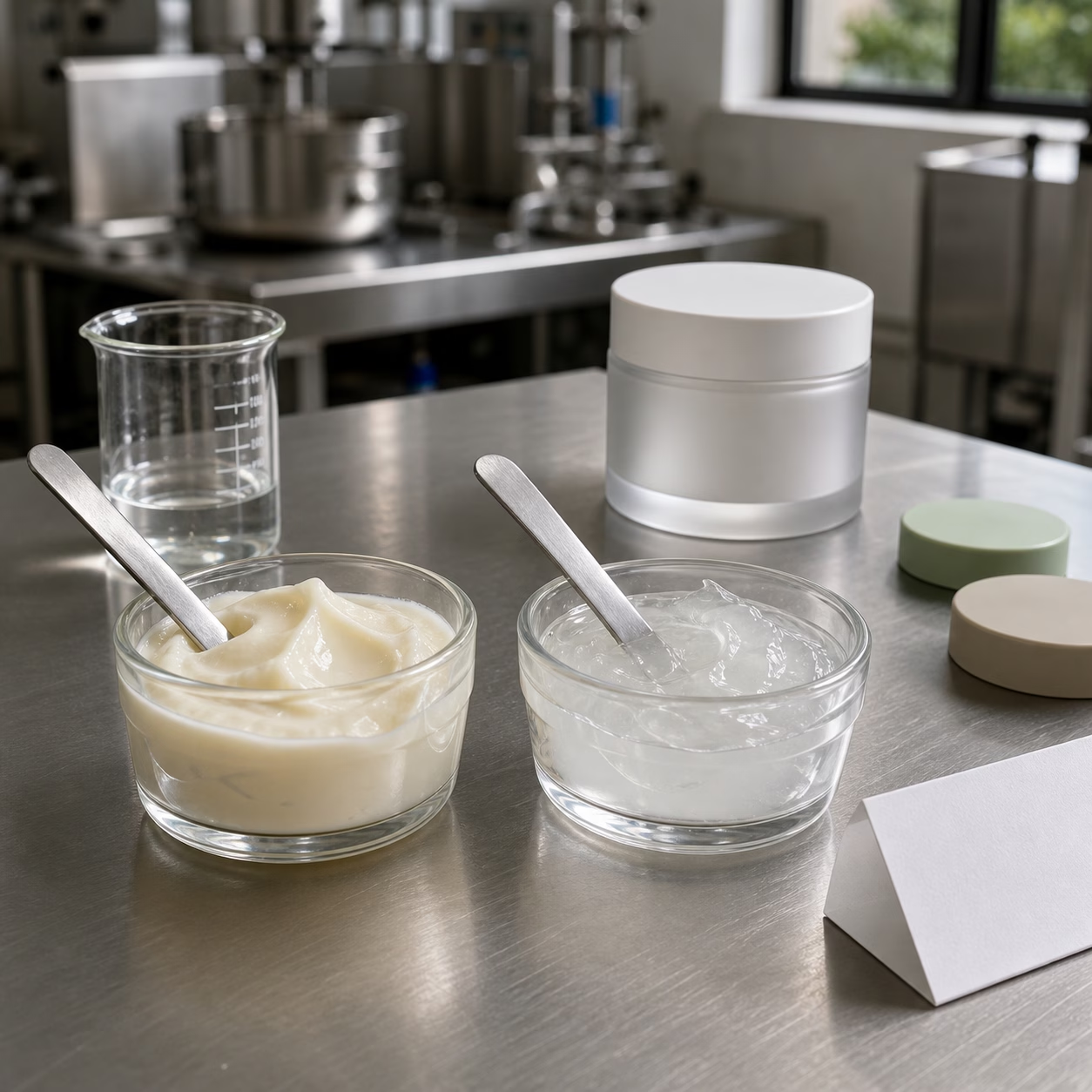
Direct answer: A tone-up cream OEM brief should define the product as a temporary cosmetic finish, then lock undertone, coverage, dry-down, transfer, oxidation and packaging tests before the buyer approves formula or artwork. “Tone-up” should not be treated as a whitening, melanin-change or permanent skin-result claim. For a useful sample round, ask for clearly separated shade directions and one scorecard that the buyer, factory and packaging team can repeat.
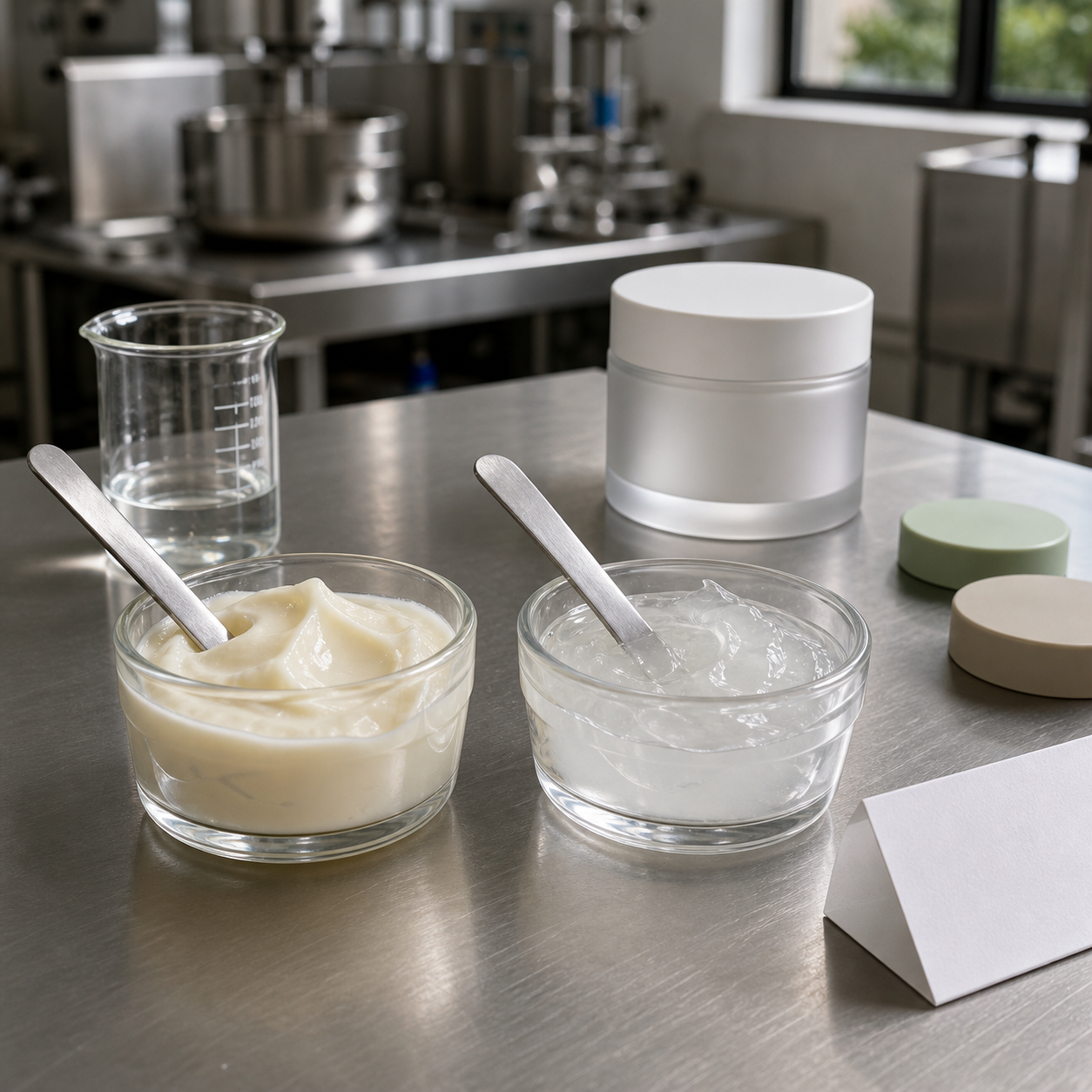
On 4 August 2026, a Japanese manufacturer announced shipment of a skincare-style tone-up cream. The event is useful as a format signal, but it is not evidence of retail velocity or a bestseller. GUOCUI therefore treats it as a buyer-question prompt: how should an OEM team convert a light complexion-and-moisture idea into a testable, claim-safe private label brief without copying the source name, shade, scent, jar, formula or campaign?
Define “tone-up” as an appearance decision
The cleanest B2B definition is short: a tone-up cream creates a sheer, visible cosmetic finish while the product is on the skin. It may also moisturize when the approved formula supports that function. It should not imply that the product changes melanin production, treats discoloration or permanently changes skin tone. In the United States, makeup and moisturizers can be cosmetics, while claims that affect body structure or function can change the regulatory path. EU cosmetic claims also need evidence, honesty and clear buyer-facing communication.
This boundary changes the sample conversation. Instead of asking a factory for a “whiter result,” describe the temporary finish: warmer, more neutral, less ashy, softly balanced or lightly blurred. Then specify how the team will judge that finish under controlled light.
Start with three separated undertone directions
A useful first round does not need a retail foundation shade wall. It needs samples that are different enough to produce a decision. GUOCUI may discuss a sheer peach route, a low-contrast neutral beige route and a muted lavender route. These are development directions, not universal shades.
| Question | What the buyer sends | What the sample team records |
|---|---|---|
| Who should the finish suit? | Target market, undertones and model diversity | Shade code, application dose and controlled-light photographs |
| How visible should it be? | Sheer correction or light cosmetic coverage | Blend edge, white cast, patchiness and layer thickness |
| What should it feel like? | Cushiony cream or quick-spread gel-cream | Pickup, spread, tack, drag and settling time |
| Where will it be sold? | Amazon, TikTok, salon, spa, wholesale or travel set | Demo clarity, label space, pack durability and channel instructions |
Separate shade testing from skincare texture testing
If the color, emulsion, fragrance and package all change together, the team cannot explain why one sample performs better. First compare undertones at the same application amount. Then compare a cream and gel-cream texture using the preferred color direction. Keep room light, camera white balance, skin preparation and observation time consistent.
For makeup-preparation use, record the products applied below and above the sample. A formula may look even by itself but pill under one sunscreen or drag under one foundation. Change one variable at a time and write down the result. That is more useful than sending the factory an edited social-media photograph with no dose or routine.
Run a transfer and oxidation scorecard
Transfer and oxidation are different observations. Transfer asks how much visible product moves to a tissue, mask edge, collar or application tool after a defined settling period. Oxidation asks whether the visible shade shifts with time. Neither should be reduced to a guaranteed all-day claim without appropriate evidence.
- Apply the same measured amount to comparable test areas.
- Record the appearance immediately, after settling and at a later agreed checkpoint.
- Photograph under daylight-balanced light and one realistic indoor light.
- Use the same tissue pressure or contact method for transfer comparisons.
- Note edge blending, white cast, ashiness, patchiness and shade shift separately.
- Repeat the planned skincare and makeup layer stack rather than switching products mid-test.
Color additives need a market-specific review
A buyer should not assume that a pigment used in one market or one product can be moved unchanged into every destination. The formula and regulatory teams need the intended countries, pigment identity, use area and label plan. In the United States, color additives used in cosmetics are subject to specific approval and use conditions. The public product page should therefore describe custom undertone options without promising an unreviewed universal pigment system.
Test the filled package, not only the formula cup
Pigmented creams reveal packaging problems that a clear gel may hide. A pump can leave shade residue around the outlet. A tube shoulder can trap product. A transparent component can make normal color drift look more dramatic. Label color and carton printing can also make the cream shade appear warmer or cooler in photographs.
Review the actual filled component for priming, dose, leakage, cap residue, closure fit, label scuffing and clean-off instructions. Compare a slim tube, airless pump and controlled-window jar only after the formula viscosity and channel are clear. A marketplace seller may prioritize parcel durability and a clean product demonstration. A salon buyer may value controlled dispensing. A travel-set buyer may need a smaller tube and a simpler instruction panel.
Keep the claim language tied to evidence
Safe early wording describes a sheer cosmetic finish, moisturizing feel, spread or buyer-selected undertone direction. Avoid permanent tone change, whitening, melanin reduction, treatment, blue-light protection, airborne-particle protection, 24-hour wear, overnight suitability, non-comedogenic results or fixed consumer-study figures unless the exact final product has an appropriate evidence and regulatory review. Do not transfer a source product’s free-from list, scent or test result to a new GUOCUI formula.
What GUOCUI needs before quotation
- Target country, sales channel and expected customer routine.
- Appearance goal stated as a temporary cosmetic finish.
- Preferred undertone directions, coverage level and texture.
- Representative moisturizer, sunscreen and makeup layer stack.
- Tube, pump or jar route, capacity and custom component color.
- Logo, label languages, carton, barcode and set requirements.
- Estimated quantity range, sample deadline and shipping destination.
MOQ and quotation can be confirmed after formula, pigment route, packaging, quantity, artwork, carton and shipping requirements are reviewed. Sample and production timeline can be confirmed after the formula, shade and packaging route are selected.
FAQ
Is a tone-up cream the same as a whitening cream?
No. In this brief, tone-up describes a temporary visible cosmetic finish. It does not describe a biological change in pigmentation or a permanent result.
Should a first sample round include many shades?
Not necessarily. Three clearly separated undertone directions with a repeatable scorecard often create a better decision than many near-identical samples.
Can the same formula be sold with an SPF claim?
An SPF claim creates a separate regulatory and finished-product testing path. This development brief deliberately excludes sun-protection claims.
Why test packaging residue?
Pigmented product around a pump, cap or tube shoulder can affect cleanliness, shade perception and customer instructions even when the formula itself is stable.
What is the best package for a tone-adjusting cream?
There is no universal best choice. Match viscosity, dose, shade visibility, parcel risk, label area and channel use, then verify the actual filled pack.
Browse the GUOCUI product catalog, Face collection, Facial Cream collection, pre-makeup moisturizer primer cream and Customization service. To prepare a shade-and-pack sample matrix, contact GUOCUI.
Leave a Reply