
Evidence boundary: August observations are retained as background. The 23 September update distinguishes development from buyer education; the 24 September update covers a 22 September lip launch. The 28 September review adds a 24 September zone-patch announcement and unresolved sale dates. None establishes sales, demand, search volume or GUOCUI test results.
Direct answer: do not turn a skincare product name into a packaging specification. A double-dose name, a thick-looking texture or a fitted sheet photograph can start a question. None replaces a component drawing, an identified material or an agreed sample check. Keep those evidence types separate before requesting tooling or quoting a finished pack.

What changed in this source review
The original review corrected an unsupported association between a double-dose serum name and dual-chamber mixing. The public pack image and product wording did not establish that mechanism. Request component evidence before specifying separate fluid paths.
Verified facts, GUOCUI factory-side inference, and what is not claimed
Verified facts: the current La Roche-Posay Japanese product page describes Mela B3 Double Concentrate Serum as a rich emulsion texture and provides application directions and an ingredient list. The reviewed text and pack image do not establish separate chambers, a mixing ratio or a pump cross-section. These observations are limited to the source page.
GUOCUI factory-side inference: require a traceable evidence item for each proposed product attribute. A texture comparison or ordinary bottle trial may answer the buyer’s question before a special component is justified. Not claimed: product popularity, a confirmed dual-chamber construction, a transferred formula, a test pass, an available patented mechanism or a guaranteed manufacturing outcome.
Three observations that should stay separate
| Observation | What it supports | Next evidence |
|---|---|---|
| Product name | How the brand identifies its item | Technical drawing and exact component code for a requested mechanism |
| Visible pack or texture | External form and a presentation reference | Supplier specification and actual formula-pack sample |
| Sampling result | The recorded sample under its stated conditions | Repeatable method, version and final-product review |
23 September update: a mist format does not establish makeup-setting performance
Verified facts: SCI’s development notebook carries a 14 September 2026 setting-spray entry under products in development. That is a dated development disclosure, not a commercial launch. Maybelline’s guide dated 22 September describes post-makeup setting spray separately from primer and powder. Its editorial date is not a new-product date.
GUOCUI factory-side inference: add a use-and-evidence gate before choosing the spray bottle. A moisture mist and a setting mist can share an external pack while requiring different formula and performance reviews. For a setting project, record the foundation and powder, layer order, application amounts, waiting period, spray distance and actuation count. Compare the candidate with the same makeup routine without spray.
Separate three decisions: whether the pump delivers evenly; whether the liquid disturbs the makeup during application and drying; and whether an agreed wear comparison supports the intended statement. Record spotting, pigment movement, tack, flaking and finish. An acceptable spray-card pattern cannot replace the last two decisions. Agree the method and acceptance criteria before reviewing results.
Not claimed: new demand, commercial readiness of the development entry, formula equivalence, blur or oil-control performance, fixed wear hours, waterproofing or successful GUOCUI testing. The clean-room Makeup Setting Mist Development Program uses an ordinary non-aerosol pump direction and independently defined finish targets. Its sample brief removes source branding, distinctive packaging and proprietary claims.
Buyer action: the Cream Lotion Spray intended-use review separates dispensing into the hand, direct body spraying and a facial-mist proposal. Give each requested route a row linked to the formula, filled sprayer and draft instructions before approving combined wording. A body-use decision does not approve a facial use. This catalog reference adds a development question; it records no new launch, demand signal or completed GUOCUI assessment.
24 September update: one lip formula needs an amount-based comparison
Verified facts: a 22 September brand release announces Elm Biosciences’ lip-serum launch on that date. Its official product page describes a balm-oil form, clear and tinted choices, and daytime and nighttime application. These sources confirm a product format and use instructions, not organic demand or GUOCUI results.
GUOCUI factory-side inference: define whether the buyer wants one formula used at different amounts or two separate day-and-night products. For a single tube, identify the formula and outlet, then compare a thin film with a more generous application under agreed conditions. Record dispensing cut-off, spreading, tack, gloss, edge migration and residue. If the larger amount behaves poorly, revisit the formula or intended use before printing a day-and-night promise.
Begin with an untinted sample to isolate the texture and dispensing decisions. A later shade option needs its own colorant, stability and market review. The Balm-Oil Lip Serum direction uses an independently specified conventional squeeze tube and oil-and-wax base. It is distinct from a two-formula lip-care duo.
Not claimed: biological-age effects, clinical equivalence, natural sales growth, approved production readiness or a copied ingredient complex. The retail formula, images, shade names and recognizable packaging are excluded from the GUOCUI development brief.
28 September update: identify the material before approving zone-patch tooling
Verified facts: a 24 September announcement issued by PICTON for TOCOBO describes hydrogel partial-face patches in two sizes. Its introductory text gives 26 September for advance sales, while its product summary says 25 September. The discrepancy remains unresolved. The stated 1 October formal Japanese launch is still a future plan at this review; retail availability was not verified.
GUOCUI factory-side inference: settle the material before commissioning the cut shape. A nonwoven patch carrying essence and a formed hydrogel patch need separate handling and pack reviews. Identify the gel or substrate, carrier film, intended facial zone and count unit. Compare removal from the pack, separation, tearing, edge lift, sliding and residue under agreed conditions. If a reclosable pack is proposed, add reopening, retrieval and preservation checks.
The Modular Zone Patch and Sheet Mask direction covers nonwoven options; the Two-Piece Hydrogel Facial Mask covers upper/lower-face sections. Neither automatically specifies a small hydrogel zone patch. Send the material and coverage requirement before requesting a variant.
Not claimed: a confirmed sale date, verified demand, quantified cooling, redness improvement, copied ingredients, proprietary shapes or completed GUOCUI development. Plain shapes, a separately defined formula and original packaging remain the starting brief.
9 October 2026 action review: separate lotion output from tool transfer
Evidence boundary: this review adds a buyer sampling action to product-format context reported on 30 September 2026. It records no new launch, sales, demand, search-volume or GUOCUI test result. The earlier August and September evidence dates remain unchanged.
Verified facts: as read on 9 October 2026, the undated current Eulah product page identifies a body lotion with a five-ball contact head and lists a water-containing formula. A matching Tesco listing identifies the same lotion format. A 30 September 2026 launch report includes the body-moisturizer format. These sources establish a public product example. They do not establish its hidden construction, component rights, actual delivery, sales or suitability for a GUOCUI project.
GUOCUI factory-side inference: keep the ordinary primary pack as the first sampling route. Record what leaves a pump, flip-top or tube with an agreed method. Keep product retained on a spreading tool and product transferred to the defined test surface in separate records. Include handling losses and collection conditions before interpreting amounts. A pump stroke or rolling pass is an action count, rather than a measured dose.
A separately sourced conventional single-cylinder tool is an optional later question. Identify its material, construction and lawful source, then assess residue, proposed cleaning and re-use instructions, storage and formula compatibility. Keep the tool outside the product reservoir. A water-containing lotion requires its own preservation and use assessment. An acceptable oil-and-roller sample cannot approve that lotion, and visible cleanliness cannot establish microbiological safety.
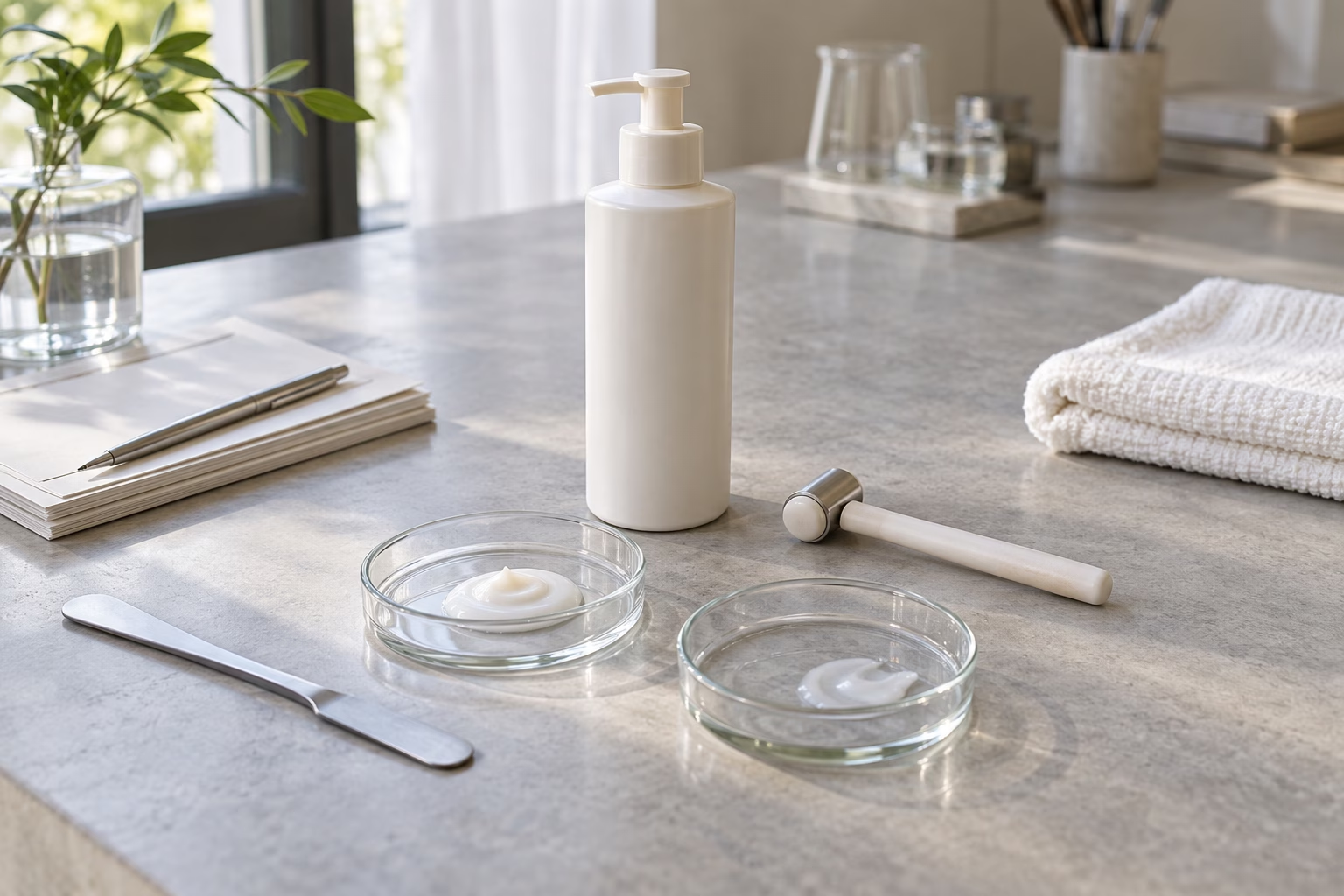
The existing Body Lotion Packaging Program now provides the dispensing, retained-product and transfer records for this comparison. Its starting route uses ordinary non-contact packaging. Source branding, imagery, five-ball and twist-valve structure, color system, ingredient combination and performance claims are excluded from the development brief.
Not claimed: an available or licensed accessory, a validated cleaning method, a fixed application amount, cooling, sculpting, slimming, circulation effects or a completed GUOCUI safety or performance test. An accessory and set assembly remain separate quotation variables.
Buyer action: send the formula and primary-pack preferences, proposed tool scope, target country, comparison method, quantity range and label languages through Contact GUOCUI. Keep confirmed requirements and open decisions separate. See Customization, Products and the Skincare Industry Trends center for the connected sourcing paths.
A clean-room sampling route before tooling
Define the role, application area and comparison criteria. Review ordinary container routes for dispensing, leakage and label space. Multiple fluid paths need component identity and drawings. For masks, compare material fit separately from essence behavior using filled samples. Keep microbiological and compatibility work tied to the final formula and pack.
Make the quotation brief show its open questions
Separate confirmed requirements from proposals. Include countries, channel, texture, application area, packaging, quantity range, label languages and launch window. Attach dated component documents. MOQ, quotation and sample or production timing follow formula, packaging, testing and shipping-plan review. An unidentified material or unresolved mechanism remains an open decision.
Where this fits in the GUOCUI catalog
GUOCUI BIO TECH / Guangzhou Guocui Biological Technology Co., Ltd. uses this distinction in the Facial Serum Packaging Component Review Program. Buyers can compare the Cushion-Texture Cream Serum, the Facial Serum category and the full Products catalog before requesting another item.
See Customization for the brief-to-sample discussion and the earlier dispensing review for downstream checks. This update adds an earlier gate: prove what the proposed format actually is. Further dated notes remain in the Skincare Industry Trends center.
FAQ
Does a double-dose name establish a dual-chamber package?
No. Record the name as a naming fact. Confirm chamber count, fluid paths, outlet design and component identity from appropriate technical evidence before specifying a mechanism.
Does day-and-night use require two lip formulas?
No. First decide whether the brief is one formula compared at two application amounts or two separate products. Verify the selected sample and its use instructions before approving wording.
Can a nonwoven zone patch use the same specification as hydrogel?
No. Identify the material, carrier, facial zone and count unit, then assess handling, fit, residue and the filled pack. Similar outlines do not establish material or packaging equivalence.
What happens when a source field conflicts with the daily report?
Preserve the dated original record, add a correction with the current source and suspend decisions that depend on the disputed field. Do not silently rewrite the earlier evidence.
Does a pump stroke or rolling pass establish the applied lotion amount?
No. Record dispensed product, product retained on the tool and transfer to the defined surface separately with an agreed method. Account for collection and handling losses before interpreting amounts.
Can a roller approved with body oil automatically be used with lotion?
No. A lotion and an oil can require different flow, material compatibility, preservation and contact-use assessments. Identify the actual formula, component and intended use before selecting the review scope.
Can an optional spreading tool be quoted with the ordinary lotion unit?
Keep the ordinary filled package, legally sourced accessory and set assembly as separate quotation and approval items. Final MOQ and timing follow formula, component, artwork, assessment and order-plan review.
What should an OEM buyer send first?
Send the desired product role, target countries, texture options, pack preference, quantity range, label languages and open engineering questions. Identify which requirements are confirmed and which remain proposals.
Buyer conclusion: verify the attribute before paying for the mechanism. Send your confirmed requirements and open questions through Contact GUOCUI for a specification-led sampling discussion.
17 October 2026 review: a sheet-mask renewal is a specification question
Direct answer: when a mask is relaunched with another sheet and another pack count, an OEM buyer should identify the changed components before requesting a matching sample or recalculating the launch budget. An announcement can establish what its publisher says changed. It cannot establish the production economics or performance of a different manufacturer’s product.
Evidence boundary: this update was reviewed on 17 October 2026. The dated news source is a 7 October announcement for a 15 October Japanese renewal; the brand’s product page is a current specification observation. FDA material below is safety background, not a new October market event. No sales, demand or search-volume evidence was obtained.
Verified facts: what the public sources actually establish
In its 7 October release, Ariel Trading announced FEMMUE Dream Glow Mask RR/PF renewal for 15 October. The publisher describes an updated sheet while retaining the essence, and a change from six sheets to five. It lists 32 mL per sheet and a five-sheet Japanese tax-inclusive retail price of JPY 4,290. The official RR page currently displays that five-sheet specification. These are attributed announcement and page observations; the publisher’s performance statements have not been independently validated here.
Retaining an essence description does not prove that every input to the finished cosmetic is unchanged. The same announcement describes a sheet coating change. Ingredient identity, supplier information and the finished-product declaration therefore remain separate questions for the responsible development team. Nothing in this brief licenses another supplier to reproduce a branded sheet technology.
GUOCUI factory-side inference: split the RFQ into three decisions
| Buyer decision | Useful request | Evidence still needed |
|---|---|---|
| Sheet replacement | Request independently sourced material options against an agreed reference sample. | Component identity, coating information, dimensions and an appropriate filled-sample comparison. |
| Individual sachet | State the proposed net content, laminate, opening and coding requirements. | Formula/package review, handling observations and the agreed safety and compatibility assessment. |
| Multipack | Specify the proposed unit count, carton construction, artwork languages and channel plan. | A separate component and assembly quotation; retail shelf price is not an OEM cost model. |
A practical first email can identify the existing reference by a buyer-assigned code and explain the problem to solve: easier unfolding, another opening geometry, a different tactile preference or another carton quantity. Ask the supplier to state which details are proposals and which are backed by a component record. Avoid requesting a competitor’s patented material, exact coating recipe, branded terminology or distinctive sachet design.
For a private label, OEM, ODM or custom formula project, the next decision is the comparison scope. Establish a reference version, identify the candidate components and agree what observations will support selection. If the candidate also changes essence, fill or pouch, record that as a broader redevelopment rather than attributing all differences to the sheet. GUOCUI BIO TECH / Guangzhou Guocui Biological Technology Co., Ltd. can use that brief for a project discussion; this article is not a report of completed GUOCUI testing.
The FDA microbiological safety background identifies materials, preservation, packaging, storage and use among contamination considerations. It supports keeping assessment responsibilities visible. It does not validate this news product, a proposed substitute material or any GUOCUI formula.
Not claimed
This update does not establish market growth, retailer stock, consumer preference, manufacturing savings, equivalent performance or an approved GUOCUI sheet. A smaller box does not establish a lower per-sheet OEM cost. The news brand’s names, imagery, package, proprietary terminology and claims are not transferred to a GUOCUI product.

Does a retail pack-count change establish a lower OEM unit cost?
No. Compare the quoted formula, substrate, individual pack, assembly, artwork and quantity requirements. A retail price and box count cannot establish another manufacturer’s cost or MOQ.
How should a buyer brief a sheet change when the essence is retained?
Identify the essence revision and each candidate sheet, including its coating inputs. Request an agreed comparison scope and qualified review of the finished-product composition, packaging and label before approving a substitution.
For a fabric mask carrying a lotion-like emulsion, use the emulsion-loaded sheet mask development brief to define the sheet, emulsion and sealed sachet together. This is a separate specification route from a self-supporting hydrogel or a cream applied from a jar; a milky appearance alone does not select the material or approve the filled product.
Buyer conclusion: obtain a change map before deciding whether the project needs component replacement, package re-quotation or wider redevelopment. Compare the Sheet Mask Fit and Essence Review Program, browse Products, review Customization and return to the Skincare Industry Trends center. Send the target country, channel, reference code and unresolved component questions through Contact GUOCUI. MOQ, quotation and timing depend on the reviewed project plan.
Leave a Reply