
Direct answer: an egg-shaped soap photograph can identify a visual direction for discussion. It cannot establish the formula, net weight, intended use, sample availability or finished specification. A useful OEM quotation brief keeps the reference image separate from the technical record, then lists the decisions still needed before a comparable price can be prepared.
Review the corresponding egg-shaped soap product inquiry page alongside this guide. The picture starts a development discussion; the open specification fields still need confirmation.
Begin with what the picture actually shows
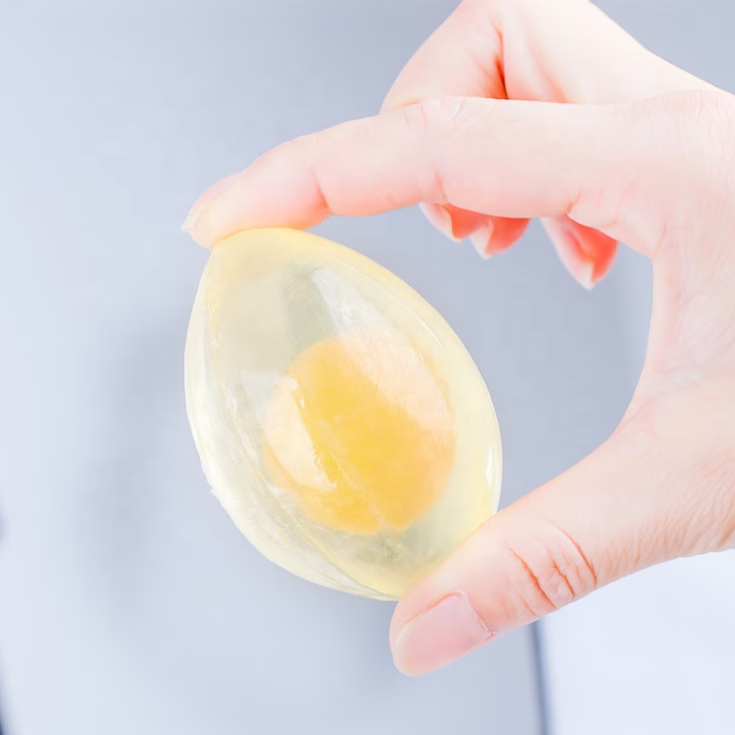
The reference shows a hand holding a translucent, rounded object with an egg-like outline and a yellow-orange central area. These are observations about the photograph. The central color is not an ingredient declaration. The hand is not a scale drawing, and the apparent size is not a confirmed dimension.
For a buyer planning a private label soap project, the first useful instruction is therefore specific: which visible feature matters? Perhaps it is the outline, the contrast between two areas, or the way the item is presented. Mark that preference on the reference. Keep assumptions about composition and use out of the instruction until they have been reviewed.
Give the visual reference and formula separate identities
Use one reference code for the image and another for any formula or physical sample later supplied. A reference image can remain unchanged while the development route changes. Conversely, two visually similar samples may have different compositions. Calling both “the egg soap” makes it difficult to know which item a quotation or comment concerns.
A compact project record can connect the store listing identifier, image filename, requested appearance and open questions. Add the sample code and revision only when those records exist. A missing field should stay marked “to confirm.” An empty field is easier to resolve than an invented value that quietly travels into artwork or an order sheet.
Separate observations, requests and confirmed specifications
| Record type | Example for this project | Quotation treatment |
|---|---|---|
| Image observation | Translucent outer area and contrasting center are visible. | Reference only; no composition inferred. |
| Buyer request | The buyer would like a rounded outline and two visual areas. | A development question, subject to review. |
| Unconfirmed field | Dimensions, net content, composition and intended use are not established. | Keep open or quote clearly defined options. |
| Confirmed specification | A dated document identifies an agreed sample and its reviewed details. | Use that version as the quotation reference. |
This distinction helps prevent a common handoff problem: a buyer approves a picture while the supplier prices an assumed product. Neither party has necessarily agreed the same scope. The written record should say what the reference contributes and which decisions remain unresolved.
Build a quote with named options
Ask for a base route and clearly named alternatives rather than one price attached to the photograph. The base route might describe the requested appearance, proposed pack format and an order range for review. Alternatives can address a different size direction, an additional color route or another outer package. These are requests to evaluate, not statements that the pictured product is available in those versions.
Keep each alternative visible in the quotation. If one route needs further material or process review, say so beside that option. A lower headline price is not a useful comparison when another quote includes different packaging, artwork work or sample preparation. The buyer should be able to trace each quoted option back to the same list of inputs.
Resolve packaging without guessing the sample size
A photograph does not establish the clearance needed inside a box or the contact points of a protective insert. Begin by describing the channel and presentation goal: an individual item, a coordinated set or another format to discuss. Then ask which measurements and component drawings are needed before the pack can be costed.
Artwork can start as an information plan. Decide where the product name, reviewed directions, required label information and buyer branding would go. Final dimensions and print files should follow the actual product and package decisions. Do not scale a carton from the hand in the source image or transfer a nearby listing’s measurements into this project.
Send one brief the sample team can answer
The most useful inquiry combines commercial context with a short decision list. It does not need a long ingredient wish list or an impressive claim. Provide:
- The reference image or listing identifier and the visible features you want to discuss.
- The intended product use, target market and sales channel, each stated separately.
- Your preferred formula direction and any restrictions for technical review.
- The size direction you would like assessed, with no assumption that the picture confirms it.
- Packaging and artwork preferences, language needs and responsibility for supplying files.
- An order range, delivery destination, sample requirement and desired launch window.
GUOCUI BIO TECH / Guangzhou Guocui Biological Technology Co., Ltd. can use this information to organize a Private Label, OEM, ODM or Custom Formula discussion. MOQ and quotation can be confirmed after formula, packaging and order-plan review. Sample and production timing can be confirmed after the proposed scope has been checked.
Close the quotation handoff in writing
Before moving from discussion to an order decision, ask for one dated summary. It should identify the sample or specification version, the selected package, the included work and the unresolved questions. Keep appearance approval separate from any technical acceptance that has yet to occur.
If the appearance changes during development, update the reference and state whether the quotation must be reviewed. If the formula changes but the photograph stays the same, update the technical record. This small distinction prevents an attractive image from becoming the only description of what the buyer expects to receive.
Frequently asked questions
Does the colored center identify an ingredient?
No. A visible color area is an appearance observation. Ingredient identity needs corresponding formula or label documentation; it cannot be read from this photograph.
Can the image establish net weight or dimensions?
No. Ask for a measured, dated specification for the exact item being discussed. Do not estimate either field from the hand or surrounding composition.
Can I request a different appearance or package?
Yes, as a development request. Describe the change and ask for a feasibility review before treating it as an available option or approved specification.
What is the first step toward a useful quotation?
Send the reference together with intended use, market, packaging preference and order range. Ask which fields remain open and which sample or document will anchor the quote.
Prepare the next discussion
Browse GUOCUI Products and the Soap category to define the product category, review Customization options, or send your reference and open questions to GUOCUI. A useful starting brief makes the requested appearance clear while keeping unconfirmed technical details visible.
When a physical sample is ready, use the facial cleansing bar sample QC checklist to organize a separate use and packaging review. The Skincare Industry Trends center collects dated research for future product discussions.