
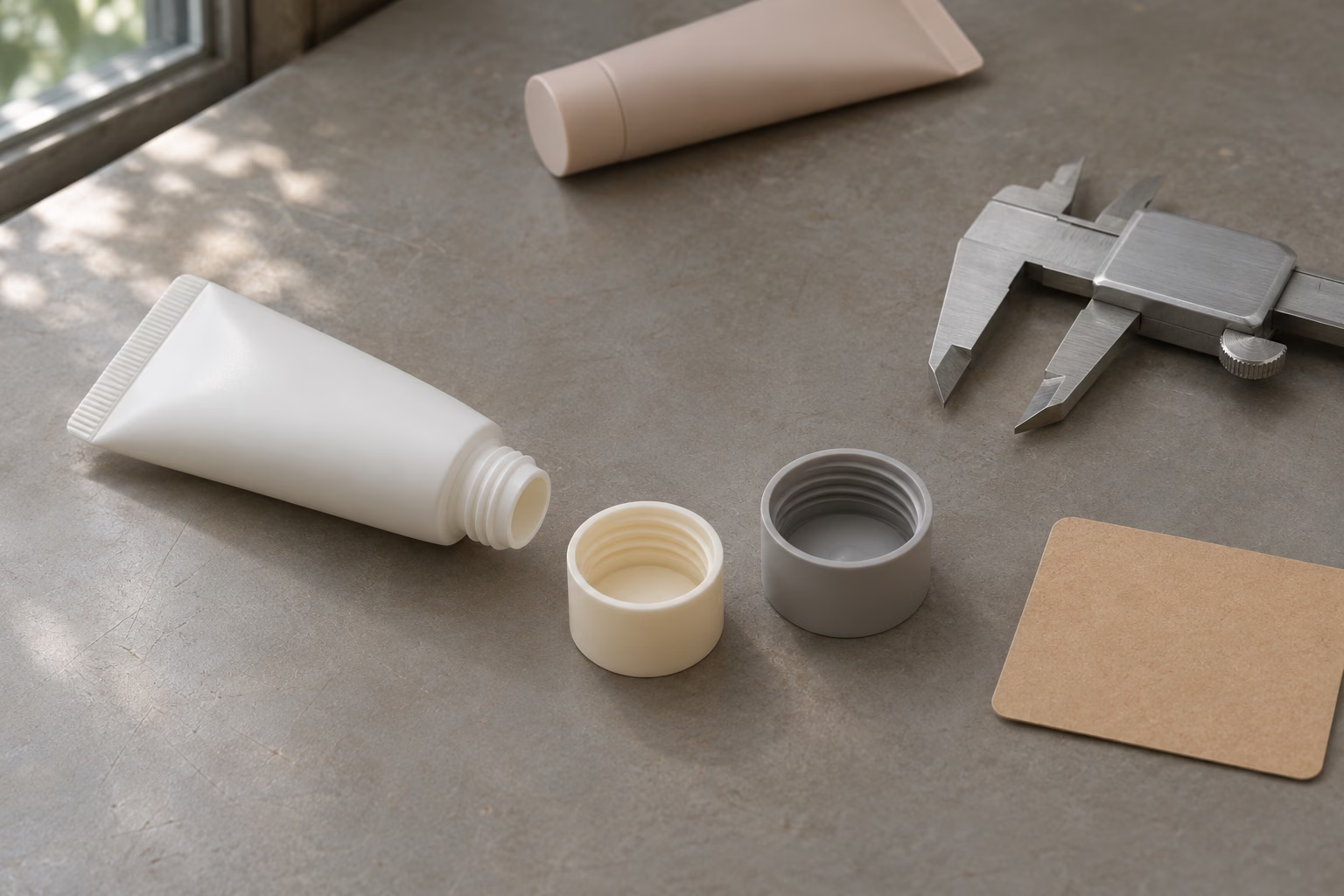
Direct answer: To prevent mix-ups in a private label mini skincare kit, give every filled unit its own code, separate similar items at the packing table, and approve a first packed kit for each market and artwork version. Make the packer prove that each unit belongs in the kit before it disappears under a sleeve or into a closed carton.
A packout is the last assembly step: the point where individually approved units, instructions and outer packaging become one saleable kit. The finished kit can fail even when every mini passed its own formula and packaging review. A body lotion can fit in the cleanser slot; a previous language insert can look right from the front. The useful question is what someone on the packing line can check in a few seconds.
Start with the two mistakes your kit makes easy
Put the physical minis side by side. Can someone distinguish a rinse-off cleanser from a leave-on lotion when both are upside down in a tray? Can they tell a French insert from an English insert when only its folded back is visible? Run this exercise with plain prototypes before committing to matched decoration. Size, colour and placement can help, but every difference should also be expressed in a code or readable name.
On 28 October 2026, Naturie announced two seasonal combinations scheduled for 10 November, one pairing a lotion with a mini gel and the other pairing a gel with a mini tube. A separate Cosme Kitchen announcement on 28 October scheduled a sequence of holiday kits from 1 November. Those statements describe assortments and schedules. Neither establishes fulfillment or demand. For a buyer building their own assortment, the useful design question is how one assembly setup stays distinct from the next.
Give the packer a reference they can work from
For a hypothetical set, use three rows: cleanser A, lotion B and insert C. Create a separate row for the outer carton. Each row needs an item code, a revision, the number expected per kit, a photo or drawing of the correct part, and one visible check the packer can make. Choose identifiers that can still be read when the front of a unit faces down. The examples below are proposed checks for a sample brief.
| Where a mix-up can happen | What to verify before closing the kit | What to do if it differs |
|---|---|---|
| Filled minis look alike | Readable unit code and name in each tray position; expected quantity of each. | Stop assembly and isolate the kits packed since the last confirmed check. |
| Caps look interchangeable | Match the approved cap and tube component codes; check the assembled profile against a reference. | Segregate the affected unit and refer the discrepancy to packaging review. |
| Two language inserts share artwork | Insert revision and market code match the outside carton. | Hold the kit, clear mixed inserts from the table and confirm the next first kit. |
| A mini is replaced on a repeat order | Check the updated assembly sheet, barcode if used, and lot record for the substitute. | Use the former version only within its agreed release scope; review the new version separately. |
The FDA cosmetics self-inspection guidance includes controls for material identity, preventing mix-ups and checking labels before use. That is useful background when discussing checks with a supplier. The table above is a suggested buyer tool. It does not certify a line, verify an order or substitute for destination-specific review.
Walk one pack through the actual changeover
Use a sample session to rehearse a switch from market A to market B. Remove the prior cartons, inserts and open bins; compare the next materials against the released list; then assemble one kit and photograph it open and closed. Check that unit identification is visible before the outer pack is sealed. Agree who signs off that first kit and what event reopens the check: a change of market, an insert revision, a switch of part lots, or a restarted packing run.
Ask how to handle rework before anything is sealed. If a label version changes, can an affected kit be identified through its unit and carton records? Can a mini be removed without damaging the other components? Count a replacement as an explicit change to the kit record, so a later review can recover which units went together. A tray layout, a good reference photo and a clear stop point are easier to use than a long instruction no one can read at the table.
What to send with a private label kit RFQ
Share a draft kit map, the intended channel and destination, each unit’s intended use and quantity, the packaging and closure direction, and the required language versions. Indicate whether the minis will also be sold alone. Flag components that are still being selected. Request separate lines for product sampling, stock or custom components, printed pieces, assembly, inspection and export packing. Compare quotes on that same scope: a unit price can exclude work that another offer includes.
GUOCUI BIO TECH / Guangzhou Guocui Biological Technology Co., Ltd. can discuss formula direction, labels, cartons and sample review through its customization service. Compare the travel hair and body mini kit development direction and the guide to reviewing each primary pack for the earlier formulation and packaging decisions. MOQ, quotation and timing depend on the confirmed formula, component choices, artwork, order plan and sample work.
Buyer FAQ
Can two minis use the same colour and tube shape?
They can share a visual family. Before approval, verify a readable distinction on the filled units, a clear check at the packing table and the right use instructions for each product.
Is a carton barcode enough to check the contents?
A carton barcode can identify the outer kit. Check the unit identities and counts before sealing, then link the finished kit to the agreed lot and artwork records.
What is the first sample to request?
Request one assembled kit per proposed market or artwork version, alongside the individually identified filled units. Ask to see it both open and closed, with the insert revision and part codes recorded.
Which microbiological limits should our lab use for the filled minis?
Before sending samples, give the lab a list of each filled mini and its intended market. Ask the lab to record the applicable microbiological limits and standard edition, the sample and lot identification, and how the results will be reported. ISO published ISO 17516:2026 on 6 November 2026 and lists the 2014 edition as withdrawn. Confirm the applicable specification with your lab and compliance team. Discuss preservative efficacy or microbiological risk assessment separately where applicable.
Evidence checked 7 November 2026. ISO 17516:2026 publication record · ISO 17516:2014 withdrawal record · ISO 11930 antimicrobial protection scope
Before you release a kit: Make each unit recognizable at the packing table, keep an accepted open-kit reference, and agree when assembly must stop and be checked again.
Discuss a mini kit packout with GUOCUI · Browse Products · Read Skincare Industry Trends