
Direct answer: A private label cream design-around starts by separating the useful product idea from another brand’s identity. Keep the buyer problem, texture target, application experience and channel need. Rebuild the formula brief, packaging structure, color system, artwork, claims and sample tests for the buyer’s own market. GUOCUI BIO TECH can then review the concept as a custom formula, private label or OEM/ODM project without carrying competitor names, campaign language or distinctive packaging into the brief.
What design-around means in skincare OEM work
Trend research can reveal a real buyer question: perhaps customers want a rich cream that leaves a high-gloss finish, a compact pump for hygienic application, or a stronger nighttime-care story. Those are useful development signals. The risk begins when the brief also preserves the source product’s name, proprietary ingredient story, exact color combination, label hierarchy, container silhouette and campaign composition.
Product packaging can contribute to the overall commercial impression of a product. For that reason, a practical OEM brief should not treat a logo swap as sufficient differentiation. This article is an operational checklist for product development and is not legal advice; buyers should arrange market-specific trademark, design and claim review with qualified advisers.
Separate the transferable idea from the source identity
| Research observation | Do not carry forward | New buyer decision |
|---|---|---|
| A glossy, cushioned cream finish attracts attention. | A proprietary series name, exclusive ingredient name or copied claim. | Define spread, absorption, after-feel and makeup compatibility in sample terms. |
| A distinctive jar or pump supports the story. | The same unusual shape, color blocking, graphics and label hierarchy. | Select a compatible standard package, then build an original color and artwork system. |
| A strong problem-and-solution narrative is memorable. | Campaign slogans, character concepts, dramatic treatment language or before-and-after framing. | Use a cosmetic buyer problem such as dry-feel comfort, barrier-care positioning or makeup-ready finish. |
| A premium routine can justify several touchpoints. | A copied set architecture or identical launch bundle. | Choose a channel-specific single product, duo or routine based on the buyer’s assortment. |
Nine decisions before a custom cream sample
1. Define the buyer and sales channel
An Amazon seller, salon range, distributor and TikTok-focused brand do not need the same cream brief. Tell the factory the target country, channel, expected retail position, buyer age group and whether the product belongs in a simple routine or a larger collection. These inputs affect pack size, claim language, carton information and the amount of education needed on the page.
2. Describe texture with observable sample language
Replace vague requests such as “luxury texture” with decisions a sample team can evaluate: gel-cream or buttery cream, quick break or long cushion, low tack or protective after-feel, soft matte or visible glow, fragrance-free or restrained fragrance. If makeup compatibility matters, specify pilling, spread and waiting-time checks rather than promising a perfect result before sampling.
3. Build a non-proprietary formula direction
Use familiar cosmetic categories such as humectants, emollients, ceramide-positioned barrier care, panthenol, beta-glucan, peptides or antioxidant directions when they suit the project. Final ingredients, percentages and claims must follow formula feasibility, stability, target-market and evidence review. A source product’s proprietary complex or patented story should remain outside the public brief unless the buyer has the right and documentation to use it.
4. Set a conservative claim boundary
Early copy can focus on moisturized feel, smoother-looking finish, comfort-feel care and support for a well-conditioned appearance. Avoid clinical, treatment, regeneration, guaranteed duration or age-reversal language unless the finished formula and destination-market evidence support it. Claims should be reviewed again when the final INCI, test plan and label are available.
5. Choose packaging for the formula, not the reference photo
Jar, airless pump and tube options should be compared against viscosity, dose, fill volume, oxygen exposure, decoration area and user handling. Ask the sample team to check pump output, closure fit, leakage, label adhesion and carton fit. A visually interesting package that cannot dispense the selected texture is not a useful design-around.
6. Rebuild the visual system
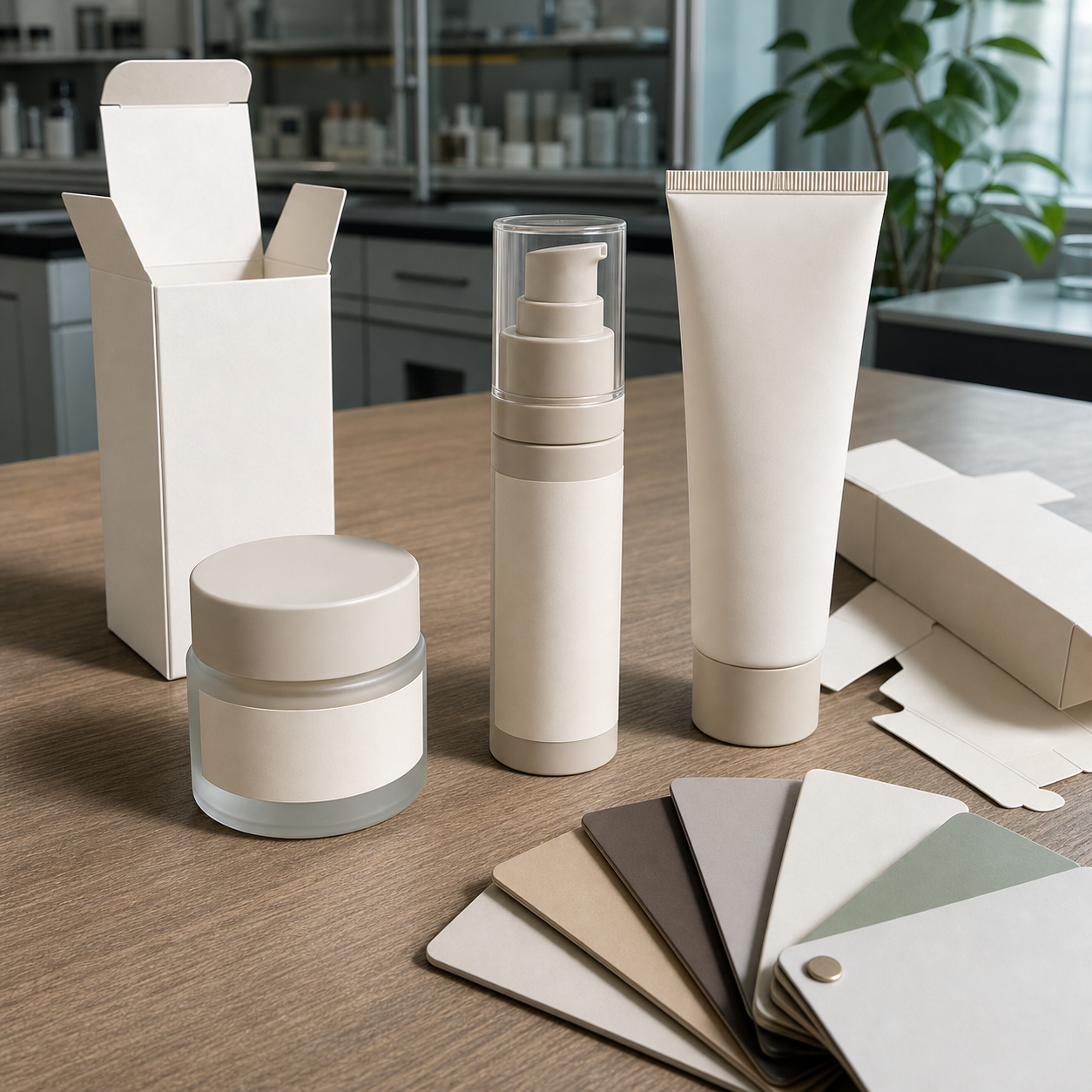
Create an original palette, material mix, logo scale, label hierarchy, carton layout and photography direction. Change several connected elements rather than one color. Avoid copying a recognizable container silhouette, dominant color combination, graphics, campaign prop or shot composition. Keep generic sample packs blank until the buyer’s artwork is ready for review.
7. Agree on sample acceptance checks
The buyer should review appearance, odor, spread, absorption, tack, after-feel, package output and use with adjacent routine products. Record what passed, what needs adjustment and which pack was used. A clear acceptance sheet prevents the bulk order from depending on memory or a social-media reference image.
8. Prepare label and export information
Share destination country, required languages, responsible-party details, barcode or lot-area needs, carton marks and any document expectations. Ingredient wording, warnings, directions and claims should be checked against the intended market. GUOCUI can coordinate packaging copy and production information, while the buyer remains responsible for the final market route and professional compliance advice.
9. Give the factory enough information to quote
Quotation depends on formula complexity, package, decoration, quantity, label languages, carton structure, set requirements and shipping plan. MOQ, sample timing and production timing can be confirmed after those variables are reviewed. A complete brief produces a more useful quotation than asking for a copied retail product at an unspecified quantity.
Buyer handoff checklist
- Target country, sales channel and intended buyer.
- Product positioning and cosmetic claim boundary.
- Texture, finish, fragrance and ingredient directions.
- Jar, pump or tube preference, capacity and decoration method.
- Original color, label, carton and product-photo direction.
- Estimated quantity, target launch timing and shipping plan.
- Sample acceptance tests and final decision owner.
- Label languages, market documents and review responsibilities.
Frequently asked questions
Can GUOCUI copy a trending cream exactly?
No. A safer project converts the buyer need into a new formula, sensory, packaging and visual brief. Competitor names, proprietary stories, source images and distinctive packaging should not become the new public product identity.
Can a buyer send reference links?
Yes. Reference links can help explain texture, channel, pack function or user experience. Mark which elements are only research signals, then document the new decisions that will define the buyer’s own project.
When should packaging be selected?
Discuss packaging early, but confirm it with the selected formula. Viscosity, dose, closure, label area, decoration and transport checks can change the final choice.
Does a design-around replace legal review?
No. It is a product-development discipline, not a legal clearance. Buyers should conduct appropriate trademark, design, artwork and market-claim review before launch.
What should a buyer send first?
Send the target market, channel, texture, package, quantity range, launch timing and the elements that must be original. GUOCUI can then organize the next formula, sample, artwork and quotation questions.
Start with an original OEM brief
Review GUOCUI Products, the Face Care category, Facial Cream options and the Customization service. For another practical sample check, see how to review face cream samples for makeup compatibility. When ready, send GUOCUI your project brief.
Leave a Reply