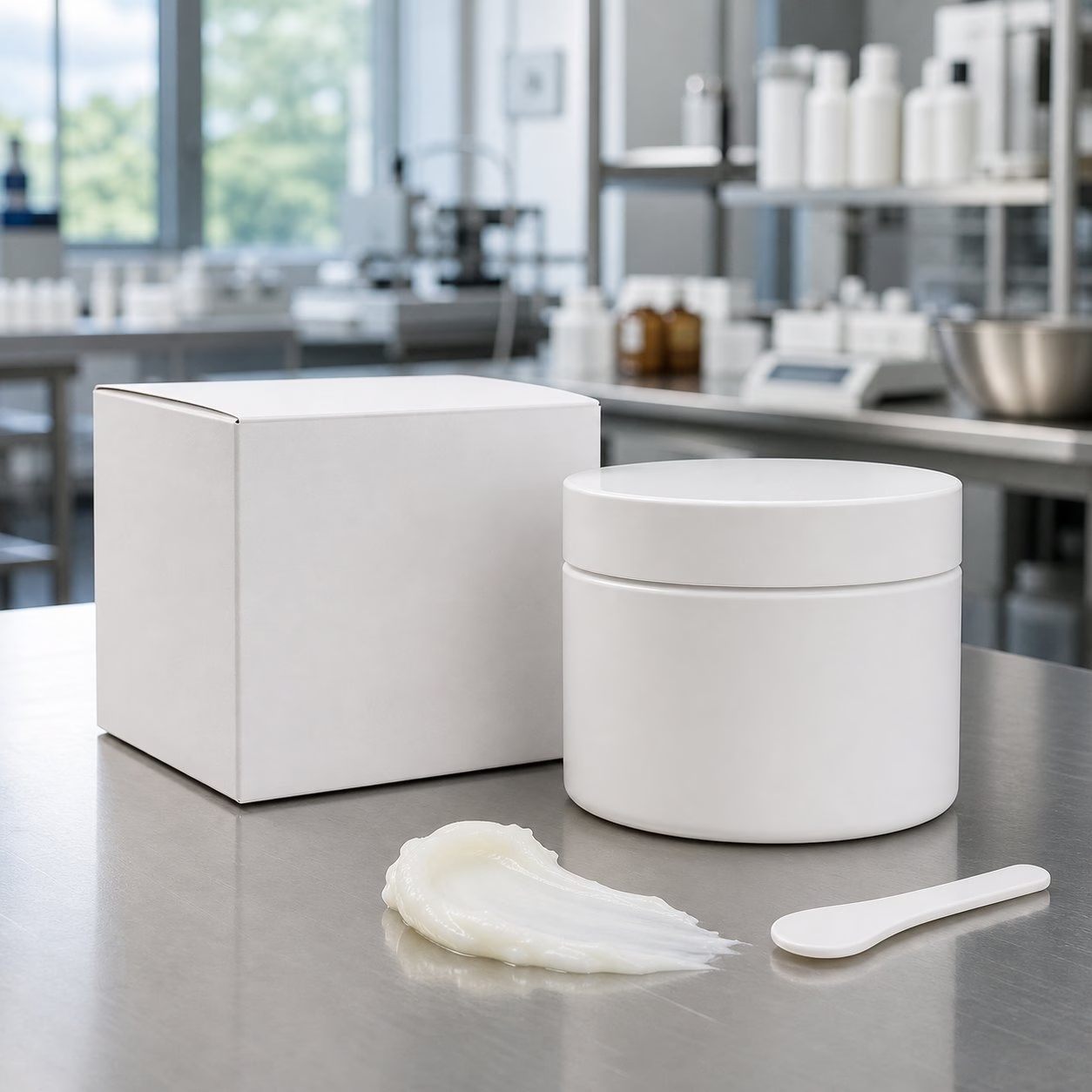
Direct answer: a cleansing balm OEM brief should define the melt profile, makeup-removal scope, emulsification and rinse-off target, after-feel, jar and spatula system, and full-size versus travel-size plan before the first sample. If these decisions stay vague, a formula can feel impressive on the sample table yet fail during warm storage, wet-hand use, repeat rinsing, travel packing, or consumer instructions.
Recent market monitoring captured a cleansing-balm launch dated July 30, 2026 in both regular and travel formats. GUOCUI treats that as a product-format signal only. It is not proof of sales, ranking, or a formula to copy. For a private label buyer, the useful question is whether two sizes can share one approved formula and a consistent user experience without creating avoidable packaging, filling, labeling, and quotation problems.
Define the Cleansing Job Before Choosing a Trend Ingredient
A cleansing balm is an anhydrous or low-water cosmetic cleanser designed to soften during use, lift oil-soluble residue, and rinse away after water is added. The exact composition and claim boundary depend on the buyer brief and destination market. “Melting,” “sherbet,” “buttery,” and “oil-balm” are sensory directions, not interchangeable specifications.
The GUOCUI export team starts with the removal job: everyday sunscreen and base makeup, heavier color cosmetics, or a gentle first-cleansing step for a routine. Waterproof and eye-area language needs separate review. A buyer should not ask a factory to maximize cleansing power, leave a rich cushion, rinse with no residue, suit every skin type, and work with every package without accepting trade-offs and testing.
| Decision | What the buyer should specify | What the sample review should check |
|---|---|---|
| Melt profile | Firm scoop, quick melt, creamy glide, or oil-rich slip. | Scoop resistance, graininess, spread, heat sensitivity, and recovery after cooling. |
| Removal scope | Daily base products, heavier makeup, or routine first cleanse. | Removal on the agreed test materials without unsupported universal claims. |
| Emulsification | Fast milk-up, slower massage window, light or rich rinse. | Water-addition behavior, repeat rinse, visible residue, and sink-side use. |
| After-feel | Clean, soft, cushioned, or low-residue direction. | Skin feel after drying and compatibility with the next routine step. |
| Pack format | Full-size jar, travel jar, spatula, inner lid, carton, or set inclusion. | Closure, scoop access, leakage, scuffing, label area, and shipping protection. |
Build Formula and Package Samples as One System
Private label cleansing balm development is not finished when the texture looks smooth in a beaker. Oils, waxes, esters, emulsifiers, fragrance choices, color, and optional botanical or vitamin-positioned ingredients can change firmness, clarity, odor, melt speed, rinsing, and package compatibility. Supplier documentation, ingredient identity, stability conditions, and destination-market claim review should support the final direction.
The primary package also changes the experience. A wide jar can make scooping easier but increases the exposed surface. An inner lid may help organize a spatula but adds components and fit checks. A compact travel jar needs enough opening clearance for practical use while staying secure inside a carton, pouch, or gift set. A premium wall thickness or special finish can alter cost, shipping weight, decoration area, and procurement timing.
Full Size and Travel Size Need Separate Filled-Pack Tests
Using one visual family for two sizes is useful for channel planning, but a small jar is not simply a scaled-down large jar. The closure thread, liner, wall thickness, headspace, spatula fit, label radius, carton tolerance, and consumer access can differ. The formula-to-package ratio may also change how quickly the balm warms during filling or use.
- Fill and close both actual packages, not empty samples only.
- Check appearance, odor, firmness, sweating, separation, and surface recovery under the agreed stability plan.
- Review closure security, leakage, liner contact, jar deformation, scuffing, and carton fit.
- Confirm that instructions, warnings, batch coding, ingredient information, barcode space, and multilingual copy remain legible on the smaller format.
- Decide whether the travel format is sold alone, used as a sample, packed in a set, or reserved for a particular channel.
Travel wording should describe the package plan, not promise compliance with every airline, retailer, or market. Final capacity, transport requirements, and labeling must be checked for the destination and sales channel.
What GUOCUI Checks During Sample and QC Handoff
- Buyer brief review: market, channel, removal scope, sensory target, ingredient restrictions, fragrance direction, pack references, quantity range, and launch timing.
- Bench sample review: appearance, scoop, melt, massage window, emulsification, rinse, after-feel, odor, and visible residue.
- Package selection: jar material and size, closure, liner, inner lid, spatula, decoration method, carton, and shipping protection.
- Filled-pack compatibility: formula contact, closure performance, warm and cool behavior, leakage risk, label adhesion, and sample transport.
- Artwork handoff: authorized logo, product name, ingredient list, directions, warnings, language versions, coding area, and barcode space.
- Approved-reference control: align the approved formula, physical package, artwork version, packing method, and buyer-defined inspection points before bulk.
GUOCUI BIO TECH / Guangzhou Guocui Biological Technology Co., Ltd. can support formula discussion, package sourcing communication, sample review, label localization, QC checkpoints, and export packing coordination. These are project workflows, not claims that every requested formula, component, or timeline is automatically available.
MOQ, Quotation, and Timing for a Cleansing Balm Project
MOQ and quotation can be confirmed after formula, packaging, quantity, label requirements, and order plan review. A regular jar and a travel jar may have different component MOQs, decoration setup, carton quantities, and assembly costs even when they share one formula.
Quotation depends on the formula route, ingredient documentation, jar and closure, inner lid or spatula, decoration, individual carton, artwork versions, sample revisions, inspection plan, shipping protection, and destination. Sample and production timing can be confirmed after formula and packaging review, component availability, artwork readiness, and the approval sequence are clear.
Buyer Information to Send Before the First Quote
- Target country, buyer type, sales channel, audience, and intended routine position.
- Removal scope, texture and rinse target, after-feel, fragrance preference, and ingredient restrictions.
- Full-size and travel-size capacity direction, estimated quantity for each, and whether both use the same artwork family.
- Jar, closure, liner, inner lid, spatula, label, printing, carton, set-box, and master-carton needs.
- Authorized logo files, label languages, barcode plan, required documents, sample deadline, and launch window.
Frequently Asked Questions
Can one cleansing balm formula be used in two jar sizes?
It may be possible, but both filled packages should be evaluated. Closure geometry, headspace, spatula access, thermal behavior, label area, and packing conditions can differ.
Can we request a vitamin-positioned or botanical cleansing balm?
Yes, as a formula discussion direction. The exact ingredient identity, supplier documents, stability, odor, color, claim wording, and destination-market suitability must be reviewed before public claims are finalized.
Does a balm cleanser need a spatula?
Not every project does. The decision depends on jar opening, texture firmness, intended use, hygiene instructions, inner-lid design, cost, and buyer preference. If included, the spatula and storage position must fit the real pack.
How should buyers compare cleansing balm samples?
Use one written scorecard for scoop, melt, spread, agreed removal task, emulsification, rinse, residue, after-feel, odor, and package handling. Compare samples under the same use conditions instead of relying on first touch.
What should be approved before bulk production?
Approve the formula reference, filled package, closure and liner, spatula or inner lid, label and carton artwork, instructions, packing method, QC checkpoints, quantity plan, and shipping requirements.
Start a Cleansing Balm OEM Brief
Review the Private Label Melting Balm Cleanser, browse the GUOCUI B2B product catalog, compare Face Care directions, and read about Customization and Private Label support. When the product and package brief is ready, send the project interest to the GUOCUI export team.
Leave a Reply