
Direct answer: a precision-tube serum should not enter OEM sampling until the buyer has defined the intended dose, formula route, nozzle and closure, target market, claim boundary, and label space. A small pack is not just a smaller serum bottle. It changes how the formula exits, how much product remains in the pack, what can fit on the label, and what the factory must test before quotation.
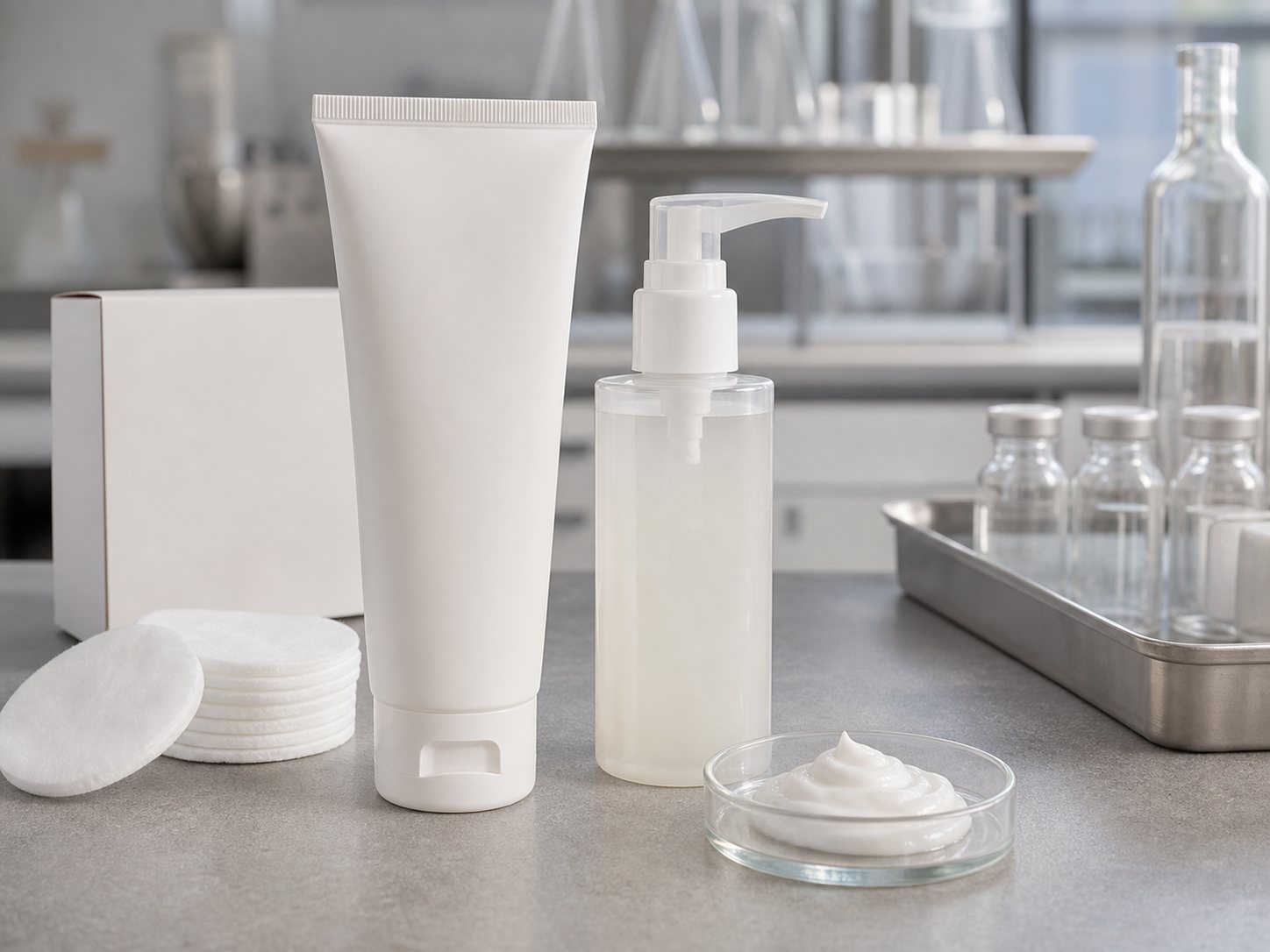
Why precision tubes are appearing in serum briefs
Recent product-format research has highlighted 15–20 ml tubes and targeted-use routines alongside larger dropper serums. That is a useful development signal for private-label buyers, but it is not evidence of guaranteed demand, sales, or conversion. The practical B2B question is whether the format solves a channel problem: compact shelf presentation, controlled application, travel-friendly merchandising, a two-SKU routine, or a smaller entry size for a professional, marketplace, salon, or spa line.
A tube can make a concept feel more precise, yet the format must still match the formula. A narrow nozzle may work with a fluid gel but struggle with a high-viscosity cream serum, visible beads, suspended powders, or an unstable emulsion. GUOCUI BIO TECH therefore treats the package and formula as one sample brief, not as two separate purchasing decisions.
Choose the cosmetic route before naming the hero ingredient
Start with the buyer outcome and market position, then select an ingredient direction that can be documented and tested. Two lower-risk starting routes are often easier to brief:
- Hydration and smooth-feel route: a lightweight serum built around humectants, compatible peptides, and a clean after-feel for daily use.
- Radiance-look route: a niacinamide and vitamin C derivative direction, subject to formula stability, color, pH, packaging, and target-market review.
A PDRN-positioned or other DNA-derived route should remain optional until the raw-material identity, INCI, source, TDS, SDS, CoA, traceability, target-market status, and proposed claims have been reviewed. The public name should not imply injection, medical procedures, tissue repair, regeneration, disease treatment, or guaranteed structural change. If those records are not ready, a non-DNA baseline sample gives the buyer a safer way to assess texture, dose, package handling, and channel fit first.
Six decisions that belong in the first RFQ
| Decision | What the buyer should state | What the factory needs to check |
|---|---|---|
| Use area and routine | Full-face, targeted-area, day, night, or paired routine | Directions, cosmetic claim boundary, likely dose and warning space |
| Formula route | Fluid gel, cream serum, emulsion, or visible-particle concept | Viscosity, stability, nozzle flow, clogging and package compatibility |
| Pack format | Soft tube, airless tube, pump, or two-format comparison | Material, closure fit, seal, decoration area and component availability |
| Desired dose | Controlled dot, short line, or broader application | Nozzle geometry, repeatability, squeeze force and residual product |
| Sales market | Countries, channels and required languages | Claims, ingredient naming, warning text and label-panel feasibility |
| Commercial plan | Forecast, sample quantity, launch window and pack variants | Quotation variables, component lead times and production review sequence |
Do not approve the tube from a beauty rendering
A rendering can help with color and layout, but it cannot prove dispensing behavior. Before artwork is locked, the sample review should include the actual formula in the intended component. The team should compare the first dispense with later dispenses, upright and inverted storage, cap cleanliness, nozzle blockage, squeeze force, leakage, label adhesion, scuffing, and product left in the pack. The exact test plan depends on formula, component, transport route, and destination requirements; a supplier test on a different bottle or formula cannot be treated as approval for the buyer’s finished pack.
For a two-SKU routine, both packs also need a clear visual hierarchy without copying another brand’s color system, tube proportions, name, or “shot” language. A useful design-around changes the formula story, color family, closure, graphics, channel role, and instructions. Blank samples and label proofs should be reviewed before bulk decoration.
Build a sample matrix that answers one question at a time
The first sample round should stay small and interpretable. One practical matrix is two formula textures crossed with two suitable package options. That lets the buyer compare sensory feel, flow, dose control, and leakage without confusing too many variables. If a DNA-derived or high-claim ingredient direction is being considered, keep it as a separate documented branch rather than hiding it inside the baseline sample.
- Confirm the buyer brief, target market, claim vocabulary, and preferred format.
- Review available formula and packaging directions with the GUOCUI export and sample teams.
- Prepare the agreed samples and blank or provisional packaging components.
- Record texture, dispense, closure, label, compatibility, and buyer feedback.
- Revise the formula or component before final artwork, quotation, and production timing are confirmed.
Sample and production timing can be confirmed after formula, packaging, label, and destination-market review. MOQ and quotation can be confirmed after the formula, component, decoration, quantity, and shipping plan are defined.
Keep claim review connected to the package
Small tubes have limited label space, but required and material information cannot be reduced to unreadable copy. In the United States, cosmetic claims must be truthful and not misleading; wording that treats disease or affects the structure or function of the body can move a product into drug territory. EU cosmetic claims are also expected to meet common criteria such as evidential support, honesty, fairness, and informed decision-making. Buyers should have market-specific labels reviewed by qualified specialists before production.
For a cosmetic serum, safer working language may describe hydration, smooth feel, radiance-looking skin, a lightweight texture, or a targeted application routine when supported by the final product and its evidence. Avoid “injection-like,” “DNA repair,” “regenerates tissue,” “treats acne,” “clinical replacement,” fixed outcome promises, or certification language that has not been verified for the finished product.
What GUOCUI needs before a useful quotation
- Target countries and sales channels.
- Preferred formula route, texture, fragrance position, and ingredients to include or avoid.
- Pack type, approximate net content direction, color, decoration, label, carton, and set requirements.
- Expected order quantity or forecast range, required sample quantity, and desired launch window.
- Reference images used only to explain function or style, plus a clear list of elements that must not be copied.
- Required claims, languages, compliance documents, shipping destination, and any channel-specific checklist.
Buyers can review the wider GUOCUI B2B product catalog, compare face-care directions, and see the custom formula and packaging workflow. For a project-specific review, send the details through the GUOCUI inquiry form. If the concept uses a retinoid supplier blend, also read the active-identity briefing guide before discussing percentages.
FAQ
Is a precision tube always better than a dropper bottle?
No. The best format depends on viscosity, dose, application area, decoration, transport, channel expectations, and buyer usability. A side-by-side package trial is often more useful than deciding from a rendering.
Can GUOCUI quote a fixed MOQ from a concept image?
Not responsibly. MOQ and quotation depend on formula, component, decoration, quantity, label, carton, testing, and shipping requirements. Those inputs should be reviewed first.
Can a buyer request a PDRN-positioned precision serum?
It can be discussed as an optional direction, but raw-material identity, source, documentation, target-market status, formula, packaging, and claim language must be reviewed. A non-DNA baseline can be sampled first.
What should be tested before artwork approval?
Check the filled component for dispense behavior, leakage, closure cleanliness, formula compatibility, label adhesion, scuffing, usable panel space, and realistic transport handling. The final plan must match the actual pack and formula.
Can buyers place a retail order directly on the site?
No. GUOCUI is an inquiry-led B2B manufacturer. Formula, packaging, sample, quotation, MOQ, timing, and export details are discussed before an order plan is confirmed.
Regulatory background: U.S. FDA cosmetics labeling claims and EU common criteria for cosmetic claims. These links are general references, not market-specific legal advice or approval of a particular formula.
Leave a Reply