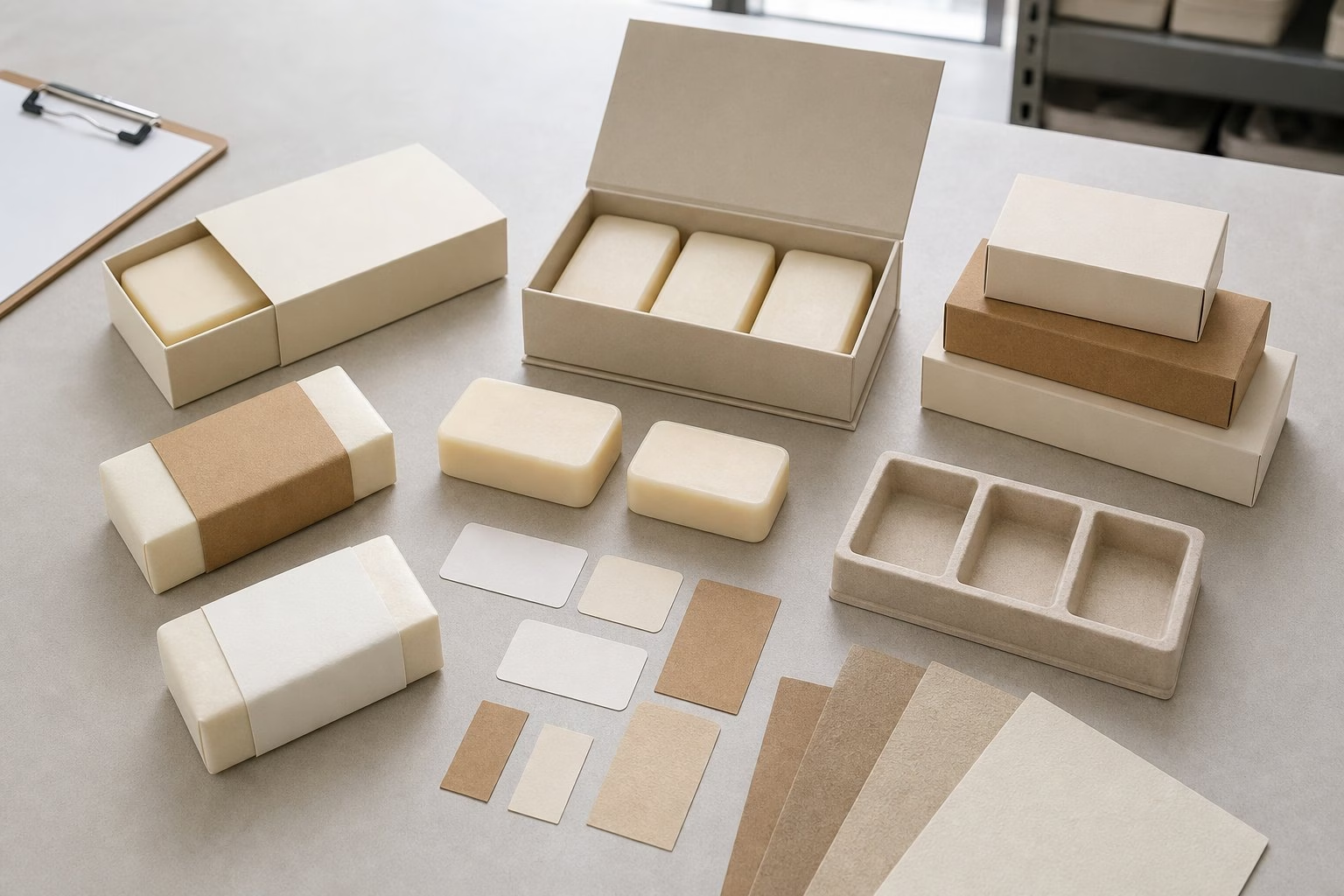
Direct answer: a private label skincare gift set should not move to quotation as a loose list of products. The buyer and factory first need one set architecture that connects the formulas, primary containers, individual cartons, insert, outer box, label hierarchy, assembly method, and shipping carton. If one layer changes after sampling, the other layers may need to be checked again.
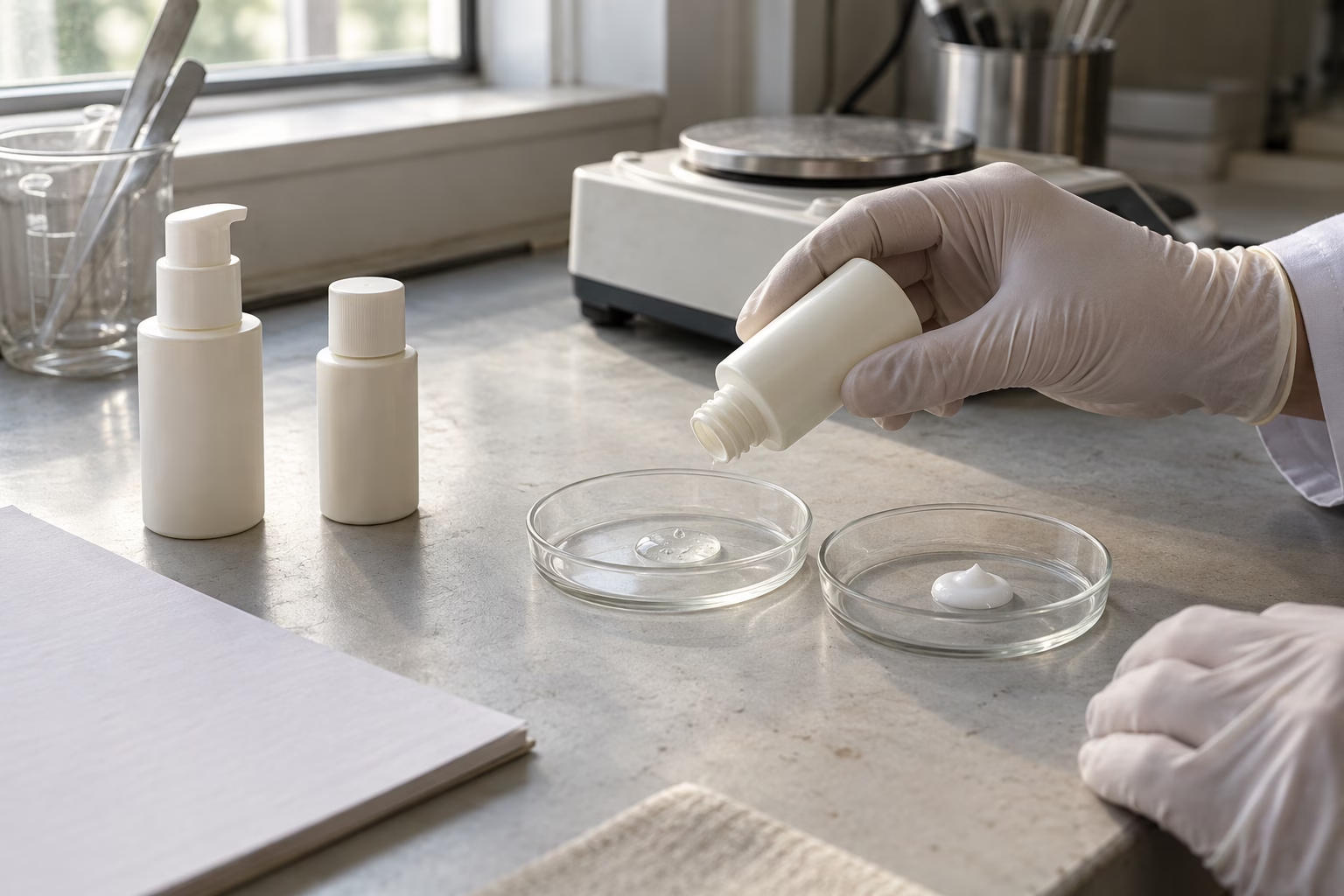
GUOCUI BIO TECH helps buyers define the product and packaging decisions needed for a representative sample. A clear brief reduces late changes to artwork, fit and quotation.
29 September update: a mini routine is several formula-pack systems
Verified facts: the brand’s official launch feature dates a four-step skincare trial kit to 18 September 2026. The exact official product page, read on 29 September, lists separate portable cleanser, toner, serum and cream items and separate ingredient lists. This verifies a dated bundle of existing routine steps, not four new formulas or demand momentum.
GUOCUI inference: choose hero-plus-mini, a two-step pair or a fuller routine before matching the packaging. For every included item, record formula code, pack code, net fill, amount per use and expected residue. Use estimated uses = usable filled amount divided by the agreed amount per use, then label the result as an estimate. If one item empties much earlier, revise the fill, instructions or step list before artwork approval. Use matching mass or volume units and retain the formula revision, component code and sample date. A fuller cleanser-to-cream set remains a separate feasibility project from an existing two-step pair.
Not claimed: formula or pack equivalence, transferable fermentation or animal-derived ingredients, compatible stock components, completed leakage testing, a fixed travel duration, natural sales growth or production readiness. Source branding, pixels, distinctive packaging and performance language are excluded from the GUOCUI brief.
What “set architecture” means in an OEM project
Set architecture is the relationship between every item inside the kit and the packaging around it. A serum bottle, cream jar, mist bottle, and mask sachet may each be feasible on their own, but the combination still needs a shared size plan, pack hierarchy, artwork system, and assembly sequence.
| Layer | Buyer decision | Factory review |
|---|---|---|
| Product mix | Two to four formats, target channel, use order | Formula route, compatibility, sampling scope |
| Primary pack | Bottle, jar, pump, dropper, sachet, capacity direction | Closure fit, leakage risk, fill and label area |
| Unit carton | Which items need individual boxes | Dieline, copy space, local language, component protection |
| Insert | Paperboard or molded insert, display order | Clearance, grip, removal, movement during transport |
| Outer box | Rigid box, folding carton, sleeve, opening experience | Board, structure, print route, assembly time |
| Shipping pack | Case quantity and destination | Master-carton fit, protection, carton marks |
Choose the product route before designing the box
A reviewed-formula route places more early work on packaging, labels and channel presentation; a custom-formula route adds texture, fragrance, ingredient and compatibility decisions. Neither has a universal MOQ, price or timeline. Quotation depends on the formulas, components, decoration, carton, SKU count, assembly, quantity, labels and shipping plan.
Build from product to transport, not from artwork alone
Move from product and primary packaging to unit cartons, insert, outer box and shipping protection. Designers need confirmed dimensions before approving artwork.
- Confirm the set brief. State the target market, buyer type, sales channel, product mix, launch window, and expected quantity range.
- Choose formula and pack directions. Match each texture to a practical bottle, jar, pump, tube, pouch, or sachet route.
- Collect component dimensions. Use supplier-confirmed measurements before final insert and carton artwork.
- Review the label hierarchy. Decide what belongs on the primary pack, individual carton, set box, and shipping carton.
- Make an assembled sample. Check how products sit, how buyers remove them, and whether labels remain visible.
- Confirm the packing sequence. Define item order, insert placement, inspection points, sealing, and case packing.
Artwork handoff needs a file map
A multi-item gift set can contain several dielines and repeated claims. The buyer should send an artwork map that identifies the latest file for each bottle label, unit carton, insert card, sleeve, outer box, and master-carton mark. File names should include the SKU or component and version date. The factory should not have to guess whether “final-v2” or “final-new” is the approved file.
Market wording needs its own review. The FDA labeling resource, read on 29 September 2026, distinguishes product labels from accompanying material and describes identity, net quantity, business information and ingredient-label requirements. Use it to prepare the label map; the destination review must address the actual product and packaging.
Supplier context: Aptar’s 17 September pump announcement recommends compatibility testing and says container shape, size and formula can affect transport-test results. This supports a project-specific review, not approval of a GUOCUI mini, a material substitution or a recycling claim.
Sample the assembled system, not only each formula
Formula samples answer questions about texture, scent, color, spread, and skin feel. Packaging samples answer questions about bottle, closure, print, label, and carton. A gift-set sample must connect both. The assembled sample should be checked for insert clearance, product movement, label orientation, opening effort, rubbing, carton pressure, and obvious presentation gaps.
GUOCUI buyers can also request a packing discussion before bulk production. A practical review may cover the approved component list, assembly order, label position, carton count, outer-box protection, and the records needed for shipment preparation. It should not be presented as proof of a buyer’s final production order until the specifications are approved.
Buyer handoff checklist
- Target country or region and sales channel.
- Set concept, buyer audience, and expected launch window.
- Two to four preferred product formats and formula route.
- Container type and approximate capacity for each item.
- Need for individual cartons, insert, sleeve, ribbon, or information card.
- Logo files, artwork status, language plan, and responsible reviewer.
- Estimated quantity range and whether one sample set or several variants are needed.
- Shipping destination and any buyer-specific carton-mark requirements.
Review the GUOCUI product catalog, compare the Lotion + Emulsion Refill and Mini Sampling Pair, examine custom skincare OEM/ODM options, or visit the Skincare Industry Trends center. The existing blank-label gift-set workflow example covers a different set type. To discuss a configurable project, use the GUOCUI skincare gift-set inquiry path.
FAQ
Can GUOCUI combine different skincare formats in one private label gift set?
Yes. Buyers can discuss combinations such as serum, cream, mist, mask, cleanser, body care, or lip care. The final mix depends on formula review, package fit, channel positioning, and the set assembly plan.
Does a skincare gift set have one MOQ?
Not automatically. The practical MOQ can be influenced by each formula, primary container, decoration process, printed carton, insert, outer box, and assembly requirement. GUOCUI confirms the quotation logic after the full set brief is reviewed.
Should the box artwork be finished before sampling?
The brand direction can start early, but final dielines should use confirmed component dimensions. Buyers should avoid approving detailed insert and outer-box artwork from estimated bottle or jar sizes.
Can one assembled sample represent bulk production?
It can confirm the intended direction, fit, and presentation, but production still depends on approved specifications, available components, artwork files, QC points, and the final order plan.
What should a buyer send first?
Send the target market, sales channel, preferred product mix, package direction, quantity range, artwork status, and launch timing. GUOCUI can then identify the next formula, packaging, sample, and quotation questions.
How should a buyer estimate a mini set’s use period?
Measure the intended amount per use and usable filled amount for each accepted formula and pack. Keep the calculation with the sample record and label it as an estimate until filled-sample observations support the instructions.
Short conclusion: a skincare gift set becomes quotation-ready when every product and packaging layer belongs to one reviewed system. Lock the architecture first; then sample, check, and price the complete set.
Evidence checked 29 September 2026. The two official kit pages, FDA labeling resource and supplier announcement above are planning references. Source formulas, images, claims and distinctive packaging are not reused.
Leave a Reply