Direct answer: what is a private label skincare version lock?
A private label skincare version lock is a written agreement that the approved formula sample, the chosen packaging components, and the print-ready artwork all describe the same product. Before printing or filling starts, the buyer and manufacturing team should be able to point to one formula code, one component specification, and one artwork revision. If any of those three changes, the affected checks reopen.
Short conclusion: do not approve a label as a picture. Approve it as the visible face of a specific formula and a specific filled package.
Why three separate approvals are safer than one final “OK”
Most packaging mistakes are not caused by a missing logo. They happen when teams approve different versions in different places: a sample is accepted in chat, a new bottle is selected later, and an older ingredient list remains in the design file. Each item may look reasonable by itself, but the production set no longer matches.
For an overseas OEM/ODM project, GUOCUI recommends treating formula, components, and artwork as three connected records. This is project control, not a substitute for the buyer’s destination-market regulatory review.
| Lock | Record to identify | What the review proves | Change that reopens it |
|---|---|---|---|
| Formula | Formula or sample code, revision, date | The approved texture, color, fragrance direction, use and cosmetic claim boundary | Ingredient, fragrance, color, preservative, dosage form or intended-use change |
| Packaging | Container, closure, capacity, material and supplier reference | The selected components fit the product and the agreed decoration route | Bottle, jar, tube, pump, cap, liner, pouch, capacity, finish or supplier change |
| Artwork | File name, revision, market, language and approval date | The copy is placed on the correct dieline and is ready for the assigned market reviewer | Formula, capacity, claims, address, barcode, language, printer or market change |
Lock 1: connect the approved sample to a formula record
A buyer may say, “The second sample feels right.” The production team needs a more exact reference. Record the sample code, date, fragrance or color variant, and the decisions that were accepted. If the project uses a ready formula, state what customization is still open. If it uses a custom formula, identify which document supplies the ingredient declaration for the production version.
The same record should define the public claim boundary. A cosmetic brief such as “lightweight scalp-care shampoo with a clean after-feel” is different from a disease-treatment promise. The U.S. FDA notes that therapeutic claims can change how a product is regulated, while false or misleading label statements can make a cosmetic misbranded. Strong wording should not be added at the artwork stage simply because there is space on the front panel.
Lock 2: approve the filled package, not only an empty component
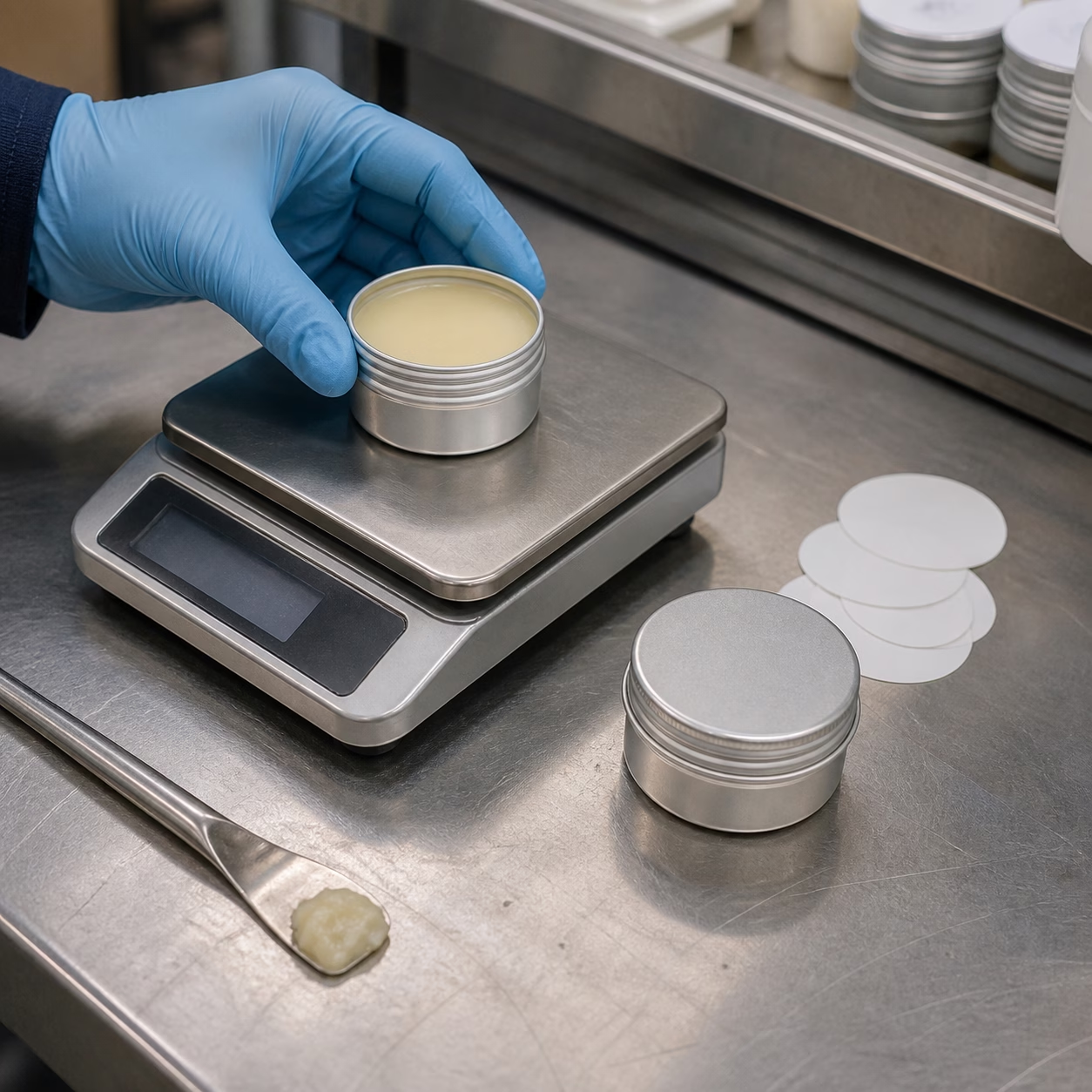
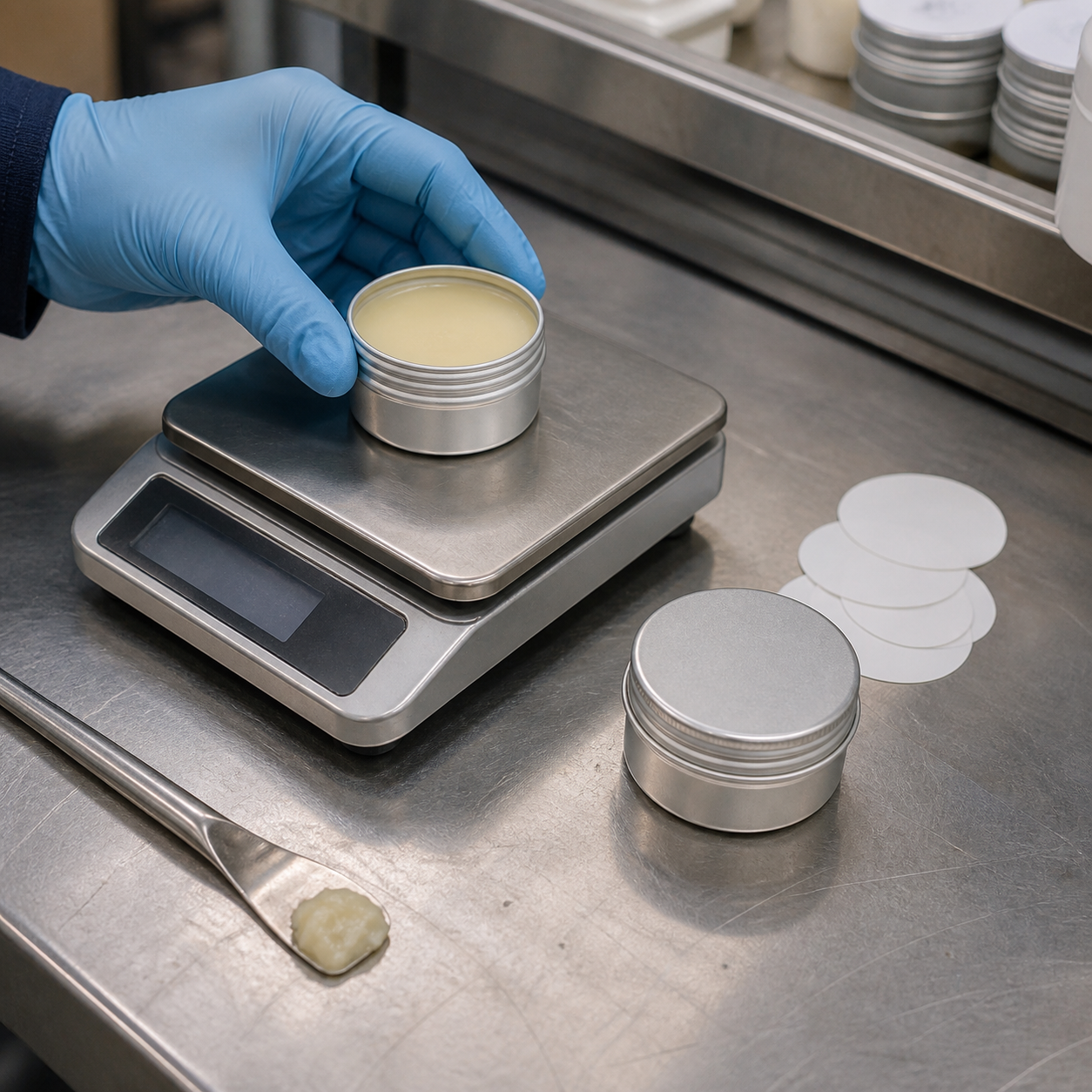
Packaging selection should include the actual bottle, jar, tube, pump, cap, liner, refill pouch, label stock, and carton direction. The team should also know the intended fill capacity and decoration method. An empty pump can look suitable and still behave differently after contact with a viscous serum, a high-fragrance body product, or an anhydrous balm.
Before the artwork is frozen, confirm the final dieline against the selected component. Check curved areas, seams, crimp zones, cap travel, label overlap, readable panels, barcode space, batch-code area, and how the primary pack sits inside the carton. If a refill is included, treat the jar and refill as one system rather than two unrelated packs.
Lock 3: give the artwork master a traceable identity
A production-ready artwork approval should name the exact file. A useful file identity includes the SKU, target market or language set, component or capacity, revision number, and date. “Final-final-new.pdf” is not a controlled master.
The buyer’s responsible party or appointed market specialist should review the required information for each destination. Current official sources illustrate why one universal file is risky: U.S. FDA guidance distinguishes the principal display panel and information panel; Great Britain requires clearly readable product information and a named Responsible Person; and the European Commission’s cosmetics legislation page continues to list current amendments to the regulatory framework.
The manufacturing team can coordinate formula information, component dimensions, print areas, sample proofs, and production communication. It should not invent the buyer’s importer details, approve an unverified certification mark, or promise that one layout is compliant in every country.
Run a 15-minute cross-check at the sample table
Place the approved sample, the selected component set, and the latest printed or digital proof together. Then read across the three locks instead of reviewing each in isolation.
- Match the formula/sample code to the ingredient source used for the artwork.
- Match the stated net contents to the chosen pack and fill plan.
- Confirm the product identity and directions describe the intended cosmetic use.
- Check that the claims set belongs to this formula revision, not an earlier concept.
- Verify the dieline, print area, language version, barcode, batch area and panel orientation.
- Name the buyer-side reviewer who gives final market approval.
This check is especially useful before a physical print proof, packaging sample, pilot fill, or mass-print release. Photographing the approved proof beside the named component can make the handoff easier to follow, but the photo does not replace the controlled source file.
Changes that should automatically reopen approval
Do not rely on memory when a late change appears. Reopen the affected lock when the formula, fragrance, color, preservative, package material, closure, capacity, supplier, print process, claim, responsible-party address, language, barcode, or target market changes. A small capacity change can affect both the quantity statement and the dieline. A fragrance adjustment can affect the ingredient information and claims review. A new market can require a separate language and responsible-party version.
The practical rule is simple: the approved master is never silently overwritten. Create a new revision, identify what changed, assign the reviewers, and record the new approval date.
What to send GUOCUI before quotation and sampling
For a clearer quotation, buyers can send the product format, formula direction, target texture or after-feel, packaging type, estimated capacity, quantity range, sales market, required languages, claim direction, decoration needs, carton or set plan, sample deadline, and shipping destination. If some fields are undecided, mark them as open instead of guessing.
MOQ and quotation can be confirmed after formula, packaging, quantity, label requirements, and the shipping plan are reviewed. Sample and production timing can be confirmed after the formula and packaging route are defined. Start with the GUOCUI product catalog, review private label customization options, or send a version-lock brief through the Contact page.
FAQ
Should artwork be finished before the formula is approved?
Early layout exploration can begin, but final ingredient, claim, direction, warning and capacity content should not be frozen against an unapproved formula and package.
Can one artwork file serve the United States, EU and Great Britain?
Not automatically. Required information, language, responsible-party details and review responsibilities can differ. Treat each market version as a controlled file and obtain appropriate market-specific review.
Who gives final cosmetic label compliance approval?
The buyer should identify the responsible party and qualified regulatory or legal reviewers for the destination market. The OEM/ODM team can supply manufacturing, formula and packaging information and flag practical production issues.
What if the bottle supplier changes after artwork approval?
Reopen the packaging and artwork locks. Confirm the new component dimensions, material, closure, decoration route and dieline before printing or filling.
Does a rendered mockup count as a print proof?
No. A render helps with appearance, while a proof should identify the exact production file, scale, color route, print area and component. A physical sample may still be needed for the agreed project.
What information is needed for a useful first quotation?
Provide the product format, formula direction, packaging route, capacity, quantity range, market, language, decoration, carton or set needs, sample target, and shipping plan. Open decisions should be stated clearly.
Source context
This buyer guide was prepared from a fresh GUOCUI public-catalog and inquiry-path review on 11 August 2026, plus current official guidance from the U.S. FDA, the European Commission cosmetics legislation page, and GOV.UK consumer cosmetics guidance. It is operational information for B2B project planning, not legal advice.
Leave a Reply