Category: Blog

  • Dual-Use Wash Pack OEM: Separate Cleanser and Five-Minute Mask Tests Before Sampling

    Dual-Use Wash Pack OEM: Separate Cleanser and Five-Minute Mask Tests Before Sampling

    Direct answer: A dual-use wash pack should not be approved with one vague “cleans well and feels nice” sample note. The cleanser route and the short-contact mask route need separate use instructions, scorecards, rinse checks, packaging checks, and claim boundaries. For an OEM buyer, the fastest path to a useful quotation is to define both protocols before asking the factory to adjust texture, cleansing feel, fermented-ingredient positioning, or pack format.

    Recent launch activity has kept two-way cleanser-and-mask formats visible, but a format signal is not proof that one formula or package suits every market. GUOCUI BIO TECH uses it as a buyer-briefing prompt: define both use routes, then review samples against those decisions. Guangzhou Guocui Biological Technology Co., Ltd. can discuss custom formula, private label, OEM/ODM, packaging, label localization, and export handoff after the buyer supplies a practical brief.

    What is a dual-use wash pack OEM project?

    A dual-use wash pack OEM project develops one rinse-off cosmetic that can be used as a short daily cleansing step and as a longer wash-off mask step. The two routes may share a base formula, but they place different demands on spread, dwell time, edge drying, rinse effort, residue, fragrance exposure, package dispensing, and directions for use. Buyers should treat them as two controlled experiences inside one SKU, not as two marketing phrases printed on the same tube.

    Start with two use protocols, not one ingredient list

    Decision Cleanser route Short-contact mask route
    Skin condition Usually damp skin Dry or lightly damp skin, chosen before testing
    Contact time Short massage and rinse A defined short dwell window followed by rinse
    Amount One practical face-cleansing dose A separately measured full-face dose
    Main score Spread, foam or slip, rinse and after-feel Coverage, edge behavior, comfort, removal and residue
    Packaging concern Clean dispensing for frequent use Enough output without messy re-dosing

    The brief should identify the target channel. A marketplace seller may prioritize a clear demonstration and leak-resistant tube. A salon or spa buyer may want professional and retail sizes. A distributor may need multilingual directions and conservative claims. These choices affect artwork, component testing, fill size, quotation, and MOQ.

    Use a sample scorecard that separates the two routes

    1. Dispensing and first spread

    Record the force needed to dispense one dose, whether the product strings at the nozzle, and whether a thicker mask dose can be applied without repeated squeezing. Then compare wet-skin spread with dry-skin or damp-skin spread. A sample may feel easy as a cleanser but drag when applied in a thicker layer.

    2. Cleansing route

    Agree whether the formula should foam, remain creamy, or produce low-lather slip. Score massage glide, eye-area avoidance instructions, rinse time, visible residue around the hairline, tightness perception, and compatibility with the buyer’s expected routine. Do not convert these observations into treatment or guaranteed-result claims.

    3. Mask route

    Measure coverage consistency, edge drying, cracking, dripping, fragrance intensity over the dwell period, and removal effort. If the concept includes a powder, clay, cellulose, or soft particulate direction, the buyer should ask how particle feel changes during massage and rinse. A pleasant first minute does not prove a comfortable full dwell window.

    4. Rinse and after-feel

    Use the same water temperature and rinse method across samples. Note rinse passes, film level, slipperiness, towel transfer, and after-feel at a fixed observation time. Define “clean,” “conditioned,” and “coated” before returning the scorecard.

    5. Filled-pack behavior

    Test the actual formula in the intended tube, pump, jar, or other reviewed component. Check cap contamination, nozzle drying, panel recovery, pump output, leakage, and label exposure to wet hands. A component that works with a thin cleanser may not dispense a mask-weight formula cleanly.

    How to brief a fermented-ingredient direction without copying a source product

    “Fermented skincare” can be a useful formulation discussion, but the ingredient identity must be specific. Ask the supplier for the INCI name, function, origin, recommended use level, TDS, SDS, CoA availability, storage conditions, compatibility notes, and destination-market review. The factory can then compare a fermented-ingredient route with a simpler control route instead of treating the trend word as a finished claim.

    Keep the public positioning cosmetic and evidence-matched. Cleansing, smooth-feel, soft-feel, moisturized-feel, and appearance-focused language may be discussed after review. Disease, inflammation, body-function repair, permanent change, microbiome treatment, or guaranteed brightening need a different assessment. Source formulas, proprietary stacks, package artwork, fragrance identities, and campaign language remain outside the GUOCUI design-around.

    Packaging options to compare before quotation

    • Soft tube: practical for controlled dispensing; review orifice size, panel recovery, cap cleanliness, and label area.
    • Airless or treatment pump: useful only when viscosity, prime cycles, output, and residue support it.
    • Jar: easy for a larger mask dose but requires a clear hygiene and application-tool decision.
    • Travel or sample sachet: useful for channel testing; confirm fill weight, seal, tear behavior, and directions space.

    MOQ and quotation depend on the formula, fill size, component availability, decoration method, label or carton requirements, quantity, and shipping plan. Sample and production timing can be confirmed after formula and packaging review. The useful next step is a technical inquiry with the missing variables.

    Factory handoff: what happens after the buyer brief

    1. The export team confirms target market, channel, use routes, claim boundary, size, and packaging preference.
    2. The formula discussion separates cleanser performance from mask dwell performance and identifies the test controls.
    3. Samples are evaluated with the two-route scorecard, not only by fragrance or first touch.
    4. Packaging samples are checked with the selected formula for dispensing, leakage, residue, label fit, and carton information.
    5. Artwork, multilingual directions, batch information, and filled-pack QC points are confirmed before bulk production planning.

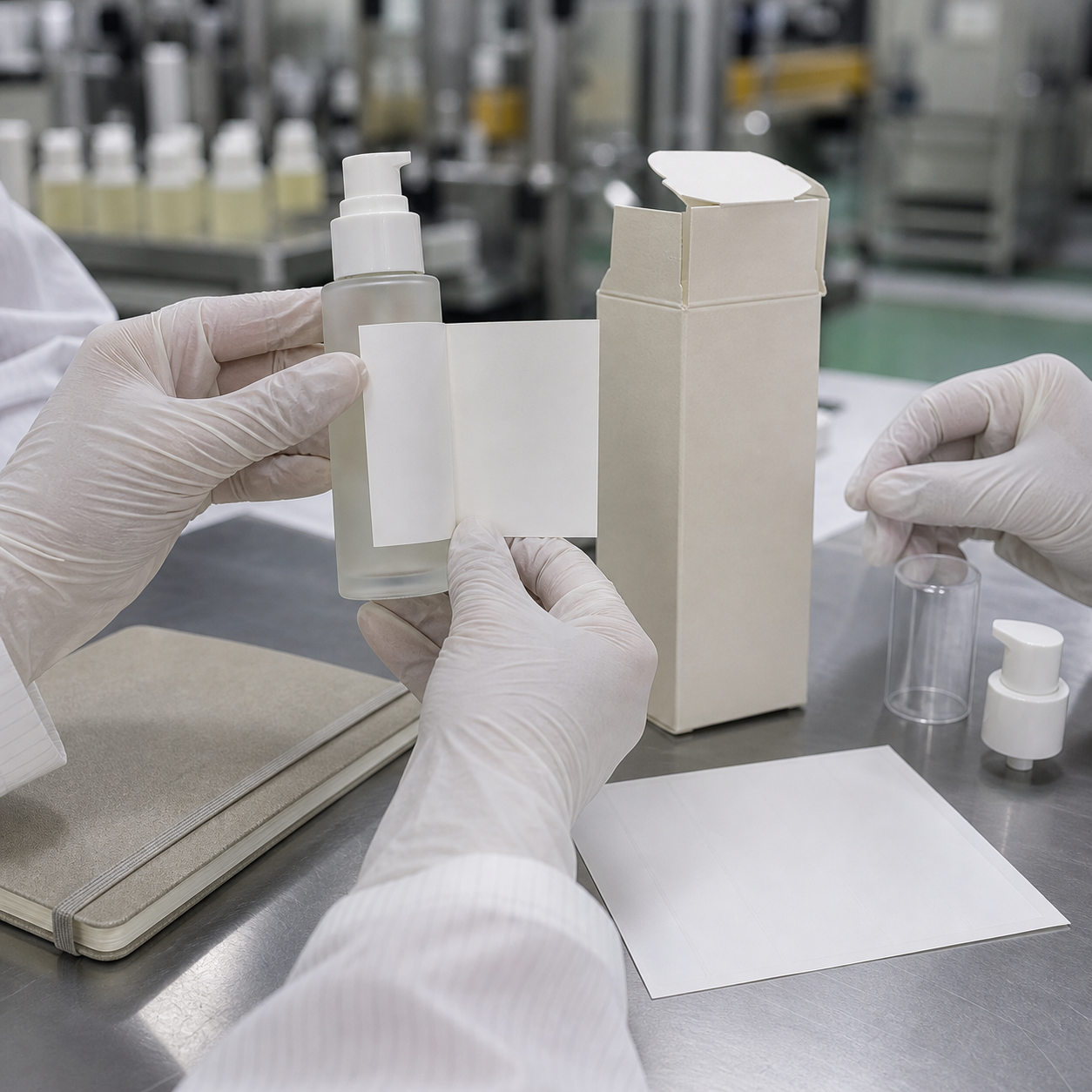
    The featured image on this guide is a previously reviewed GUOCUI-owned cleanser-and-mask QC workflow example. It shows blank packaging, texture and foam samples, and a package check; it is not the exact final dual-use formula, buyer artwork, current production batch, or performance proof.

    Information to send with a dual-use wash pack RFQ

    • Target country or market and sales channel.
    • Daily cleanser route, mask route, contact-time expectation, and preferred sensory finish.
    • Ingredient directions to include or avoid, plus allergen or fragrance preferences.
    • Tube, pump, jar, sachet, fill-size, color, finish, LOGO, label, carton, and set requirements.
    • Expected quantity, target launch window, sample destination, and shipping plan.
    • Claims or label phrases that require market-specific review.

    Review GUOCUI’s B2B product catalog, the related rice clay foam cleanser-mask direction, facial mask category, and customization process. When the two use routes are defined, send the project variables through the Contact page.

    FAQ

    Can one sample be tested as both cleanser and mask?

    Yes, but use separate protocols and scorecards. Contact time, dose, skin condition, spread, rinse effort, and packaging output differ between the two routes.

    Does a fermented ingredient make the product more effective?

    Not automatically. The exact INCI, supplier documents, use level, formula compatibility, finished-product testing, and claim evidence matter. A trend label is not a substitute for those checks.

    Should a dual-use wash pack foam?

    That is a design choice. A buyer may choose creamy low-lather slip, visible foam, or another rinse-off texture, but the cleanser and mask routes must both remain coherent.

    Which package is best for a cleanser-mask formula?

    There is no universal answer. Formula viscosity, dose, hygiene preference, channel, decoration, shipping, and component availability should be reviewed together.

    What is the MOQ and production time?

    MOQ, quotation, sample timing, and production timing can be confirmed after the formula, packaging, quantity, label requirements, and shipping plan are reviewed.

    What should a buyer approve before bulk production?

    Approve the formula sample for both routes, the filled package, directions, claims, artwork, label and carton details, QC points, and the final commercial plan.

    Sources and scope

    A July 15, 2026 first-party launch notice for an August 4 dual-use rinse-off cleanser and mask was used only as a current format signal. Claim boundaries were checked against FDA cosmetic guidance and the in-force EU common criteria for cosmetic claims. No source brand, formula, image, package, proprietary name, price, sales claim, or consumer result was copied.


  • Elastic-Feel Facial Toner OEM: Define Stringing, Slip, Tack, and Layering Before Sampling

    Elastic-Feel Facial Toner OEM: Define Stringing, Slip, Tack, and Layering Before Sampling

    Direct answer: an elastic-feel facial toner should not be approved from words such as “mochi,” “bouncy,” or “rich” alone. Before an OEM sample is accepted, the buyer and factory should define how the liquid lifts from the hand, spreads, strings, settles, feels at one and five minutes, layers with the next product, and dispenses from the proposed package. Those observations turn a trend description into a repeatable private-label brief.

    GUOCUI factory QC review of blank facial toner samples and label alignment
    GUOCUI-owned facial-toner QC workflow example. The image shows blank sample packaging and label review; it is not the final elastic-feel formula, a buyer-approved pack, a current production batch, or performance proof.

    What Does “Elastic-Feel Toner” Mean in an OEM Brief?

    For a custom-formula project, elastic feel is a sensory target rather than a medical or performance claim. It can describe a toner that has more body than a water-thin lotion, shows a controlled thread or cushion during pickup, spreads without sudden runoff, and leaves a finish the buyer can evaluate. The exact route may be clear or softly translucent, fragrance-free or lightly scented, fast-settling or deliberately cushiony. GUOCUI BIO TECH should discuss those choices as sample variables, not copy a retail product name, fixed ingredient story, bottle, color system, or campaign.

    A useful brief also separates texture from skin-result language. “Forms a short thread between two test surfaces” can be observed. “Makes skin permanently bouncy” cannot be accepted from a bench sample. Keeping that boundary clear helps the export team, formula team, packaging team, and buyer review the same target.

    Use a Five-Part Toner Texture Scorecard

    Checkpoint What to record Why it affects the project
    Pickup and stringing Dose, lift method, thread length, break point, and whether the result repeats Separates controlled elasticity from uncontrolled ropiness or handling mess
    Spread and slip Number of passes, drag, edge behavior, and coverage at the agreed dose Helps compare hand, cotton-pad, and palm-press application routes
    Settle and tack Surface feel immediately, at one minute, and at five minutes Prevents “rich” from becoming a vague approval that changes between reviewers
    Layering Interaction with the planned serum, cream, makeup, or channel routine Reveals pilling, uneven slip, excess tack, or long wait-time concerns
    Package output First dose, repeated dose, neck residue, cap cleanliness, and leakage orientation Connects the formula texture to the real bottle and shipment plan

    Build a Small Sample Matrix Before Choosing a Formula Direction

    Ask for a controlled comparison rather than one attractive sample. A practical first matrix can include a lighter elastic lotion, a medium cushion toner, and a richer essence-toner direction. Keep the evaluation method constant: same dose, test surface, room conditions, application route, waiting time, and next product. Record version codes so the buyer does not approve “the second bottle” while the laboratory is working from a different note.

    The formula discussion can cover humectant balance, polymer or gum route, viscosity range, clarity, color, fragrance, skin feel, and compatibility with the chosen market and claim plan. Ingredient ideas remain subject to formula review, supplier documentation, stability work, and target-market compliance. A trend launch does not authorize copying its exact INCI, proprietary phrase, percentages, scent, or appearance.

    Test the Intended Application Method

    Palm press or hand application

    Record whether the toner can be dosed cleanly, whether it runs before spreading, how much slip remains during pressing, and when the surface stops feeling wet. If the line is intended for layered routines, repeat the agreed dose rather than adding an undefined extra splash.

    Cotton-pad use

    Check pickup, pad saturation, drag, edge dryness, and product left in the pad. A formula designed for hand application may feel wasteful or stringy on cotton. If both methods matter, the brief should say which is primary and which is only optional.

    Layering with the channel routine

    An Amazon skincare set, salon protocol, distributor range, and social-commerce demonstration may use different layer stacks. Define the serum, cream, makeup, waiting time, and application amount used for review. Do not switch products between samples and then attribute the difference to the toner.

    Match the Package to the Actual Toner Sample

    A bottle selected from a catalog image is not a finished packaging decision. Compare the real formula in the proposed bottle, reducer, disc-top, pump, or other controlled-dose component. Check priming where relevant, dose repeatability, stringing at the outlet, wipe-back, neck residue, closure engagement, side-storage leakage observation, label area, decoration, and carton fit.

    For an ecommerce buyer, the filled pack may need additional handling and parcel review. For a salon or spa buyer, controlled dosing and clean repeated use may matter more. For a distributor, multilingual label space and a pack family that can extend to a cream or cleanser may affect the decision. Supplier component information helps shortlist options, but the buyer’s final formula-pack-carton combination still needs project-specific review.

    How GUOCUI Can Organize Sample and QC Communication

    1. Buyer brief: confirm target market, channel, texture reference in descriptive terms, application method, pack direction, quantity range, and artwork status.
    2. Sample matrix: label each formula version and record dose, stringing, spread, tack, finish, and layer-stack observations.
    3. Package shortlist: fill the leading samples into the intended components and compare output, residue, closure, label, and carton questions.
    4. Approval record: identify the selected formula version, package code, fill size, artwork revision, and open items before quotation or bulk planning.
    5. QC handoff: translate the approved appearance, flow, dispensing, label position, and packing notes into checkpoints appropriate to the project.

    This workflow supports a clearer conversation; it does not replace formula stability, packaging compatibility, microbiological, safety, claims, or market-specific work required for the confirmed product.

    Information to Send Before Requesting a Toner Quotation

    • Target country, sales channel, buyer type, and intended routine position.
    • Preferred light, medium, or rich elastic-feel direction and primary application method.
    • Fragrance, color, ingredient, vegan, or market restrictions that must be reviewed.
    • Package type, fill-size direction, custom logo label, carton, and language needs.
    • Expected quantity range, sample window, launch timing, and shipping plan.

    MOQ, quotation, and timeline can be confirmed after formula, packaging, quantity, label requirements, and shipping plan review. Buyers can first browse the GUOCUI product catalog, compare facial toner directions, review OEM/ODM customization options, see an adjacent private-label toner workflow, or send an inquiry brief.

    FAQ: Elastic-Feel Facial Toner OEM

    Is elastic feel the same as high viscosity?

    No. Viscosity is one part of the sample. Pickup, stringing, break point, spread, tack, residue, and package output also affect how the toner is experienced and reviewed.

    Can a buyer ask for a “mochi” toner?

    The buyer can describe the desired cushion, thread, slip, and after-feel, but GUOCUI should create an original formula and packaging brief without copying another brand’s identity, proprietary language, formula, imagery, or trade dress.

    Should the sample be tested by hand or with a cotton pad?

    Test the primary application method first. If both matter, define the dose and acceptance points for each because a formula can behave differently on the palm and on cotton.

    Does a pleasant first sample prove stability?

    No. Sensory approval is only one gate. The confirmed formula and package still need the appropriate stability, compatibility, safety, microbiological, claims, and market review for the project.

    Which package is best for an elastic toner?

    There is no universal answer. The choice depends on flow, dose control, stringing at the outlet, residue, closure, label area, channel, fill size, and shipment plan. Test the actual sample in the actual component.

    What determines MOQ and quotation?

    Formula direction, package and closure, fill size, quantity, decoration, label languages, carton, testing needs, and shipping plan all affect the quotation. Send those variables before asking for a fixed answer.

  • Tone-Up Cream OEM: Lock Shade, Transfer, and Pack Tests Before Sampling

    Tone-Up Cream OEM: Lock Shade, Transfer, and Pack Tests Before Sampling

    Direct answer: A tone-up cream OEM brief should define the product as a temporary cosmetic finish, then lock undertone, coverage, dry-down, transfer, oxidation and packaging tests before the buyer approves formula or artwork. “Tone-up” should not be treated as a whitening, melanin-change or permanent skin-result claim. For a useful sample round, ask for clearly separated shade directions and one scorecard that the buyer, factory and packaging team can repeat.

    Cream and gel-cream samples reviewed on a cosmetic factory formulation table for a tone-up cream OEM brief
    GUOCUI-owned same-class formulation workflow example. It shows texture review, not the final tone-adjusting shade, formula or buyer package.

    On 4 August 2026, a Japanese manufacturer announced shipment of a skincare-style tone-up cream. The event is useful as a format signal, but it is not evidence of retail velocity or a bestseller. GUOCUI therefore treats it as a buyer-question prompt: how should an OEM team convert a light complexion-and-moisture idea into a testable, claim-safe private label brief without copying the source name, shade, scent, jar, formula or campaign?

    Define “tone-up” as an appearance decision

    The cleanest B2B definition is short: a tone-up cream creates a sheer, visible cosmetic finish while the product is on the skin. It may also moisturize when the approved formula supports that function. It should not imply that the product changes melanin production, treats discoloration or permanently changes skin tone. In the United States, makeup and moisturizers can be cosmetics, while claims that affect body structure or function can change the regulatory path. EU cosmetic claims also need evidence, honesty and clear buyer-facing communication.

    This boundary changes the sample conversation. Instead of asking a factory for a “whiter result,” describe the temporary finish: warmer, more neutral, less ashy, softly balanced or lightly blurred. Then specify how the team will judge that finish under controlled light.

    Start with three separated undertone directions

    A useful first round does not need a retail foundation shade wall. It needs samples that are different enough to produce a decision. GUOCUI may discuss a sheer peach route, a low-contrast neutral beige route and a muted lavender route. These are development directions, not universal shades.

    Question What the buyer sends What the sample team records
    Who should the finish suit? Target market, undertones and model diversity Shade code, application dose and controlled-light photographs
    How visible should it be? Sheer correction or light cosmetic coverage Blend edge, white cast, patchiness and layer thickness
    What should it feel like? Cushiony cream or quick-spread gel-cream Pickup, spread, tack, drag and settling time
    Where will it be sold? Amazon, TikTok, salon, spa, wholesale or travel set Demo clarity, label space, pack durability and channel instructions

    Separate shade testing from skincare texture testing

    If the color, emulsion, fragrance and package all change together, the team cannot explain why one sample performs better. First compare undertones at the same application amount. Then compare a cream and gel-cream texture using the preferred color direction. Keep room light, camera white balance, skin preparation and observation time consistent.

    For makeup-preparation use, record the products applied below and above the sample. A formula may look even by itself but pill under one sunscreen or drag under one foundation. Change one variable at a time and write down the result. That is more useful than sending the factory an edited social-media photograph with no dose or routine.

    Run a transfer and oxidation scorecard

    Transfer and oxidation are different observations. Transfer asks how much visible product moves to a tissue, mask edge, collar or application tool after a defined settling period. Oxidation asks whether the visible shade shifts with time. Neither should be reduced to a guaranteed all-day claim without appropriate evidence.

    • Apply the same measured amount to comparable test areas.
    • Record the appearance immediately, after settling and at a later agreed checkpoint.
    • Photograph under daylight-balanced light and one realistic indoor light.
    • Use the same tissue pressure or contact method for transfer comparisons.
    • Note edge blending, white cast, ashiness, patchiness and shade shift separately.
    • Repeat the planned skincare and makeup layer stack rather than switching products mid-test.

    Color additives need a market-specific review

    A buyer should not assume that a pigment used in one market or one product can be moved unchanged into every destination. The formula and regulatory teams need the intended countries, pigment identity, use area and label plan. In the United States, color additives used in cosmetics are subject to specific approval and use conditions. The public product page should therefore describe custom undertone options without promising an unreviewed universal pigment system.

    Test the filled package, not only the formula cup

    Pigmented creams reveal packaging problems that a clear gel may hide. A pump can leave shade residue around the outlet. A tube shoulder can trap product. A transparent component can make normal color drift look more dramatic. Label color and carton printing can also make the cream shade appear warmer or cooler in photographs.

    Review the actual filled component for priming, dose, leakage, cap residue, closure fit, label scuffing and clean-off instructions. Compare a slim tube, airless pump and controlled-window jar only after the formula viscosity and channel are clear. A marketplace seller may prioritize parcel durability and a clean product demonstration. A salon buyer may value controlled dispensing. A travel-set buyer may need a smaller tube and a simpler instruction panel.

    Keep the claim language tied to evidence

    Safe early wording describes a sheer cosmetic finish, moisturizing feel, spread or buyer-selected undertone direction. Avoid permanent tone change, whitening, melanin reduction, treatment, blue-light protection, airborne-particle protection, 24-hour wear, overnight suitability, non-comedogenic results or fixed consumer-study figures unless the exact final product has an appropriate evidence and regulatory review. Do not transfer a source product’s free-from list, scent or test result to a new GUOCUI formula.

    What GUOCUI needs before quotation

    • Target country, sales channel and expected customer routine.
    • Appearance goal stated as a temporary cosmetic finish.
    • Preferred undertone directions, coverage level and texture.
    • Representative moisturizer, sunscreen and makeup layer stack.
    • Tube, pump or jar route, capacity and custom component color.
    • Logo, label languages, carton, barcode and set requirements.
    • Estimated quantity range, sample deadline and shipping destination.

    MOQ and quotation can be confirmed after formula, pigment route, packaging, quantity, artwork, carton and shipping requirements are reviewed. Sample and production timeline can be confirmed after the formula, shade and packaging route are selected.

    FAQ

    Is a tone-up cream the same as a whitening cream?

    No. In this brief, tone-up describes a temporary visible cosmetic finish. It does not describe a biological change in pigmentation or a permanent result.

    Should a first sample round include many shades?

    Not necessarily. Three clearly separated undertone directions with a repeatable scorecard often create a better decision than many near-identical samples.

    Can the same formula be sold with an SPF claim?

    An SPF claim creates a separate regulatory and finished-product testing path. This development brief deliberately excludes sun-protection claims.

    Why test packaging residue?

    Pigmented product around a pump, cap or tube shoulder can affect cleanliness, shade perception and customer instructions even when the formula itself is stable.

    What is the best package for a tone-adjusting cream?

    There is no universal best choice. Match viscosity, dose, shade visibility, parcel risk, label area and channel use, then verify the actual filled pack.

    Browse the GUOCUI product catalog, Face collection, Facial Cream collection, pre-makeup moisturizer primer cream and Customization service. To prepare a shade-and-pack sample matrix, contact GUOCUI.


  • Gentle Peel Serum OEM: Separate Daily Dropper Use From Weekly Cotton-Pad Testing

    Gentle Peel Serum OEM: Separate Daily Dropper Use From Weekly Cotton-Pad Testing

    Direct answer: A gentle peel serum OEM brief should not treat daily dropper use and weekly cotton-pad use as one approval test. The same formula may feel comfortable when pressed onto the face but become too wet, too draggy, or too intensive when loaded onto a pad. GUOCUI BIO TECH therefore recommends two separate sample protocols before quotation: one for daily spread, layering, pack dose, and leave-on feel; another for pad loading, local contact time, glide, residue, and clear use directions.

    This approach is useful for overseas brands planning a mild exfoliating serum, a texture-refining cosmetic, or a two-way facial serum for DTC, marketplace, salon, spa, and wholesale channels. It starts with how buyers and end users will handle the product, then works backward into formula, pH, bottle, label, carton, sample review, and claim evidence. It does not assume a fixed acid system, concentration, frequency, result, MOQ, price, or production time.

    Write two use cases before discussing ingredients

    The first sample route is a daily leave-on serum. Define whether it is applied with fingertips after cleansing, how many drops or pump strokes are expected, what follows it in the routine, and whether the target feel is watery, cushioned, silky, or lightly emollient. Review spread, absorption, tack, pilling, fragrance level, color, and comfort under a moisturizer.

    The second route is an occasional cotton-pad protocol. Specify the pad type, loading amount, whether the pad is used for a gentle pass or a short local hold, and which areas are excluded. A formula that performs well in a dropper trial may soak a pad unevenly, evaporate quickly, create friction, or leave more material than expected. Those are product-development questions, not copywriting details.

    Approval point Daily dropper or pump Weekly cotton-pad protocol
    Dose Record drops or pump output and full-face spread. Record pad loading, retained liquid, and local contact area.
    Skin feel Check slip, absorption, tack, and layering. Check glide, drag, wetness, evaporation, and residue.
    Package Check priming, dose repeatability, closure, and leakage. Check whether the opening supports controlled pad loading without over-dispensing.
    Directions State routine order and compatible follow-on products. State frequency, local-use boundary, rinse or leave-on decision, and stop-use wording.
    Evidence Approve appearance and sensory language only after sample review. Do not turn a stronger handling method into a stronger public result claim.

    Formula decisions that belong in the buyer brief

    The buyer does not need to arrive with a finished ingredient list, but the brief should define the risk level. A hydration-first direction can be discussed with buyer-approved humectants and comfort-feel ingredients. A mild exfoliation route needs a separate review of ingredient identity, supplier documents, intended amount, finished-formula pH, compatibility, warnings, and target-market rules. Do not use a supplier blend percentage as if it were the pure active level.

    Ask whether the same formula must support both use cases. Sometimes one formula can pass both protocols. In other projects, the daily serum should remain the core SKU while the pad-based method is removed from the label. That is a valid outcome. A two-way story is useful only when the finished sample, directions, evidence, and destination-market review support it.

    Set a pH and compatibility handoff, not a marketing number

    Finished pH affects formula behavior, preservative strategy, packaging compatibility, user instructions, and the evidence plan. The buyer brief should request the proposed pH range and tolerance, how it will be measured, and what changes would trigger a sample revision. It should also record color, odor, clarity, viscosity, sediment, and package interaction at the start of testing.

    GUOCUI can discuss stability and compatibility work after the formula route and package are selected. The exact program depends on the project. A useful handoff identifies the bottle material, closure, liner, dropper bulb or pump actuator, label stock, carton, storage orientation, and transport plan. A bottle that looks premium in an empty sample is not approved until the filled pack behaves consistently.

    Choose the dispensing system from the protocol

    Dropper

    A dropper makes dose visible and can suit fluid serums, but the team should check fill pickup, dose variation, neck wiping, leakage, label staining, and user contact with the pipette. Record the practical dose rather than assuming a full pipette.

    Pump

    A pump can make repeatable daily dosing easier. Review priming strokes, output per actuation, tail-off, clogging, actuator return, cap security, and low-fill performance. For a pad protocol, confirm that one or two strokes load the pad without uncontrolled splash.

    Controlled orifice bottle

    A small orifice can support direct pad loading, but flow rate changes with viscosity, opening size, bottle squeeze, and temperature. Test upright storage, side storage, carton protection, and repeated opening. Do not choose the opening from appearance alone.

    Build sample acceptance around observable decisions

    Send each evaluator the same instructions, pad specification, moisturizer, room conditions, dose guide, and evaluation form. Photograph the approved bottle and record the sample code. A practical scorecard can cover spread, glide, absorption, tack, residue, visible pilling, fragrance strength, pad drag, dispensing control, and package cleanliness. Separate observations from public claims.

    Patch testing, tolerance evaluation, stability work, compatibility review, and claim support must match the formula and destination market. FDA explains that intended use helps determine whether a product is regulated as a cosmetic, a drug, or both. EU cosmetic claim criteria also require legal compliance, truthfulness, evidential support, honesty, fairness, and informed decision-making. These are reasons to write cautious, supportable label language before artwork approval.

    What GUOCUI needs before quotation

    • Target market, buyer channel, and desired launch position.
    • Daily-only or daily-plus-weekly use plan.
    • Preferred texture, finish, fragrance route, and color boundary.
    • Ingredient direction and any ingredients or claims to avoid.
    • Dropper, pump, or controlled-orifice preference and target capacity.
    • LOGO, label, carton, multilingual artwork, and set-pack requirements.
    • Estimated quantity, sample needs, shipping country, and target schedule.

    MOQ and quotation can be confirmed after formula, packaging, quantity, label requirements, and shipping plan review. Sample and production timing can be confirmed after the formula and filled-pack direction are agreed. Review GUOCUI Products, Face Care, Facial Serum, a related custom serum direction, the serum stability and packaging handoff, and Customization. To start a brief, use the GUOCUI inquiry form.

    FAQ

    Can one gentle peel serum be used both ways?

    Possibly, but both protocols should pass separately. The pad method changes dose, friction, local contact, evaporation, and residue, so a daily fingertip test is not enough.

    Should the public page list a fixed acid percentage?

    Only when ingredient identity, actual active level, finished formula, target-market rules, evidence, and label review support it. A supplier blend input should not be presented as a pure-active percentage.

    Which package is best for pad use?

    There is no universal answer. A controlled orifice or repeatable pump may help, but viscosity, dose, cap fit, leakage, label staining, and user handling must be tested with the final filled pack.

    What can be customized?

    Buyers can discuss formula direction, texture, fragrance, color, capacity, bottle, closure, LOGO, label, carton, multilingual artwork, and set packaging. Final options depend on the approved brief and technical review.

    What should a buyer send first?

    Send the market, channel, use protocol, texture target, ingredient preferences, pack direction, estimated quantity, artwork needs, and shipping country. GUOCUI can then organize the sample and quotation questions.


  • Body Serum OEM: Set Absorption, Residue, and Pump Tests Before Quotation

    Body Serum OEM: Set Absorption, Residue, and Pump Tests Before Quotation

    Direct answer: a body serum OEM brief should define absorption, residue and package-output targets before a factory quotes the project. “Lightweight” is not a test method. Buyers get a more useful sample when they describe where the product is used, how long it should remain workable, how the finish should feel after five and fifteen minutes, and which pump or tube must deliver the formula consistently.

    Image disclosure: the featured image is a re-reviewed GUOCUI-owned body-serum lotion QC workflow example. It shows how a blank pump sample can be checked on a factory worktable; it is not a new formula, final buyer package, certified shipment or current production batch.

    Why body serum needs its own sample brief

    A face-serum brief copied onto a larger bottle usually misses the body-use reality. The application area is wider, the quantity per use is greater, clothing may touch the skin soon afterward, and the pack has to dispense repeatedly through a longer pump path. A body serum may look elegant in a small lab cup and still feel slow, sticky or difficult to pump in the intended 150–250 ml package.

    Recent retailer listings make the serum-in-lotion format worth reviewing, but a launch signal is not proof of sales or the right formula for every brand. The useful factory question is narrower: can the buyer translate “fast, smooth and moisturising” into a scorecard that the sample team can repeat?

    Start with the routine, not the ingredient headline

    Tell the factory when the user applies the product. A post-shower serum used on slightly damp skin may need faster spread and shorter rub-in than a spa retail lotion designed for massage. A warm-climate DTC product may prioritize a low-tack finish, while a winter distributor may accept more cushion. These choices affect emollients, humectants, rheology, fragrance and package selection.

    Also separate a basic hydration-and-comfort route from an exfoliation-positioned route. If the second route uses an acid or another higher-review ingredient, the active identity, level, pH, directions, warning language, testing plan and destination market should be confirmed before artwork. A competitor’s ingredient pair or consumer claim should not become a GUOCUI formula instruction by default.

    A practical absorption and residue scorecard

    Checkpoint What the panel records Why the buyer needs it
    Initial spread Number of passes, slip and visible streaking on damp and dry skin Shows whether the sample fits the intended routine and dose.
    Five-minute finish Tack, oiliness, powdery drag, shine and fragrance strength Helps compare “lightweight” samples with specific language.
    Fifteen-minute finish Residue, softness, transfer to clothing and scent persistence Connects sensory decisions to channel and use-case needs.
    Reapplication Pilling, uneven layering and change in tack Matters for dry climates, travel and frequent-use positioning.
    Wash-off observation Film, slip and ease of removal during the next shower Prevents a “clean finish” brief from hiding a heavy residual film.

    Use the same application amount, area, timing and scoring words for every sample. The scorecard is not a clinical efficacy test; it is a decision tool that helps the buyer and factory discuss sensory differences without relying on vague adjectives.

    Match viscosity to the real pump or tube

    The package is part of the product. Ask for the intended bottle size, neck, actuator, dip tube, closure and label area before the final package sample. The factory can then check priming, output per stroke, repeated-use consistency, tail-off, dip-tube reach and residue. A pump that works with water may not work with a structured serum-lotion.

    Filled-pack checks should reflect the project: upright and side storage, warm and cool conditions, repeated pumping, cap security, leakage orientation, label adhesion and carton fit. Supplier closure data can inform the plan, but it does not prove that the buyer’s final formula, bottle, pump, label and shipping route have passed together.

    Decide the formula branches before quotation

    A useful RFQ does not need a final INCI, but it should identify the branches that change development work. For example: fragrance-free versus scented; low-tack versus richer satin finish; standard hydration route versus exfoliation-positioned route; pump versus tube; one capacity versus travel and home sizes. If the buyer asks for custom scent, special active documentation, a printed component or extra destination-market support, the factory needs that information before it can give a reliable quote or schedule.

    GUOCUI can discuss common hydration and comfort-feel options such as glycerin, panthenol, beta-glucan, oat-derived or other buyer-approved materials. Final ingredients and public wording depend on the confirmed formula, raw-material documents, sample review, testing plan and target market. “Pore clearing,” treatment, medical, permanent-smoothing or guaranteed-result claims should not be imported from a retail reference.

    What factory work should be visible to the buyer

    A credible product page or quotation handoff should show more than a polished bottle. Buyers need to understand the work behind it: sample labels, pump choices, texture comparison, formula notes, QC checkpoints, artwork dimensions, filled-pack observations and packing preparation. Those details help an overseas brand see what must be approved before bulk production.

    The handoff can follow six stages: buyer brief, bench samples, sensory scorecard, package match, stability and compatibility plan, then artwork and pre-production confirmation. Each stage has a decision owner. That makes the route easier to manage than promising a fixed MOQ or lead time before formula and packaging variables are known.

    Information to send for a useful body-serum quotation

    • Target country, sales channel and intended routine.
    • Texture target: fluid lotion, serum-lotion or light gel-cream.
    • Finish target: low-tack, soft satin or dewy-looking.
    • Ingredients to include or avoid, plus any separate exfoliation branch.
    • Fragrance-free, low-scent or original scent preference.
    • Pump, airless-style package or tube, capacity and travel-size need.
    • Estimated quantity range, artwork status, required languages and destination.
    • Desired sample window and launch timing.

    FAQ

    What is a body serum OEM brief?

    It is a buyer document that defines the routine, texture, finish, formula branches, packaging, target market, quantity range and sample tests for a custom body serum project.

    How is a body serum different from a body lotion?

    The terms are not controlled texture specifications. In a buyer brief, “body serum” often signals faster spread, a lighter or more fluid structure, and an ingredient or routine story. The factory still needs measurable sensory and package targets.

    Should the pump be chosen after the formula?

    Formula and package should be developed together. Early pump candidates help reveal output, priming, leakage and compatibility issues before artwork or bulk decisions.

    Can the formula be fragrance-free?

    Yes, a fragrance-free or low-scent direction can be discussed. Final odor, raw materials and label wording are reviewed with the formula and destination market.

    What is the MOQ and price?

    MOQ and quotation can be confirmed after formula, fragrance, package, capacity, label, carton, quantity and shipping plan review.

    How long do samples and production take?

    Sample and production timing can be confirmed after formula and packaging review. Custom components, extra tests and artwork changes can affect the schedule.

    Build the next sample brief

    Start with the GUOCUI product catalog, compare the Glow-Look Body Serum Lotion, review the Body category and Customization process, then send the routine, finish, formula and package variables through the Contact form. For shipping-oriented pack review, also read the filled-pack retest guide.

  • Eye Serum OEM: Test Dose, Migration, and Makeup Layering Before Quotation

    Eye Serum OEM: Test Dose, Migration, and Makeup Layering Before Quotation

    Eye Serum OEM: Test Dose, Migration, and Makeup Layering Before Quotation

    Small eye-serum packs look simple on a line sheet, but they create unusually precise development questions. A recent 15 ml launch is a useful reminder that the format is not just a smaller facial serum. The buyer, formula team, packaging supplier, filling team, and claim reviewer need one shared definition of dose, placement, texture movement, pack response, and acceptable cosmetic language before a quotation is comparable.

    Direct answer: an eye serum OEM brief should define one application dose, the intended placement around the eye area, the target texture and dry-down, the products that will be layered above it, the dispensing system, and the cosmetic claims allowed in the destination market. The factory should then test dose repeatability, migration, residue, pilling, pack compatibility, and batch-to-batch appearance before the buyer approves artwork or production.

    General GUOCUI eye care texture sample review with gloved hands blank jar and scale
    General GUOCUI eye-care sample review shown as process context, not as the final formula or pack for a new eye serum project.

    What is an eye serum OEM project?

    An eye serum OEM project is a private label or custom formula development program for a lightweight leave-on cosmetic used around the eye contour. It may use a fluid gel, light emulsion, or serum texture and can be filled into a controlled dropper, narrow pump, airless pack, or precision tube. The project remains cosmetic unless the formula, claims, presentation, or intended use places it in another regulatory category.

    The practical distinction is control. A face serum may tolerate a broad “two or three drops” instruction. A small eye-area product needs a dose that is easy to repeat and small enough to avoid excess movement, tack, and conflict with makeup. That makes the pack and the application instruction part of the formula brief, not a decoration decision left until the end.

    Use one test matrix before comparing samples

    Buyer decision Factory check Evidence before approval
    Dose per eye area Output per actuation or drop and user repeatability Recorded weights or volumes across repeated doses
    Placement zone Spread, edge movement, residue, and contact risk Agreed application map and observation notes
    Texture and dry-down Slip, tack, film, roll-up, and visible residue Timed review on the approved sample protocol
    Layering routine Compatibility with moisturizer, sunscreen, concealer, and makeup Named product order, wait time, and pilling record
    Dispensing pack Leakage, clogging, dose drift, wiper fit, and closure security Filled-pack compatibility and transport checks
    Claims and label Formula support, wording boundary, and artwork space Destination-market claim review and buyer approval

    1. Define the dose before choosing the pack

    Start with the intended amount for one use, not with a fashionable component. If the direction says “one drop,” specify which dropper, angle, fill level, and liquid viscosity produced that drop. If it says “one pump,” test output at the start, middle, and end of the pack. A narrow tube should be checked for bead size and control at realistic hand pressure.

    The buyer does not need to invent a universal number. The useful outcome is a repeatable range tied to the selected formula and component. GUOCUI can discuss dropper, pump, airless, and tube routes during custom packaging and formula review, but the final system should be confirmed with the filled product.

    2. Test migration and residue around the intended placement zone

    A light serum can move farther than expected when too much is applied or when the formula stays wet. A richer emulsion can remain visible in fine folds. The sample protocol should therefore record where the product is placed, how far it spreads, how quickly it settles, and whether it leaves tack, shine, flakes, or a visible edge.

    This is a cosmetic use and sensory check, not a clinical promise. The buyer should also define whether the sample is intended for morning use, evening use, or both. If the brief includes sensitive-skin positioning, the required safety and tolerance work must be agreed for the destination market; a marketing phrase cannot replace that evidence.

    3. Run a makeup-layering protocol, not a one-time hand swatch

    Pilling is often created by the routine rather than by one product alone. Record the eye serum dose, wait time, moisturizer, sunscreen, concealer, tool, and number of passes. Repeat the same sequence for each sample. A useful factory report distinguishes immediate roll-up, delayed tack, makeup drag, patchiness, and transfer instead of collapsing them into “good” or “bad.”

    For ecommerce, salon, spa, and professional retail buyers, this test also improves instructions. It can reveal whether a smaller dose, a longer set time, or a different product order is more realistic. Related guidance on component choices is available in GUOCUI’s eye-care packaging sample guide.

    4. Keep claims separate from texture approval

    A pleasant cooling feel, smooth spread, or reduced-looking dryness does not automatically support treatment, structural, or medical language. Claims should be truthful, not misleading, suitable for the target market, and supported at the level required for the final formula. Cell-renewal, eyelid-lift, treatment, regeneration, and guaranteed-result wording should not be borrowed from a trend source or raw-material presentation.

    A safer early brief can focus on hydration, lightweight feel, smooth application, refreshed-looking eye contour, makeup compatibility, and a defined sensory profile, subject to formula and market review. Final label text, translations, and artwork should be checked after the formula and pack are selected.

    5. Build the quotation from variables the factory can review

    Send the target market, sales channel, texture reference, preferred ingredients or exclusions, pack type, fill size, logo and artwork status, order quantity range, sample window, and testing expectations. If a custom formula is required, separate must-have inputs from optional directions. This lets the team compare ready-formula, adjusted-formula, and custom-development routes without pretending they carry the same work.

    MOQ and quotation can be confirmed after formula, packaging, and order plan review. Sample and production timing can be confirmed after the formula route, component availability, artwork handoff, testing scope, and approval sequence are clear. GUOCUI does not present an unreviewed number as a fixed commitment.

    Factory workflow for an eye serum sample

    1. Review the buyer brief, destination market, channel, claims, and pack direction.
    2. Select a formula route and prepare controlled samples with version notes.
    3. Compare dose, migration, residue, layering, and packaging response.
    4. Confirm the preferred formula and filled-pack test plan before artwork approval.
    5. Check label files, multilingual copy, carton structure, and coding space.
    6. Complete agreed QC, packing, and export communication before bulk release.

    Browse the GUOCUI B2B product catalog, review the current eye-care product direction, or send an eye serum project brief. GUOCUI BIO TECH / Guangzhou Guocui Biological Technology Co., Ltd. supports overseas buyers with formula discussion, packaging selection, sample review, QC communication, label handoff, and export-ready inquiry support.

    FAQ

    What should an eye serum OEM brief include?

    Include the target market and channel, intended texture, one-use dose, application zone, layering routine, ingredient preferences or exclusions, pack type, fill size, claims, artwork status, quantity range, and sample window.

    Should a dropper be selected before the formula?

    It can be shortlisted early, but the final dropper should be confirmed with the selected formula. Viscosity, surface tension, wiper geometry, bulb response, fill level, and user technique can change the delivered dose.

    How should pilling be checked?

    Use a fixed dose, placement zone, wait time, product order, makeup products, tools, and number of passes. Record immediate and delayed roll-up separately so the team can identify the actual interaction.

    Can GUOCUI confirm MOQ and timing immediately?

    MOQ, quotation, sample timing, and production timing depend on the formula route, component availability, quantity, decoration, artwork, testing, and shipping plan. They can be confirmed after those variables are reviewed.

    What claim direction is safer for an early cosmetic brief?

    Use appearance and sensory language that the final formula can support, such as hydration, lightweight feel, smooth application, refreshed-looking eye contour, and makeup compatibility. Destination-market review still applies.


  • Skin Longevity Skincare OEM: Turn the Trend Into a Claim-Aware Sample Brief

    Skin Longevity Skincare OEM: Turn the Trend Into a Claim-Aware Sample Brief

    Direct answer: A skin longevity skincare OEM brief should turn a broad trend phrase into a product that a buyer, sample team, packaging supplier and claims reviewer can actually evaluate. Start with the intended user, texture, routine role and cosmetic appearance benefit. Then define formula categories, sample checks, package output, evidence needs and market wording. Do not build the project around a competitor’s product name, proprietary complex, dramatic biology story or unverified age-reversal promise.

    Buttery cream and clear gel-cream texture samples reviewed on a cosmetics factory development bench
    GUOCUI-owned texture-development visual showing two sample directions. It is a workflow example, not a finished buyer formula, current production batch or performance result.

    What “skin longevity” should mean in an OEM conversation

    For a practical private label project, skin longevity is a positioning umbrella, not a finished claim. It can organize familiar cosmetic decisions around moisture, barrier-care positioning, comfortable daily use, antioxidant direction, texture and a well-conditioned appearance. It does not by itself prove that a product changes cellular ageing, regenerates tissue or alters the structure of skin.

    That distinction matters because product status is shaped by intended use. FDA guidance explains that claims to treat disease or affect body structure or function can move a product beyond an ordinary cosmetic route. EU cosmetic-claim criteria also require claims to be supported and presented honestly. A buyer should therefore lock the market and evidence plan before artwork turns an interesting concept into an unsupported promise.

    Translate the trend into decisions the sample team can measure

    Trend-level request Sample or document decision Conservative early wording
    “Make a longevity cream.” Choose routine role, skin-feel target, user profile and sales channel. Daily mature-skin care or barrier-support cream direction.
    “It should feel resilient.” Define spread, cushion, absorption, tack, finish and next-morning feel. Comfortable, cushioned moisture and a smoother-looking finish.
    “Use advanced actives.” Review supplier identity, INCI, recommended use, stability and claim support. Custom formula direction subject to ingredient and market review.
    “Show visible change fast.” Set a finished-product test plan and approve exact claim wording only after evidence review. No fixed timing or quantified result during concept sampling.

    Build the formula brief without borrowing a proprietary story

    A safer starting brief uses ingredient categories the development team can evaluate: humectants for moisture, emollients for slip and cushion, ceramide-positioned or lipid directions for barrier-care storytelling, soothing-feel materials, peptides, ferments or antioxidant directions where feasible. These are development routes, not a promise that every ingredient will appear in the final formula.

    Ask the factory to confirm the complete INCI proposal, raw-material documentation, compatibility, color and odor risk, target pH where relevant, preservation approach and package constraints. Do not assume a source product’s percentages, supplier trademark, patented combination or clinical language can be transferred. If the buyer wants a named supplier active, the quotation should identify its documentation and cost separately from the base formula.

    Choose one texture architecture before comparing packages

    “Cream” can mean a quick-break gel-cream, a soft lotion-cream, a dense buttery texture or an airless-pump formula with controlled output. Sampling too many undefined textures at once makes feedback vague and quotation comparisons weak. Pick one primary architecture and one deliberate alternative.

    • Light gel-cream: assess quick spread, low tack, pilling and warm-climate feel.
    • Cushioned cream: assess pickup, drag, absorption time and protective after-feel.
    • Airless-compatible cream: assess priming, dose consistency, tail-off and formula left in the pack.
    • Jar format: assess scoop or finger pickup, surface recovery, closure fit and label area.

    Package selection follows the formula. A pump chosen from a reference photo may not handle the final viscosity. The sample team should check output after storage, leakage, closure torque, label adhesion, carton fit and the filled pack—not only the empty component.

    Use a three-layer claim handoff

    1. Concept layer: target buyer, routine role and cosmetic benefit direction. Keep this flexible while formulas are being screened.
    2. Sample layer: observable sensory notes such as spread, tack, finish and package output. Do not convert a pleasant sample into a clinical claim.
    3. Launch layer: final INCI, finished-product evidence, destination-market review, label language and channel requirements. Approve public copy only at this layer.

    This handoff prevents early mood-board language from becoming permanent artwork. It also helps buyers compare manufacturers fairly: the formula, package and evidence scope are visible rather than hidden behind a fashionable phrase.

    What GUOCUI checks during sample and QC discussion

    GUOCUI BIO TECH can organize a private label or custom formula discussion around the approved brief. The team can compare texture directions, review sample feedback, check jar, tube or pump options, confirm blank-pack fit, discuss custom logo label and carton requirements, and record QC points before production planning. Final MOQ, quotation and timing depend on formula, packaging, decoration, quantity, label languages, document needs and shipping plan.

    A useful sample record names the formula version and package tested. It notes appearance, odor, spread, absorption, tack, finish, pilling, pump output or jar pickup, and any change after the agreed observation conditions. If the buyer changes the formula or package, the affected checks should be repeated rather than carried forward by assumption.

    Buyer brief checklist before quotation

    • Target country, sales channel and intended user.
    • Routine role: day cream, night cream, gel-cream, serum or coordinated set.
    • Primary texture, finish, fragrance and color direction.
    • Ingredient categories to explore and ingredients to avoid.
    • Cosmetic claim boundary and evidence expected before launch.
    • Jar, airless pump or tube preference, capacity and decoration plan.
    • Custom logo, label languages, carton and insert requirements.
    • Estimated quantity, sample window, launch timing and shipping market.

    Frequently asked questions

    Is skin longevity a specific formula?

    No. It is a positioning direction. The final formula still requires a defined texture, ingredients, package, sample checks, safety support, claims and market review.

    Can GUOCUI copy a trending longevity product?

    No. A workable project keeps only the general buyer need. Competitor names, proprietary systems, source images, distinctive packaging and fixed performance claims must not become the new product identity.

    Which product format is the best starting point?

    A face cream or gel-cream is often easy for buyers to understand, but the right format depends on channel, climate, routine and packaging. A serum or coordinated set may be more suitable for another brief.

    Can MOQ and price be confirmed from the concept alone?

    No. MOQ and quotation can be confirmed after formula, packaging, quantity, label requirements, document needs and shipping plan review.

    When should public claims be finalized?

    After the final formula, intended market, evidence and label context are available. Concept copy should remain conservative until that review is complete.

    Start a claim-aware custom skincare brief

    Browse GUOCUI Products, the Face Care category, Facial Cream options and Customization. For the design-around boundary, read nine decisions before cream sampling. When the product direction is clear, send GUOCUI the target market, texture, package, quantity range and launch timing.

    Source context


  • Cleansing Balm OEM: Define Melt, Rinse-Off and Travel-Pack Tests Before Sampling

    Cleansing Balm OEM: Define Melt, Rinse-Off and Travel-Pack Tests Before Sampling

    Direct answer: a cleansing balm OEM brief should define the melt profile, makeup-removal scope, emulsification and rinse-off target, after-feel, jar and spatula system, and full-size versus travel-size plan before the first sample. If these decisions stay vague, a formula can feel impressive on the sample table yet fail during warm storage, wet-hand use, repeat rinsing, travel packing, or consumer instructions.

    Recent market monitoring captured a cleansing-balm launch dated July 30, 2026 in both regular and travel formats. GUOCUI treats that as a product-format signal only. It is not proof of sales, ranking, or a formula to copy. For a private label buyer, the useful question is whether two sizes can share one approved formula and a consistent user experience without creating avoidable packaging, filling, labeling, and quotation problems.

    Define the Cleansing Job Before Choosing a Trend Ingredient

    A cleansing balm is an anhydrous or low-water cosmetic cleanser designed to soften during use, lift oil-soluble residue, and rinse away after water is added. The exact composition and claim boundary depend on the buyer brief and destination market. “Melting,” “sherbet,” “buttery,” and “oil-balm” are sensory directions, not interchangeable specifications.

    The GUOCUI export team starts with the removal job: everyday sunscreen and base makeup, heavier color cosmetics, or a gentle first-cleansing step for a routine. Waterproof and eye-area language needs separate review. A buyer should not ask a factory to maximize cleansing power, leave a rich cushion, rinse with no residue, suit every skin type, and work with every package without accepting trade-offs and testing.

    Decision What the buyer should specify What the sample review should check
    Melt profile Firm scoop, quick melt, creamy glide, or oil-rich slip. Scoop resistance, graininess, spread, heat sensitivity, and recovery after cooling.
    Removal scope Daily base products, heavier makeup, or routine first cleanse. Removal on the agreed test materials without unsupported universal claims.
    Emulsification Fast milk-up, slower massage window, light or rich rinse. Water-addition behavior, repeat rinse, visible residue, and sink-side use.
    After-feel Clean, soft, cushioned, or low-residue direction. Skin feel after drying and compatibility with the next routine step.
    Pack format Full-size jar, travel jar, spatula, inner lid, carton, or set inclusion. Closure, scoop access, leakage, scuffing, label area, and shipping protection.

    Build Formula and Package Samples as One System

    Private label cleansing balm development is not finished when the texture looks smooth in a beaker. Oils, waxes, esters, emulsifiers, fragrance choices, color, and optional botanical or vitamin-positioned ingredients can change firmness, clarity, odor, melt speed, rinsing, and package compatibility. Supplier documentation, ingredient identity, stability conditions, and destination-market claim review should support the final direction.

    The primary package also changes the experience. A wide jar can make scooping easier but increases the exposed surface. An inner lid may help organize a spatula but adds components and fit checks. A compact travel jar needs enough opening clearance for practical use while staying secure inside a carton, pouch, or gift set. A premium wall thickness or special finish can alter cost, shipping weight, decoration area, and procurement timing.

    Full Size and Travel Size Need Separate Filled-Pack Tests

    Using one visual family for two sizes is useful for channel planning, but a small jar is not simply a scaled-down large jar. The closure thread, liner, wall thickness, headspace, spatula fit, label radius, carton tolerance, and consumer access can differ. The formula-to-package ratio may also change how quickly the balm warms during filling or use.

    • Fill and close both actual packages, not empty samples only.
    • Check appearance, odor, firmness, sweating, separation, and surface recovery under the agreed stability plan.
    • Review closure security, leakage, liner contact, jar deformation, scuffing, and carton fit.
    • Confirm that instructions, warnings, batch coding, ingredient information, barcode space, and multilingual copy remain legible on the smaller format.
    • Decide whether the travel format is sold alone, used as a sample, packed in a set, or reserved for a particular channel.

    Travel wording should describe the package plan, not promise compliance with every airline, retailer, or market. Final capacity, transport requirements, and labeling must be checked for the destination and sales channel.

    What GUOCUI Checks During Sample and QC Handoff

    1. Buyer brief review: market, channel, removal scope, sensory target, ingredient restrictions, fragrance direction, pack references, quantity range, and launch timing.
    2. Bench sample review: appearance, scoop, melt, massage window, emulsification, rinse, after-feel, odor, and visible residue.
    3. Package selection: jar material and size, closure, liner, inner lid, spatula, decoration method, carton, and shipping protection.
    4. Filled-pack compatibility: formula contact, closure performance, warm and cool behavior, leakage risk, label adhesion, and sample transport.
    5. Artwork handoff: authorized logo, product name, ingredient list, directions, warnings, language versions, coding area, and barcode space.
    6. Approved-reference control: align the approved formula, physical package, artwork version, packing method, and buyer-defined inspection points before bulk.

    GUOCUI BIO TECH / Guangzhou Guocui Biological Technology Co., Ltd. can support formula discussion, package sourcing communication, sample review, label localization, QC checkpoints, and export packing coordination. These are project workflows, not claims that every requested formula, component, or timeline is automatically available.

    MOQ, Quotation, and Timing for a Cleansing Balm Project

    MOQ and quotation can be confirmed after formula, packaging, quantity, label requirements, and order plan review. A regular jar and a travel jar may have different component MOQs, decoration setup, carton quantities, and assembly costs even when they share one formula.

    Quotation depends on the formula route, ingredient documentation, jar and closure, inner lid or spatula, decoration, individual carton, artwork versions, sample revisions, inspection plan, shipping protection, and destination. Sample and production timing can be confirmed after formula and packaging review, component availability, artwork readiness, and the approval sequence are clear.

    Buyer Information to Send Before the First Quote

    • Target country, buyer type, sales channel, audience, and intended routine position.
    • Removal scope, texture and rinse target, after-feel, fragrance preference, and ingredient restrictions.
    • Full-size and travel-size capacity direction, estimated quantity for each, and whether both use the same artwork family.
    • Jar, closure, liner, inner lid, spatula, label, printing, carton, set-box, and master-carton needs.
    • Authorized logo files, label languages, barcode plan, required documents, sample deadline, and launch window.

    Frequently Asked Questions

    Can one cleansing balm formula be used in two jar sizes?

    It may be possible, but both filled packages should be evaluated. Closure geometry, headspace, spatula access, thermal behavior, label area, and packing conditions can differ.

    Can we request a vitamin-positioned or botanical cleansing balm?

    Yes, as a formula discussion direction. The exact ingredient identity, supplier documents, stability, odor, color, claim wording, and destination-market suitability must be reviewed before public claims are finalized.

    Does a balm cleanser need a spatula?

    Not every project does. The decision depends on jar opening, texture firmness, intended use, hygiene instructions, inner-lid design, cost, and buyer preference. If included, the spatula and storage position must fit the real pack.

    How should buyers compare cleansing balm samples?

    Use one written scorecard for scoop, melt, spread, agreed removal task, emulsification, rinse, residue, after-feel, odor, and package handling. Compare samples under the same use conditions instead of relying on first touch.

    What should be approved before bulk production?

    Approve the formula reference, filled package, closure and liner, spatula or inner lid, label and carton artwork, instructions, packing method, QC checkpoints, quantity plan, and shipping requirements.

    Start a Cleansing Balm OEM Brief

    Review the Private Label Melting Balm Cleanser, browse the GUOCUI B2B product catalog, compare Face Care directions, and read about Customization and Private Label support. When the product and package brief is ready, send the project interest to the GUOCUI export team.


  • Precision Tube Serum OEM: Lock Dose, Formula, and Claim Boundaries Before Sampling

    Precision Tube Serum OEM: Lock Dose, Formula, and Claim Boundaries Before Sampling

    Direct answer: a precision-tube serum should not enter OEM sampling until the buyer has defined the intended dose, formula route, nozzle and closure, target market, claim boundary, and label space. A small pack is not just a smaller serum bottle. It changes how the formula exits, how much product remains in the pack, what can fit on the label, and what the factory must test before quotation.

    Blank cosmetic tube and pump samples used to compare packaging options for a private label serum project
    General GUOCUI-owned package-sample visual for format discussion. It does not show the final formula, dose, label, test result, or production batch for a current project.

    Why precision tubes are appearing in serum briefs

    Recent product-format research has highlighted 15–20 ml tubes and targeted-use routines alongside larger dropper serums. That is a useful development signal for private-label buyers, but it is not evidence of guaranteed demand, sales, or conversion. The practical B2B question is whether the format solves a channel problem: compact shelf presentation, controlled application, travel-friendly merchandising, a two-SKU routine, or a smaller entry size for a professional, marketplace, salon, or spa line.

    A tube can make a concept feel more precise, yet the format must still match the formula. A narrow nozzle may work with a fluid gel but struggle with a high-viscosity cream serum, visible beads, suspended powders, or an unstable emulsion. GUOCUI BIO TECH therefore treats the package and formula as one sample brief, not as two separate purchasing decisions.

    Choose the cosmetic route before naming the hero ingredient

    Start with the buyer outcome and market position, then select an ingredient direction that can be documented and tested. Two lower-risk starting routes are often easier to brief:

    • Hydration and smooth-feel route: a lightweight serum built around humectants, compatible peptides, and a clean after-feel for daily use.
    • Radiance-look route: a niacinamide and vitamin C derivative direction, subject to formula stability, color, pH, packaging, and target-market review.

    A PDRN-positioned or other DNA-derived route should remain optional until the raw-material identity, INCI, source, TDS, SDS, CoA, traceability, target-market status, and proposed claims have been reviewed. The public name should not imply injection, medical procedures, tissue repair, regeneration, disease treatment, or guaranteed structural change. If those records are not ready, a non-DNA baseline sample gives the buyer a safer way to assess texture, dose, package handling, and channel fit first.

    Six decisions that belong in the first RFQ

    Decision What the buyer should state What the factory needs to check
    Use area and routine Full-face, targeted-area, day, night, or paired routine Directions, cosmetic claim boundary, likely dose and warning space
    Formula route Fluid gel, cream serum, emulsion, or visible-particle concept Viscosity, stability, nozzle flow, clogging and package compatibility
    Pack format Soft tube, airless tube, pump, or two-format comparison Material, closure fit, seal, decoration area and component availability
    Desired dose Controlled dot, short line, or broader application Nozzle geometry, repeatability, squeeze force and residual product
    Sales market Countries, channels and required languages Claims, ingredient naming, warning text and label-panel feasibility
    Commercial plan Forecast, sample quantity, launch window and pack variants Quotation variables, component lead times and production review sequence

    Do not approve the tube from a beauty rendering

    A rendering can help with color and layout, but it cannot prove dispensing behavior. Before artwork is locked, the sample review should include the actual formula in the intended component. The team should compare the first dispense with later dispenses, upright and inverted storage, cap cleanliness, nozzle blockage, squeeze force, leakage, label adhesion, scuffing, and product left in the pack. The exact test plan depends on formula, component, transport route, and destination requirements; a supplier test on a different bottle or formula cannot be treated as approval for the buyer’s finished pack.

    For a two-SKU routine, both packs also need a clear visual hierarchy without copying another brand’s color system, tube proportions, name, or “shot” language. A useful design-around changes the formula story, color family, closure, graphics, channel role, and instructions. Blank samples and label proofs should be reviewed before bulk decoration.

    Build a sample matrix that answers one question at a time

    The first sample round should stay small and interpretable. One practical matrix is two formula textures crossed with two suitable package options. That lets the buyer compare sensory feel, flow, dose control, and leakage without confusing too many variables. If a DNA-derived or high-claim ingredient direction is being considered, keep it as a separate documented branch rather than hiding it inside the baseline sample.

    1. Confirm the buyer brief, target market, claim vocabulary, and preferred format.
    2. Review available formula and packaging directions with the GUOCUI export and sample teams.
    3. Prepare the agreed samples and blank or provisional packaging components.
    4. Record texture, dispense, closure, label, compatibility, and buyer feedback.
    5. Revise the formula or component before final artwork, quotation, and production timing are confirmed.

    Sample and production timing can be confirmed after formula, packaging, label, and destination-market review. MOQ and quotation can be confirmed after the formula, component, decoration, quantity, and shipping plan are defined.

    Keep claim review connected to the package

    Small tubes have limited label space, but required and material information cannot be reduced to unreadable copy. In the United States, cosmetic claims must be truthful and not misleading; wording that treats disease or affects the structure or function of the body can move a product into drug territory. EU cosmetic claims are also expected to meet common criteria such as evidential support, honesty, fairness, and informed decision-making. Buyers should have market-specific labels reviewed by qualified specialists before production.

    For a cosmetic serum, safer working language may describe hydration, smooth feel, radiance-looking skin, a lightweight texture, or a targeted application routine when supported by the final product and its evidence. Avoid “injection-like,” “DNA repair,” “regenerates tissue,” “treats acne,” “clinical replacement,” fixed outcome promises, or certification language that has not been verified for the finished product.

    What GUOCUI needs before a useful quotation

    • Target countries and sales channels.
    • Preferred formula route, texture, fragrance position, and ingredients to include or avoid.
    • Pack type, approximate net content direction, color, decoration, label, carton, and set requirements.
    • Expected order quantity or forecast range, required sample quantity, and desired launch window.
    • Reference images used only to explain function or style, plus a clear list of elements that must not be copied.
    • Required claims, languages, compliance documents, shipping destination, and any channel-specific checklist.

    Buyers can review the wider GUOCUI B2B product catalog, compare face-care directions, and see the custom formula and packaging workflow. For a project-specific review, send the details through the GUOCUI inquiry form. If the concept uses a retinoid supplier blend, also read the active-identity briefing guide before discussing percentages.

    FAQ

    Is a precision tube always better than a dropper bottle?

    No. The best format depends on viscosity, dose, application area, decoration, transport, channel expectations, and buyer usability. A side-by-side package trial is often more useful than deciding from a rendering.

    Can GUOCUI quote a fixed MOQ from a concept image?

    Not responsibly. MOQ and quotation depend on formula, component, decoration, quantity, label, carton, testing, and shipping requirements. Those inputs should be reviewed first.

    Can a buyer request a PDRN-positioned precision serum?

    It can be discussed as an optional direction, but raw-material identity, source, documentation, target-market status, formula, packaging, and claim language must be reviewed. A non-DNA baseline can be sampled first.

    What should be tested before artwork approval?

    Check the filled component for dispense behavior, leakage, closure cleanliness, formula compatibility, label adhesion, scuffing, usable panel space, and realistic transport handling. The final plan must match the actual pack and formula.

    Can buyers place a retail order directly on the site?

    No. GUOCUI is an inquiry-led B2B manufacturer. Formula, packaging, sample, quotation, MOQ, timing, and export details are discussed before an order plan is confirmed.

    Regulatory background: U.S. FDA cosmetics labeling claims and EU common criteria for cosmetic claims. These links are general references, not market-specific legal advice or approval of a particular formula.


  • Seasonal Skincare Gift Set OEM Quotation: Build a Variant Matrix Before Pricing

    Seasonal Skincare Gift Set OEM Quotation: Build a Variant Matrix Before Pricing

    Blank serum cream and pump samples in a configurable rigid skincare gift box on a sample table
    Original blank-label development concept for formula, primary-pack and box quotation discussions. It is not a finished buyer order, approved artwork, production batch or fixed set specification.

    Direct answer: a reliable seasonal skincare gift set quotation is not one price attached to a box photo. The factory must price a defined combination of formulas, fill sizes, primary containers, individual cartons, insert structure, outer box, artwork scope, assembly work, order quantity and shipping preparation. If any of those variables is still open, the quotation should state what is assumed and what still needs buyer confirmation.

    This is especially important for distributors, salon groups, marketplace sellers and emerging brands planning a year-end or campaign set. A small change—such as replacing a stock jar with an airless pump, adding a unit carton, or moving from a paper insert to molded pulp—can change component minimums, assembly steps, box dimensions and the sampling sequence. GUOCUI BIO TECH uses a variant matrix to keep these decisions visible before formula samples and box proofs are treated as one approved system.

    Why a single “price per set” is incomplete

    A gift set is a system of several sellable units plus the packaging that joins them. The quote can only be compared fairly when the same system is being priced. One supplier may assume stock bottles and a plain sleeve; another may assume custom-colored bottles, printed cartons and a rigid box. The two totals answer different briefs.

    The same caution applies to low-quantity testing. A buyer can ask for a low MOQ direction, but the practical route depends on whether suitable stock components exist and whether every selected formula can share a workable production and packing plan. GUOCUI does not invent a fixed MOQ or price before this review. MOQ and quotation can be confirmed after formula, packaging and order-plan review.

    Buyer Quotation Matrix: seven inputs to freeze

    Quote input What the buyer should define What the factory checks
    Formula route Ready formula or custom formula, texture, fragrance, claim direction and market restrictions Sample route, ingredient-document needs, stability questions and claim wording boundary
    Set architecture Two to four compatible formats and the role of each item Whether the products can be sampled, filled, packed and reviewed as one program
    Fill size Capacity or weight for every item, including any travel size Fill compatibility, net-content label space and component availability
    Primary packaging Bottle, jar, tube, pump or dropper; stock or custom color Neck finish, pump fit, leakage risk, decoration route and component minimums
    Printed components Label, unit carton, insert, outer sleeve and rigid or folding box Artwork zones, dielines, finishes, plate or tooling needs and supplier lead-time variables
    Assembly and QC Insert order, sealing, wrap, batch coding, set assembly and inspection expectations Work steps, insert clearance, product orientation, pack-out check and sampling evidence
    Order and shipping plan Quantity range, destination market, channel, launch window and shipping-carton needs Quotation basis, carton configuration, timeline dependencies and export-preparation questions

    Ask for three quote scenarios, not one vague total

    A useful first comparison can contain three controlled scenarios. The baseline route uses compatible ready formulas, available stock primary packs and simple printed decoration. The brand-upgrade route adds selected custom colors, individual cartons or a more structured outer box. The channel-ready route adds the pack-out and documentation questions required by the target sales channel and destination market.

    These are not promises of fixed price bands. They are a way to show which decision changes cost and timing. A buyer can remove a nonessential finish, reduce the number of formats, keep one stock bottle family, or delay a custom mold without losing the product concept. Conversely, a retailer presentation requirement may make an insert or unit carton non-negotiable.

    Packaging trends still need project-level verification

    Recent supplier releases show why the matrix should remain specific. Aptar’s July 2026 e-commerce closure portfolio discusses closure-level transport testing, while Amcor’s July 2026 refill overview presents refill systems as an integrated packaging choice. These are useful sourcing signals, not proof that an arbitrary bottle, formula or final gift set is already approved. The selected container, closure, fill and shipping configuration still need project-level review.

    Regulatory context also affects artwork and box space. The U.S. FDA’s cosmetic labeling resources explain that required information must be presented correctly and that cosmetic labels are not pre-approved by FDA. The EU Packaging and Packaging Waste Regulation provides a broader framework for packaging and packaging waste. Buyers should confirm the applicable label and packaging obligations for their destination market rather than asking the factory to print unverified approval language.

    From quote matrix to sample table

    Once a buyer selects a scenario, GUOCUI can turn it into a sample-review sequence. Formula and texture are reviewed first. Primary containers are then checked for fill and dispensing direction. Unit-carton and label artwork are mapped to the correct dielines. The insert is checked against the real filled or representative components, and the assembled box is reviewed for clearance, orientation and handling.

    Sample and production timing can be confirmed after formula and packaging review. A box mockup made before the bottles are locked may look attractive but provide little evidence. Likewise, approving a serum sample does not approve the pump, printed label, insert or shipping case. Each approval should name the exact item and version.

    Buyer handoff checklist before quotation

    • Target country, buyer type and sales channel.
    • Set concept and preferred number of product formats.
    • Ready-formula or custom-formula preference for each item.
    • Target texture, fragrance direction and cosmetic claim language.
    • Fill size and preferred bottle, jar, tube, pump or dropper.
    • Logo, label language, unit-carton, insert and outer-box artwork status.
    • Expected quantity range, sample window and launch timing.
    • Any retailer, marketplace, salon, distributor or export-document requirements.

    Start with the GUOCUI product catalog to identify the closest formula formats. Review custom skincare OEM/ODM options, the earlier gift-set architecture guide, and the filled-pack retest guide. Then send a structured brief through Contact. The form is an inquiry path; it does not create an online order.

    FAQ

    Can GUOCUI quote a gift set before every component is selected?

    GUOCUI can discuss a preliminary direction if the assumptions are explicit. A confirmed quotation should follow formula, primary-pack, printed-component, quantity and shipping-plan review.

    Does every item in a skincare set have the same MOQ?

    Not necessarily. Formula and packaging component requirements can differ. The practical set quantity depends on how those requirements align, so no universal MOQ should be assumed.

    What is the fastest route for a first market test?

    A buyer can ask the team to evaluate compatible ready formulas, stock containers and a restrained print scope. Feasibility still depends on the chosen formats, quantity range and destination-market needs.

    Should the box be designed before the bottles are confirmed?

    No final box should be treated as approved before the component dimensions and orientation are locked. Early mood boards are useful, but dielines and insert engineering should follow the selected packs.

    What commercial details should remain variable?

    Price, MOQ, sample timing, production timing, packaging availability and shipping preparation should remain subject to the reviewed formula, package, quantity, artwork and destination plan.

    Source context