Category: Blog

  • Private Label Jelly Cleanser OEM: Eight Tests Before Pilot Packaging

    Private Label Jelly Cleanser OEM: Eight Tests Before Pilot Packaging

    Direct answer: a private label jelly cleanser sample should not be approved because the texture looks novel in one jar. Before pilot packaging, the buyer and factory should agree on the rinse profile, foam level, wet-skin slip, after-rinse feel, viscosity target, package dispensing, transport checks and microbiological review plan. Those decisions turn a playful format into a product brief that can be quoted, sampled and checked consistently.

    Jelly textures can work for face cleansers, body washes and other rinse-off concepts, but each channel reads the format differently. A beauty retailer may focus on visual texture and shelf presentation. A salon buyer may care more about controlled dosing and clean handling. An ecommerce seller needs packaging that can survive parcel movement without leaking or becoming difficult to dispense. GUOCUI BIO TECH uses the sample stage to align these practical decisions before formula, artwork and bulk production move forward.

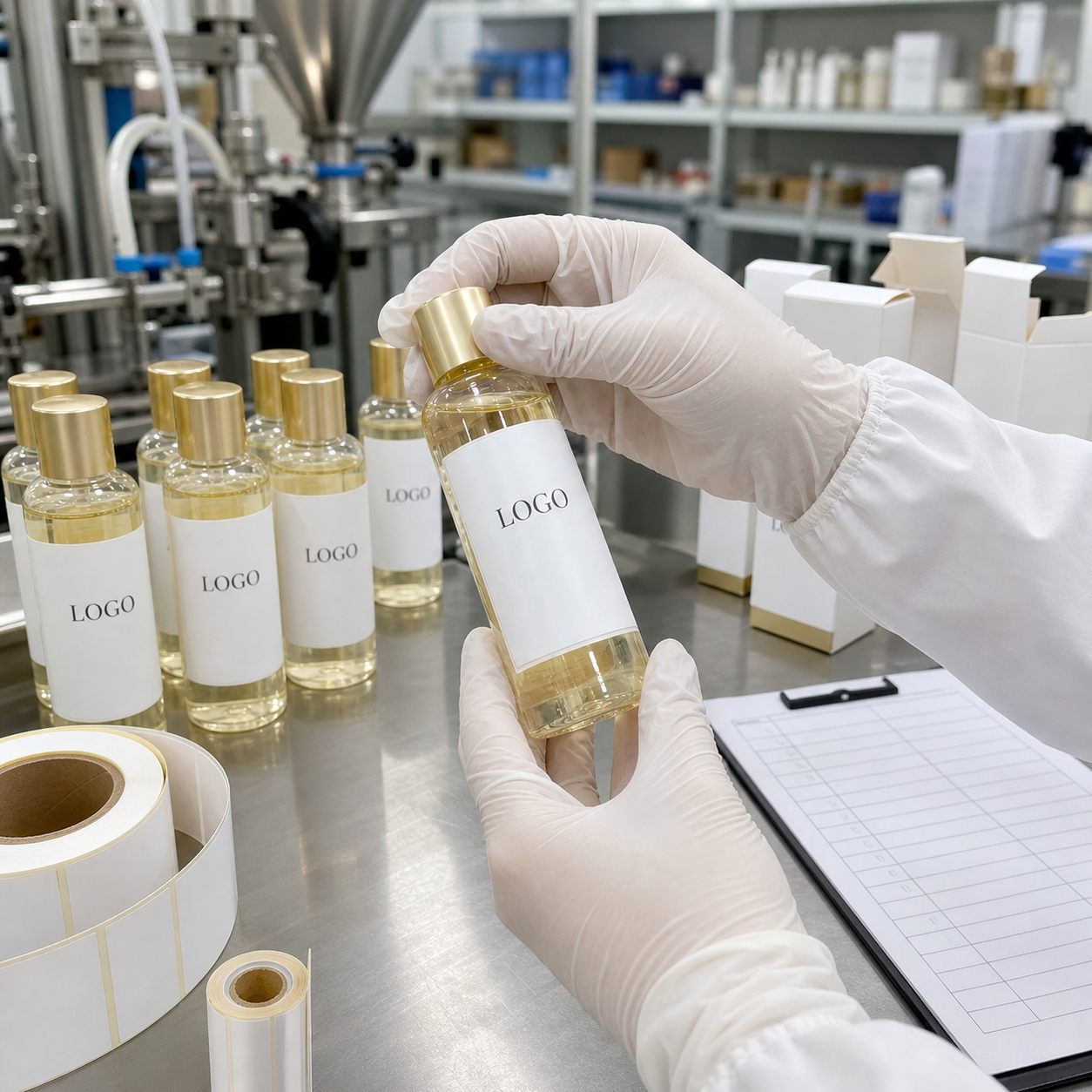
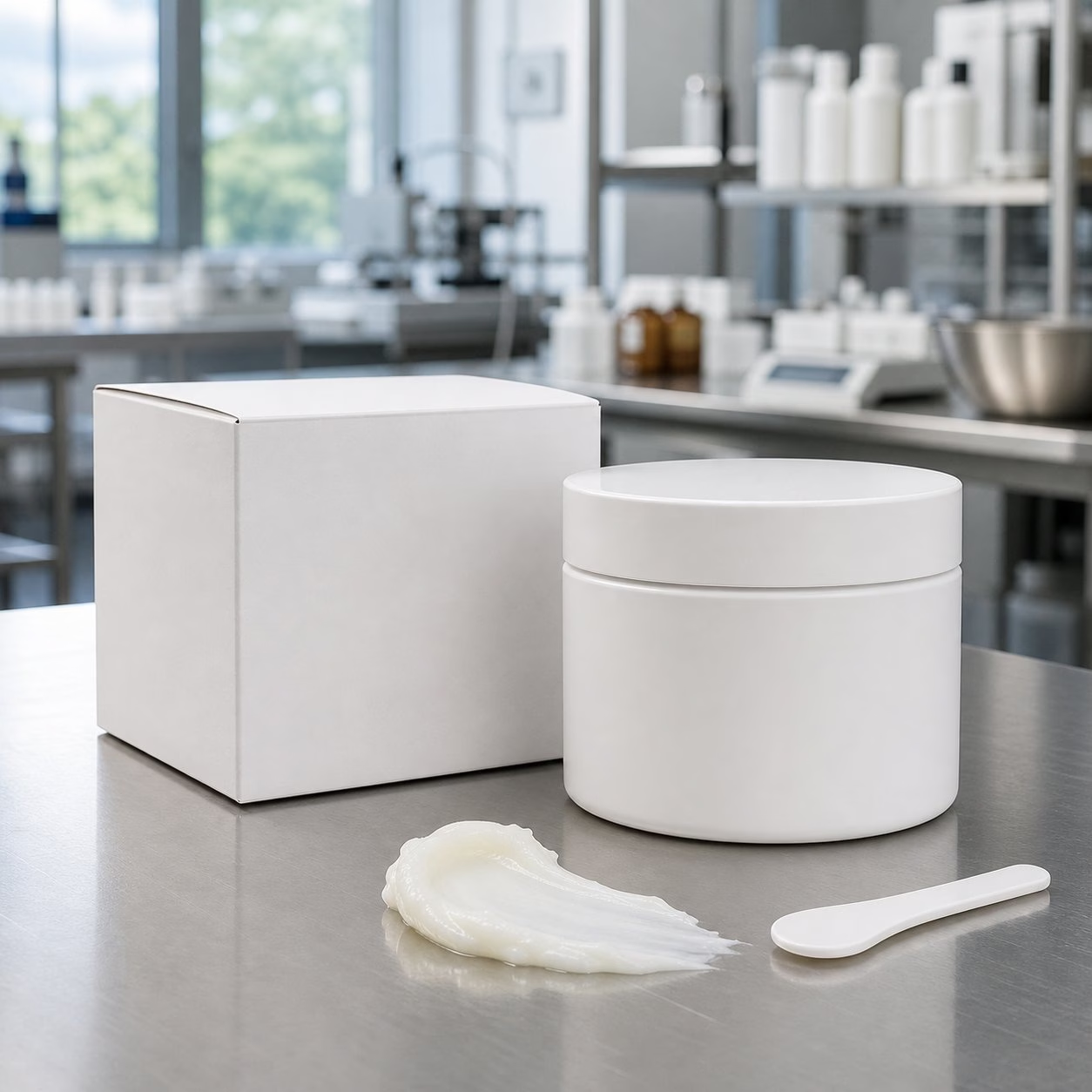
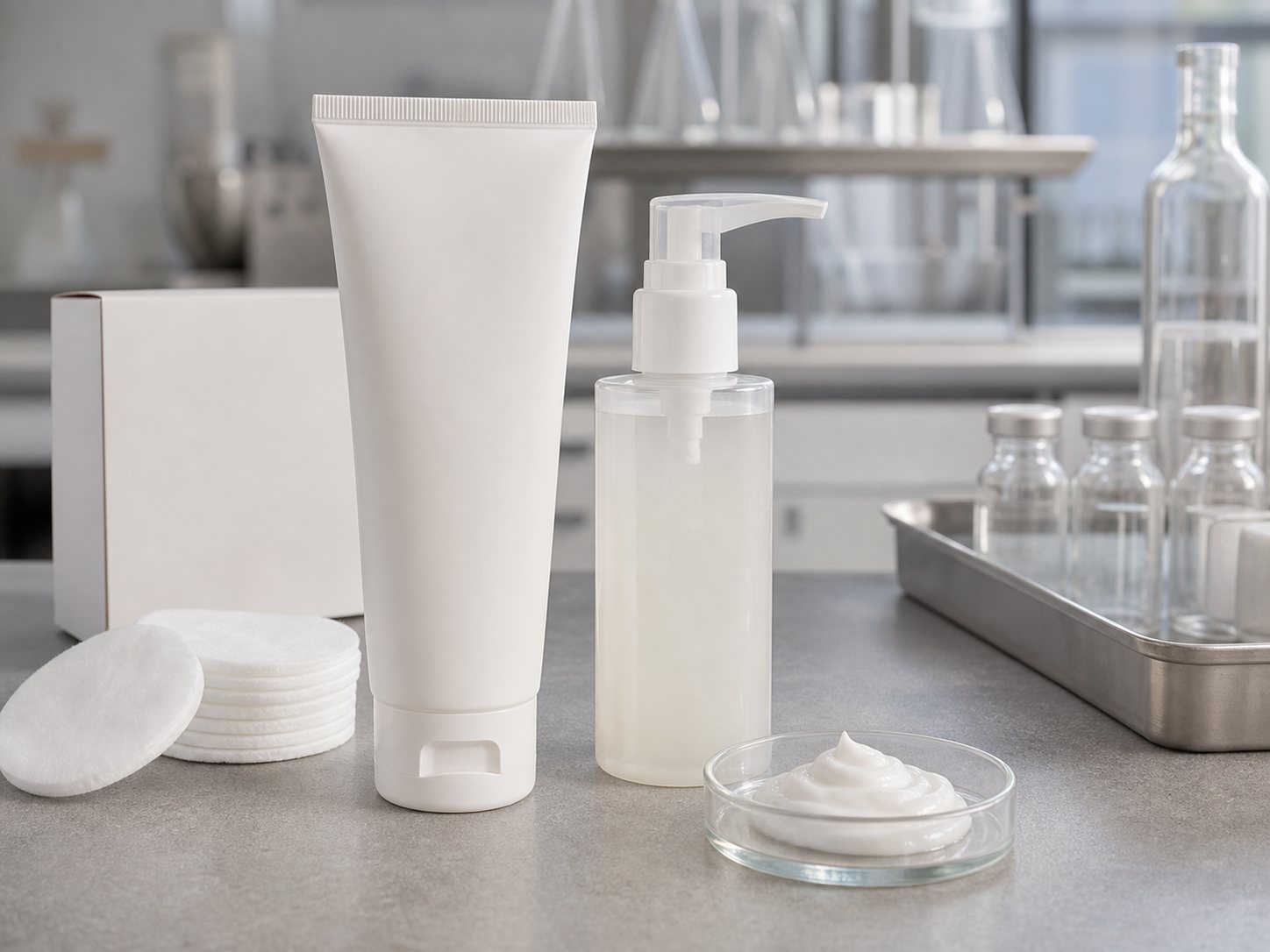
    Laboratory dishes with liquid and texture samples used as a visual reference for jelly cleanser sample testing
    Licensed laboratory reference photograph for sample-testing context. It is not GUOCUI factory or product-gallery evidence.

    What is a private label jelly cleanser?

    A private label jelly cleanser is a rinse-off cosmetic format with a cohesive gel or jelly-like body rather than a thin liquid or conventional cream cleanser. “Jelly” describes the sensory and visual direction, not a fixed formula, ingredient list or performance claim. The final system may be transparent, translucent or softly opaque, and it may be developed for low foam, moderate foam or a more playful lather depending on the buyer’s market and channel.

    The most useful OEM brief avoids copying a retail product name, package or proprietary ingredient story. It specifies the user experience in measurable workshop language: how much product is dispensed, how quickly it spreads on wet skin, whether it strings or breaks cleanly, how it rinses, and what the package must do after storage and transport.

    Eight checks before pilot packaging

    1. Define the rinse and foam target

    Start with the intended use: face, body, travel, salon backbar or gift-set cleanser. Then describe the desired foam as low, moderate or rich instead of using vague words such as “perfect.” Ask the sample team to note rinse time, residue perception and whether the skin feel matches the channel. A face cleanser may need a different after-rinse target from a shower jelly.

    2. Compare wet-skin slip at a controlled dose

    Use the same sample dose, water temperature and evaluation time for each version. Record whether the jelly spreads evenly, drags, breaks into pieces or becomes too runny after contact with water. The buyer should also state whether the product will be used with hands, a cleansing tool or a shower accessory, because the application method changes the useful texture window.

    3. Observe structure recovery

    A visually appealing sample can still become inconvenient if it stays stringy around a pump, collapses after shaking or does not settle cleanly after use. Photograph the sample before and after repeated dispensing, then compare it again after the agreed rest period. This is a practical screening step; the technical team should define the appropriate viscosity and stability methods for the confirmed formula.

    4. Match the texture to the dispensing system

    Do not choose a bottle from appearance alone. A pump, squeeze tube, disc-top bottle or wide-mouth jar creates different dosing, hygiene, leakage and residue questions. Ask for package samples using the intended neck finish, closure and orifice. Check the first dose, repeated doses and product remaining around the actuator or cap. If a jar is considered, discuss how consumer contact and use conditions affect the product-safety review.

    5. Run a package compatibility plan

    Formula and packaging should be reviewed as one system. Agree which conditions will be checked for leakage, paneling, seal performance, discoloration, odour change, label lifting and dispensing consistency. Intended market packaging should be included in the review, not only an inert lab container. Test scope and acceptance criteria depend on the confirmed formula, package materials, market and order plan.

    6. Review transport and temperature handling

    Parcel movement can change what the buyer sees when a sample arrives. Pack the bottle in the proposed inner support and carton, then inspect it after the agreed transport simulation or sample shipment. Record cap movement, pump locking, leakage, trapped air and texture appearance. A failed carton or closure should not be misdiagnosed as a formula failure.

    7. Confirm the microbiological review path

    Water-based cosmetics require a suitable safety and preservation review. The United States FDA notes that contamination can come from raw materials, water, manufacturing conditions, an ineffective preservation system, packaging, shipping, storage or consumer use. The buyer should ask what finished-product and microbiological work is appropriate for the confirmed formula and destination market. A visual sample check is not a substitute for that technical review.

    8. Freeze artwork only after the package route is stable

    Confirm net content, label panel size, batch-code area, directions, warnings, language versions, barcode position and carton marks after the primary package is selected. A late change from pump to tube can alter label dimensions, copy hierarchy and shipping carton counts. GUOCUI can review custom logo labels, boxes and multilingual packaging as part of the project handoff, but final wording should match the confirmed formula and target-market review.

    Sample decision table for buyers

    Decision What to record Why it changes the project
    Texture Clarity, flow, stringing, break and recovery Affects sensory direction and package dispensing
    Use test Dose, wet-skin slip, foam, rinse and residue perception Aligns the sample with channel and user expectations
    Package Pump or closure, orifice, leakage, label area and fill size Changes MOQ, quotation, artwork and transport planning
    Technical review Stability, compatibility and microbiological scope Must fit the confirmed formula and destination market
    Production handoff Approved sample, package code, artwork version and QC notes Prevents different teams from working from different references

    Buyer handoff checklist

    • Product use: face cleanser, body wash, salon format, travel size or set item.
    • Target market and sales channel.
    • Desired jelly appearance, colour direction, fragrance level, foam and after-rinse feel.
    • Reference texture described without copying brand names or protected package design.
    • Preferred capacity, bottle or tube style, closure and custom logo route.
    • Quantity range, sample deadline and intended launch window.
    • Artwork status, label languages, carton needs and barcode status.
    • Destination-market document or testing questions that must be reviewed.

    MOQ and quotation can be confirmed after formula, packaging, quantity, label requirements and shipping plan review. Sample and production timing can be confirmed after the formula direction and package route are agreed. Buyers can first review the GUOCUI product catalog, compare face-care directions and facial cleanser options, then open the customization process.

    Frequently asked questions

    Does a jelly cleanser need a jar?

    No. The useful package depends on viscosity, dose, hygiene expectations, closure performance, fill size and channel. Pumps, tubes, disc-top bottles and jars should be compared with the actual sample rather than selected from a catalog image alone.

    Can a buyer approve the formula from one appearance photo?

    No. A photo can document clarity, colour and obvious separation, but it cannot show dispensing, wet-skin slip, foam, rinse, odour, package compatibility or microbiological suitability. Use a controlled scorecard and retain the approved physical sample reference.

    Can GUOCUI provide a fixed MOQ or lead time for every jelly cleanser?

    Not responsibly from the format name alone. MOQ, quotation and timing vary with formula route, package availability, decoration, quantity, testing, label work and shipping plan. Share those inputs before asking for a project-specific answer.

    What should be approved before bulk production?

    The handoff should identify the approved sample, formula or version reference, primary package, artwork revision, net content, label language, carton and QC notes. Market-specific documents and testing needs should also be assigned to the correct factory, buyer or local compliance owner.

    Send a clearer jelly cleanser RFQ

    GUOCUI BIO TECH / Guangzhou Guocui Biological Technology Co., Ltd. supports private label and OEM/ODM buyers with formula-direction discussion, sample review, package matching, custom logo labels, cartons, QC communication and export preparation. Use the Contact form to send the intended use, target market, texture, package, quantity range and sample timing. The team can then discuss a practical next sampling and quotation step.

    Sources used for the safety and compatibility framework: FDA: Microbiological Safety and Cosmetics; FDA: Product Testing of Cosmetics; European Commission SCCS testing guidance.

  • How to Review Private Label Face Cream Samples for Makeup Compatibility

    How to Review Private Label Face Cream Samples for Makeup Compatibility

    Direct answer: A useful makeup-compatibility sample review keeps the application amount, waiting time, skincare steps and makeup products consistent, then records pilling, drag, patchiness, excess slip and finish. The goal is not to declare one cream universally compatible. It is to identify which cream or gel-cream direction works best for the buyer’s intended routine, channel and package before formula, artwork and bulk-production decisions are locked.

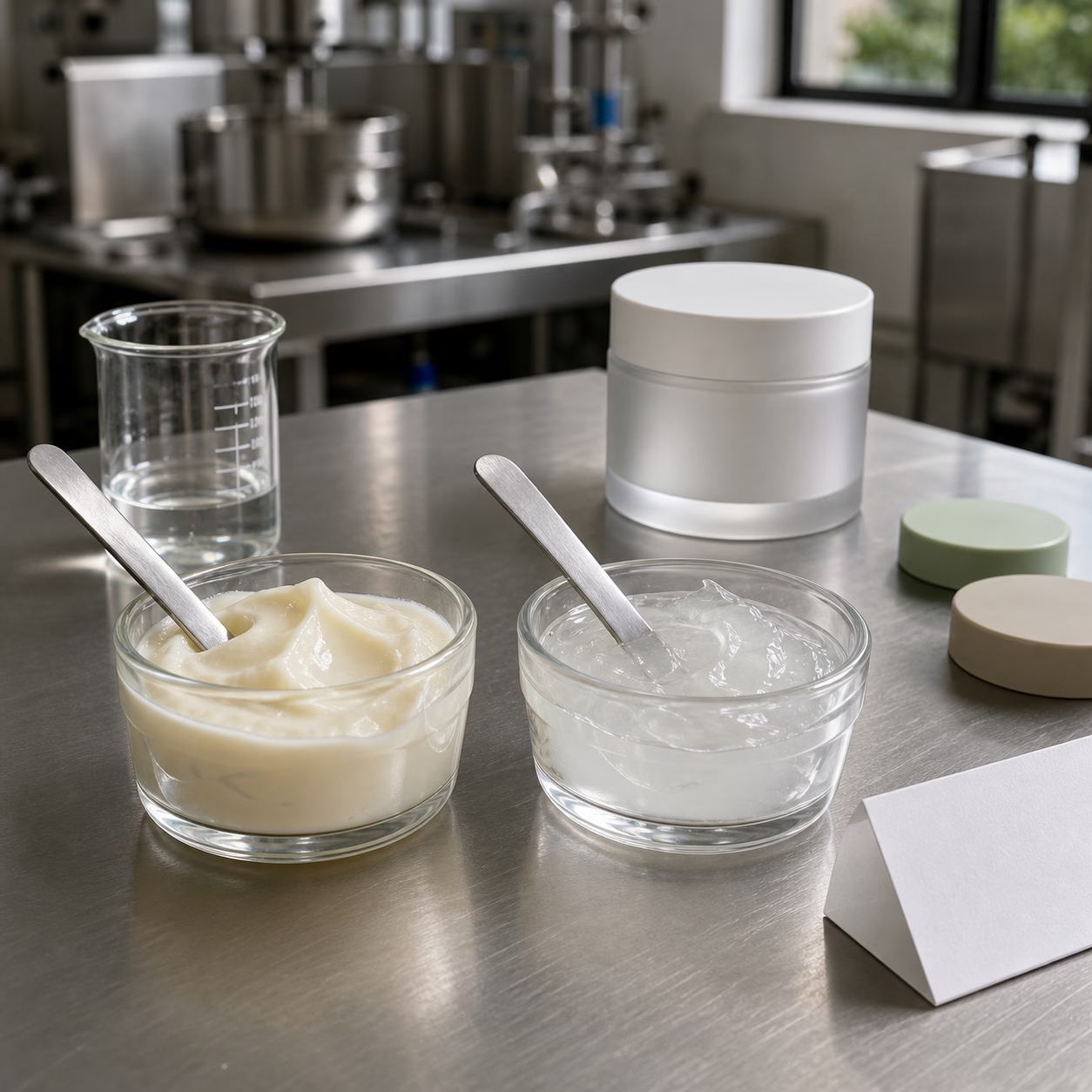
    Cream texture reference used during a private label face cream sample review
    Texture reference photograph by Jana Kukebal via Pexels. Project decisions still require testing the buyer’s actual sample and routine.

    Makeup compatibility is a practical sample-review question for a private label face cream, especially when the product is positioned as a morning moisturizer, makeup-preparation cream or fast-absorbing gel-cream. It describes how the approved cosmetic sample behaves inside a defined routine. It is not a clinical claim, a guaranteed wear-time promise or proof that the formula will perform identically with every sunscreen, foundation and application method.

    Set a controlled test, not a beauty demo

    A short social video may show a pleasant texture, but a factory and buyer need repeatable notes. Before comparing samples, write down what stays constant. Use the same amount, the same application area, the same waiting interval and the same follow-on products. If one tester changes the sunscreen, doubles the cream dose and applies foundation immediately, the result cannot be compared fairly with a second sample.

    Test variable What to record Why it matters
    Application amount Approximate dose and coverage area Too much product can create slip or rolling that is not visible at a normal dose.
    Waiting time Time before sunscreen or makeup A formula may need a short settling period before the next layer.
    Layer order Serum, cream, sunscreen and makeup sequence Changing the order changes the surface being evaluated.
    Application method Fingers, sponge or brush Rubbing, pressing and sweeping create different friction.
    Environment Room temperature, humidity and test date Climate can change perceived absorption and after-feel.

    Review the sample in three layers

    1. Start with the face cream by itself

    Check pickup, spread, cushion, absorption and the surface after-feel at a normal use amount. Note whether the sample feels watery, gel-like, creamy, waxy, tacky, powdery or oily. Record scent strength and how quickly it changes. This first pass helps separate a formula issue from a later layering issue.

    2. Repeat the buyer’s normal morning stack

    Apply the representative toner or serum before the sample, then the intended sunscreen if that is part of the market routine. Use actual planned products when possible. A sample that feels excellent alone may behave differently over a high-polymer serum or under a film-forming sun-care product. GUOCUI’s sample discussion should therefore ask the buyer which products are likely to sit directly below and above the cream.

    3. Pair it with representative complexion products

    Choose a small, relevant set rather than an unrealistic shelf of makeup: for example, one water-light foundation, one richer complexion base and the buyer’s main concealer or cushion format. Apply them with the method used by the target customer. Observe the first five minutes and again after a practical settling period. Do not convert this internal comparison into a fixed public performance claim without an appropriate evidence plan.

    Use a simple scorecard that leads to a decision

    A useful scorecard describes the visible result and the business decision it affects. A one-to-five scale can help compare samples, but written observations are more important than the number.

    Checkpoint What the tester looks for Possible next action
    Pilling or rolling Small visible particles after rubbing or makeup application Repeat with controlled dose and wait time; review the full layer stack.
    Drag Foundation catches instead of spreading evenly Compare a more emollient or slower-setting texture direction.
    Excess slip Complexion product moves or will not settle Reduce dose, extend wait time or compare a lighter after-feel.
    Patchiness Uneven coverage around dry or high-friction areas Review skin preparation, application tool and cream cushion.
    Finish shift More shine, dullness or texture visibility than planned Choose the finish that matches channel and customer expectation.

    Do not blame the cream before checking the routine

    Pilling can come from several interacting causes: excessive application, insufficient waiting time, friction from repeated rubbing, or an incompatible combination of film-forming layers. The practical response is to change one variable at a time. If the team changes the formula, dose, sunscreen and foundation together, it will not know which change improved the result.

    The same discipline applies to patchiness or slip. Ask whether the issue appears when the cream is used alone, only after sunscreen or only with one complexion product. Photograph the result under consistent light, label the sample code and record the sequence. That evidence gives the formulation and export teams a clearer question than a message saying only that a sample “does not work.”

    Cream versus gel-cream is a channel choice

    A cushioned cream may suit a buyer who wants a comforting skincare-first step or a cooler, drier-market story. A lighter gel-cream may fit humid markets, fast routines or sellers who want quick texture demonstrations. Neither format is automatically better. The useful decision combines climate, target skin feel, makeup routine, package, price position and the buyer’s claim boundary.

    For Amazon or TikTok sellers, the texture must be easy to explain without exaggerated promises, and the package must survive parcel delivery. Makeup artists may value controlled dispensing and repeatable layering. Salons or spas may compare a professional-use size with a retail take-home unit. Distributors may need one texture that remains understandable across several markets and label languages.

    Check dispensing and package fit with the chosen dose

    A sample jar allows easy texture review, but the final pack changes how much product a customer receives. Test whether an airless pump, tube or jar delivers a practical amount for the compatibility routine. Review viscosity, pump output, cap fit, leakage risk, label area and carton protection. A formula that needs an unusually large dose to feel comfortable may require a different communication and pack-size plan from a formula designed for a thin morning layer.

    MOQ and quotation can be confirmed after formula, packaging and order-plan review. Sample and production timing can be confirmed after the texture direction, component availability, artwork needs and buyer testing plan are clear.

    Buyer handoff checklist

    • Target country, climate, channel and customer routine.
    • Sample code, application amount and waiting time.
    • Products used below and above the sample, with exact layer order.
    • Application method and where pilling, drag, slip or patchiness appeared.
    • Preferred cream or gel-cream after-feel and finish.
    • Jar, pump or tube route, capacity and expected dispensing amount.
    • Quantity range, label languages, sample deadline and launch window.

    FAQ

    Can one private label face cream work with every foundation?

    No responsible sample review should promise universal compatibility. Test representative routines for the intended buyer and define the approved claim boundary separately.

    How many samples should a buyer compare?

    The practical number depends on how different the target textures are. Comparing two clearly defined directions is often more useful than requesting many samples without a decision rule.

    Should a buyer test sunscreen and foundation together?

    Yes, when that stack reflects normal use. Record each layer, dose, waiting time and application method so the result can be repeated.

    Is pilling proof that the formula is defective?

    Not by itself. First isolate dose, wait time, rubbing and the other film-forming products. Then send repeatable notes to the factory for review.

    Browse the GUOCUI product catalog, Face collection, Facial Cream collection and Customization service. For project setup, read the pre-makeup moisturizer OEM brief. To discuss samples, send the checklist through Contact GUOCUI.

  • How to Brief a Pre-Makeup Moisturizer Primer OEM Project

    How to Brief a Pre-Makeup Moisturizer Primer OEM Project

    Direct answer: A useful pre-makeup moisturizer primer OEM brief should define the desired skin feel, makeup-preparation finish, formula boundaries, package route, target channel, order plan and destination market before samples are made. This gives the factory a practical basis for texture trials, package-fit checks, label review and quotation. It also prevents a hybrid product from becoming a vague promise that is difficult to sample, explain or approve.

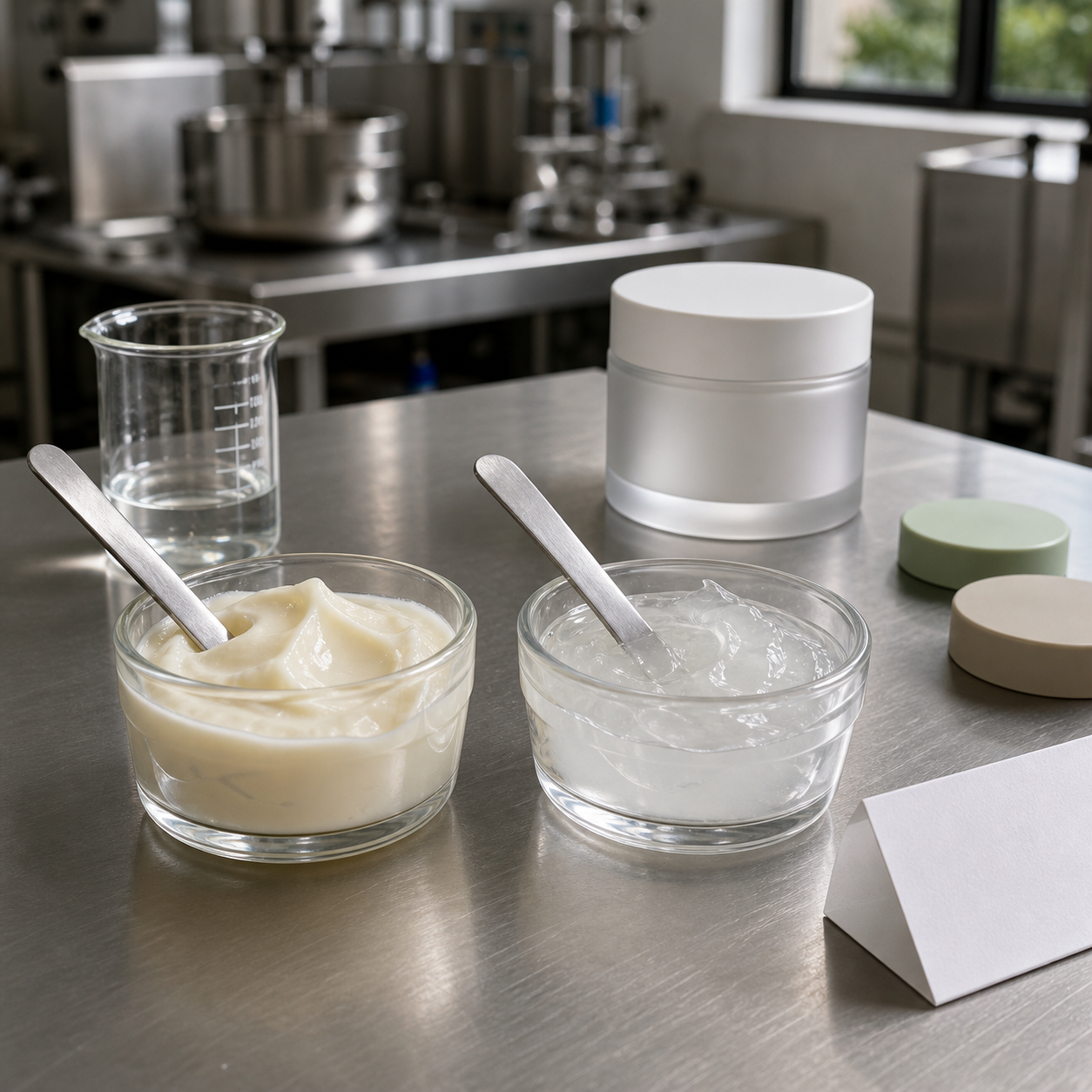
    Unbranded pre-makeup moisturizer cream sample on a GUOCUI factory sample table
    An unbranded cream sample and texture cup prepared for a B2B formulation and packaging discussion.

    A moisturizer-primer hybrid is a cosmetic skincare direction that combines a moisturized after-feel with a surface finish intended to prepare skin for makeup. For private-label buyers, the important question is not whether two retail category names can be placed on one label. The useful question is which texture, finish, package and claim set will make sense for the intended customer and channel.

    Moisturizer, primer or one makeup-prep step?

    A daily moisturizer brief often starts with hydration feel, comfort and routine position. A makeup primer brief may focus more on slip, finish, pilling behavior and how makeup applies over the surface. A hybrid project must decide which job leads. If the buyer wants a skincare-first product, the sample may prioritize a comfortable cream and a natural-looking finish. If the project is makeup-led, faster absorption and controlled surface slip may be more important.

    Short conclusion: choose one lead function and one supporting function. “Moisturizer with a makeup-ready finish” is usually clearer for sampling than a long list of unsupported performance promises.

    What the factory needs before the first texture trial

    GUOCUI BIO TECH / Guangzhou Guocui Biological Technology Co., Ltd. can use a structured buyer brief to compare feasible formula and packaging routes. Before a sample discussion, the buyer should answer the following questions:

    • Is the target feel buttery and cushioned, light and fast-absorbing, or balanced between the two?
    • Should the finish look softly dewy, natural, or less shiny?
    • Which makeup products will normally be used after it?
    • Is the main channel skincare retail, makeup retail, salon, spa, Amazon, TikTok, wholesale or a starter set?
    • Are there preferred ingredients, exclusions, scent limits or destination-market claim restrictions?
    • Does the project need a jar, airless jar, pump, tube, mini size or coordinated set?

    Formula direction should describe a result, not borrow a campaign

    A buyer may discuss humectant, emollient and barrier-supporting cosmetic directions, including hyaluronic-acid-positioned hydration, panthenol, niacinamide or ceramide-positioned care. Those are starting points, not a finished public claim set. Exact ingredients, percentages and label language should follow feasibility, sample and destination-market review.

    It is also useful to describe what the product should not do. A very rich film may conflict with a humid-market brief. A quick-dry texture may not suit buyers who want a cushioned massage step. A strong scent may be unsuitable for a makeup artist or sensitive-skin-positioned channel. These tradeoffs are easier to resolve on a sample table than after artwork is printed.

    Sample evaluation: test the routine, not only the cream

    During sample review, check spread, absorption time, surface feel and scent. Then evaluate the sample under representative makeup products rather than assuming universal compatibility. Observe visible pilling, patchiness, excessive slip and how the finish changes after a normal waiting period. Record the amount used and the order of application so feedback is repeatable.

    This is a cosmetic-use assessment, not a clinical performance test. If a buyer wants a specific wear, hydration or measured claim, the evidence and wording route must be discussed separately. A factory should not turn an informal sample impression into an unsupported numerical promise.

    Choose packaging after texture direction is credible

    Package route Why a buyer may choose it What to verify
    Compact airless jar Premium cream presentation with controlled dispensing Fill compatibility, evacuation, cap fit, decoration and refill availability
    Airless pump Familiar skincare format and cleaner dose handling Viscosity, pump output, dip tube or airless system and label area
    Soft tube Travel, salon kit or online-channel convenience Tube material, closure, crimp, print route and carton fit
    Conventional jar Direct access to a richer cream texture Inner lid, spatula option, closure, label and handling instructions

    Capacity, component material, color, decoration, label stock, carton and shipping protection can affect MOQ, quotation and timeline. A stock component with custom label work is a different project from a custom-colored package or a multi-size range.

    Channel decisions change the brief

    An Amazon or TikTok seller may need a texture that can be demonstrated clearly on camera, a compact information hierarchy and a package that survives parcel delivery. A makeup artist program may prioritize pump hygiene, kit size and compatibility with several complexion routines. A salon or spa may want a professional back-bar size plus a retail take-home unit. A distributor may care more about multilingual artwork, carton marks and a coordinated range that can be explained across several markets.

    The formula does not need to become completely different for every channel, but the buyer should identify the lead channel before finalizing texture, capacity and claims. That decision reduces late artwork changes and makes quotation comparisons more meaningful.

    Factory workflow from brief to packing preparation

    1. Brief review: target buyer, channel, texture, finish, formula limits, package, quantity range and market.
    2. Feasibility discussion: formula direction, component availability, label boundary and sampling route.
    3. Sample evaluation: application, after-feel, scent and makeup-preparation behavior are recorded.
    4. Package-fit check: closure, dispensing, label position and carton structure are reviewed with the selected texture.
    5. Artwork confirmation: logo, multilingual copy, barcode, carton marks and required buyer information are checked before printing.
    6. QC and packing preparation: approved appearance, fill, closure, label placement, carton and shipment instructions are used as checkpoints.

    MOQ, quotation and timeline: what changes the answer?

    MOQ and quotation can be confirmed after formula, packaging and order-plan review. The main variables include formula route, component availability, decoration, label and carton work, quantity, testing or document requests, set assembly and shipping plan. Sample and production timeline can be confirmed after formula and packaging review. Publishing an invented fixed number before these inputs are known would make the buyer decision less reliable, not more convenient.

    Buyer handoff checklist

    • Target country, channel and intended retail position.
    • Lead function: skincare-first moisture or makeup-first preparation.
    • Desired texture, finish, scent and ingredient direction.
    • Reference capacity and preferred jar, pump or tube route.
    • Logo, label languages, carton, barcode and set requirements.
    • Estimated quantity range, sample deadline and launch date.
    • Testing, documentation, packing and shipping requirements.

    FAQ

    Can a private-label moisturizer also be positioned for makeup preparation?

    Yes, if the approved texture, sensory result and public wording support that position. The brief should state which function leads and how the buyer will evaluate the sample.

    Can GUOCUI discuss both cream and gel-cream samples?

    Different sensory directions can be reviewed based on channel, climate, finish and package. Final feasibility and sample scope are confirmed after the buyer brief.

    Should packaging be selected before the formula?

    A preliminary package route helps sourcing, but final component confirmation should follow texture and compatibility review. Viscosity, dispensing and decoration can change the practical choice.

    Does a low-MOQ direction mean one fixed quantity?

    No. MOQ depends on formula, stock or custom components, decoration, label and carton work, SKU count and order plan. Send the quantity range so the factory can compare feasible routes.

    Explore the GUOCUI product catalog, Face collection, Facial Cream collection and Customization service. To prepare a factory review, send the checklist through Contact GUOCUI.

  • Private Label Massage Oil: Build a Claim-Safe OEM Brief Before Sampling

    Private Label Massage Oil: Build a Claim-Safe OEM Brief Before Sampling

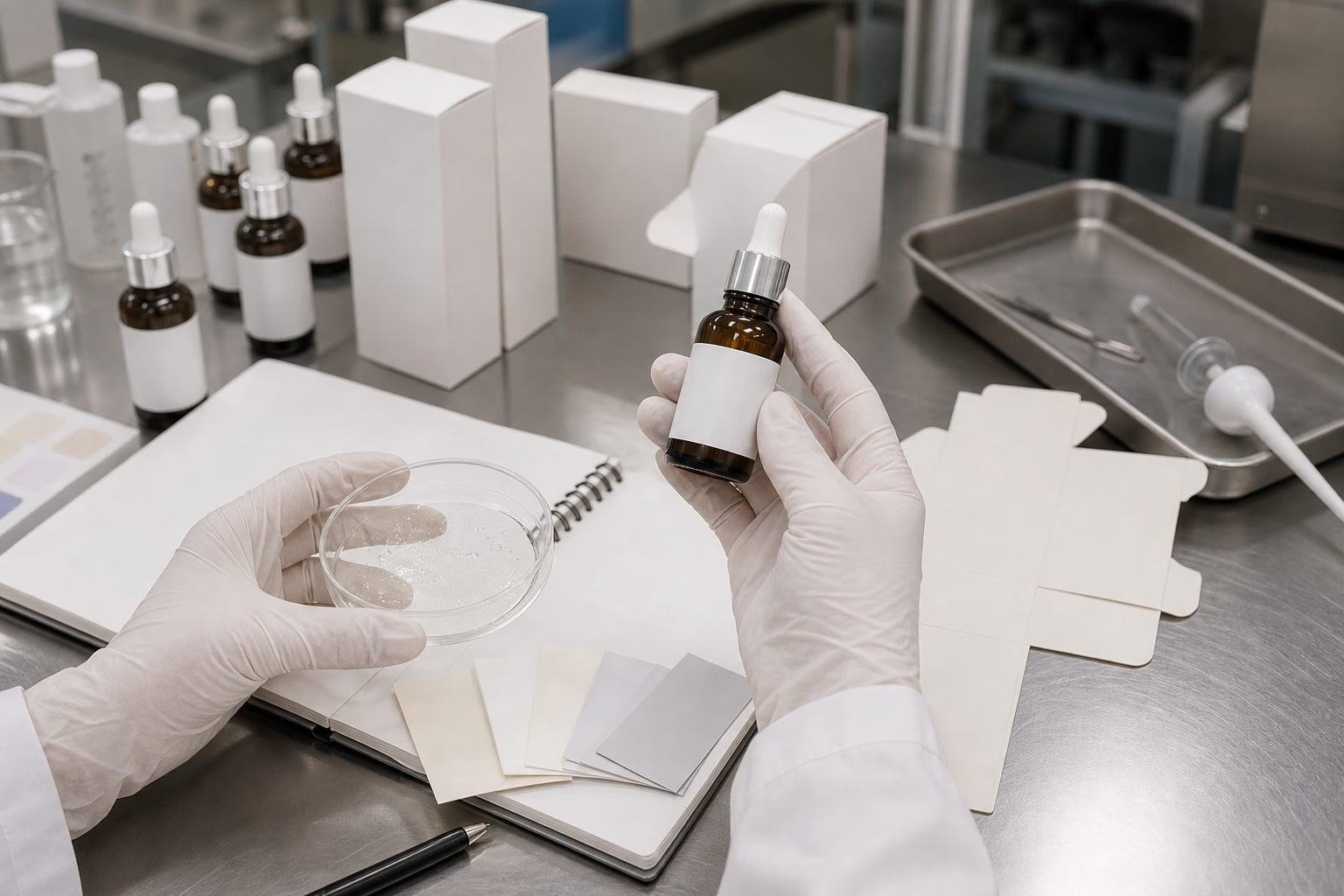
    GUOCUI quality-control worker compares unbranded massage oil pump and dropper samples on a factory table
    Massage oil samples should be reviewed as a formula, package, claim and market-language system—not as a bottle choice alone.

    Direct answer: a useful private label massage oil brief starts by fixing the product’s cosmetic job, target channel, sensory profile, pack, claim boundaries and destination market before the factory makes samples. If a buyer wants a warming-feel or comfort-positioned oil, the brief should describe texture, glide, fragrance and after-feel without promising to treat pain, inflammation or injury. That distinction changes the formula conversation, label review, evidence needs and sometimes the regulatory route.

    At GUOCUI BIO TECH, the practical question is not “Can you copy this bottle?” It is “What should the label responsibly say, and what must the sample prove?” The answers help Guangzhou Guocui Biological Technology Co., Ltd. prepare a clearer OEM/ODM path for spa brands, distributors, e-commerce sellers and importers.

    Cosmetic massage oil or therapeutic product?

    The boundary begins with intended use. The U.S. FDA gives a direct massage-oil example: an oil intended to lubricate the skin and add fragrance can be a cosmetic, while therapeutic positioning such as muscle-pain relief can move the product into drug territory. Marketing copy, online listings, labels and supporting imagery can all help establish intended use. Buyers should therefore settle the claim direction before asking for label artwork or a final quotation.

    Brief element Cosmetic-oriented direction Higher-risk direction needing specialist review
    Primary job Massage glide, skin-conditioning feel, fragrance ritual Treating pain, injury, inflammation or disease
    Sensory language Warming-feel, light slip, cushion, non-heavy finish Guaranteed deep heat, muscle recovery or therapeutic action
    Evidence question Does the finished sample match the agreed sensory target? Does the finished product support a regulated treatment claim?
    Launch action Cosmetic safety, label and claim review for the target market Pause and confirm the correct regulatory route with qualified counsel

    This is a commercial sampling guide, not legal advice. Final wording must match the destination country, responsible-person or importer requirements, sales channel and finished-product evidence. In the EU, cosmetic claims must be truthful and supported by adequate, verifiable evidence. Current UK guidance likewise places safety, product information, notification and claim support with the responsible business.

    1. Name the buyer, channel and use moment

    A spa treatment-room oil and a marketplace home-massage oil may share a base format, but they do not need the same pack, scent strength, label hierarchy or dispensing control. Start the RFQ with the buyer type: salon or spa, hotel amenity supplier, distributor, pharmacy-style retailer, online beauty seller, or gift-set brand. Then state the use moment—professional massage, after-shower body ritual, travel set, couple-care gift, or fragrance-led body care.

    A spa may value controlled slip, back-bar sizes and clean dispensing. An online seller may need a leak-resistant consumer bottle and protective carton. A distributor may need multilingual artwork space and several capacity options.

    2. Convert “warming” into a sensory target

    “Warming” is too vague for sampling. Describe what the evaluator should feel and when: immediate or gradual sensation, mild or noticeable intensity, short or extended perception, and whether fragrance should reinforce the warm character. Also define glide, absorption speed, cushion, tack, residue, shine and after-feel. The factory can then discuss ingredient directions without promising a medical outcome.

    Ask for a reference range rather than a copied formula. For example: a medium-glide body oil with a dry-touch finish, low tack, a soft warming-feel concept, and a restrained aromatic profile suitable for a spa-private-label line. Ingredient preferences and exclusions can be added after the sensory target is clear. The finished formula, not one highlighted ingredient, must support the final cosmetic story.

    3. Build a sample scorecard before the sample arrives

    Agree on the evaluation method before production starts. A useful scorecard records appearance, odor, dispensing, spread, glide time, absorption, residue, skin feel after a defined interval, package cleanliness and leakage after handling. If several evaluators are involved, use the same amount, application area and review timing. Patch-test and local safety instructions should follow the responsible market plan.

    Do not approve only from a fragrance strip or a product photo. Review the oil in the intended pump or dropper, because dispensing changes the buyer experience. Photograph the approved bottle, closure, label position and carton orientation so the bulk-production handoff has a visual reference.

    4. Match the oil to the package

    Pumps, droppers, reducers and disc-top closures handle oil differently. The buyer should provide target capacity, material preference, finish, closure type, label area, carton requirement and shipping method. The factory and packaging team can then check viscosity fit, dose control, neck and closure compatibility, decoration area, leakage risk and transit protection.

    • Pump: useful for controlled consumer or professional dispensing; confirm dose and lock design.
    • Dropper: supports a precise ritual, but bulb, pipette and closure fit need review.
    • Reducer or pour cap: simple, but flow can become messy if the orifice and viscosity do not match.
    • Carton or set box: provides artwork space and shipping protection; confirm insert and bottle movement.

    5. Prepare label and export information early

    Before label confirmation, send the target country, sales channel, brand name, language set, responsible-party details, intended claims and required documents. The final label plan may need product identity, net contents, ingredient list, batch information, precautions, responsible-party details and origin information depending on the market. Keep placeholder copy out of mass production.

    Claims should be checked against the finished formula and available support. Avoid carrying over treatment wording, clinical-sounding icons, competitor terminology or unsupported ingredient benefits from a reference image. GUOCUI can help organize cosmetic wording and artwork questions, while the buyer and its market-qualified reviewer retain responsibility for destination-market approval.

    6. Give the factory enough information to quote

    MOQ and quotation can be confirmed after formula, packaging and order-plan review. The useful RFQ inputs are formula route, fragrance direction, pack capacity, bottle and closure, decoration method, label and carton status, quantity range, target market, sample deadline and requested shipment timing. A low-MOQ ready-formula route and a custom formula with special packaging are different projects, so one fixed price without those inputs is rarely meaningful.

    Sample and production timeline can be confirmed after formula and packaging review. Artwork revisions, custom components, testing needs and multilingual labels can add decision steps. A realistic schedule separates formula sample, packaging sample, artwork approval, pre-production confirmation, filling and packing, QC check, and export preparation.

    Factory handoff checklist

    1. Buyer type, sales channel and destination market.
    2. Cosmetic use and claim boundary, including wording to avoid.
    3. Texture, glide, absorption, finish and fragrance target.
    4. Ingredient preferences, exclusions and market restrictions.
    5. Bottle capacity, material, closure, label and carton direction.
    6. Quantity range, sample window and launch timing.
    7. Artwork status, language set and required support documents.

    Browse the GUOCUI B2B catalog, compare the massage oil category, and review private label and custom formula options. When the brief is ready, use the product-specific inquiry path.

    FAQ

    Can GUOCUI make a warming-feel private label massage oil?

    GUOCUI can discuss a cosmetic warming-feel direction after the buyer defines the target sensation, market, channel, ingredient limits, pack and claim boundaries. Final wording and formula suitability require finished-product and destination-market review.

    Can the label say “muscle pain relief”?

    Do not assume that wording belongs on a cosmetic label. In the United States, the FDA specifically uses therapeutic muscle-pain relief for massage oil as an example that can make the intended use a drug use. Confirm the correct regulatory route before formula or artwork approval.

    What packaging works for massage oil?

    Pumps, droppers and reducer closures can all work, but the decision depends on viscosity, dose, use setting, leak resistance, decoration and shipment. Review the actual formula in the intended package before bulk production.

    What should I send for a quotation?

    Send the product use, target market, formula route, fragrance, pack capacity, closure, decoration, carton, quantity range, artwork status and timing. Quotation depends on formula, packaging, quantity, label requirements and shipping plan.

    Does GUOCUI offer ready formula and custom formula routes?

    Yes. Buyers can discuss ready-formula private label, design-based customization or custom formula development. The sampling plan should match the amount of formula, sensory and packaging change required.

    Sources used for the buyer guide


  • Private Label Men’s Body Fragrance Mist: Seven Decisions Before OEM Sampling

    Private Label Men’s Body Fragrance Mist: Seven Decisions Before OEM Sampling

    Direct answer: A private label men’s body fragrance mist should not enter OEM sampling with only a scent name and bottle photo. The buyer should first define the intended use, scent direction, base, spray system, pack format, market label needs, and acceptance tests. Those decisions let the factory evaluate formula, pump and packaging together, then prepare a quotation based on real variables instead of assumptions.

    Unbranded men's body fragrance mist samples being checked on a cosmetic factory QC table

    Why this format deserves a separate OEM brief

    Recent July 2026 launch activity made men’s whole-body fragrance mist a useful direction to test, but a launch signal is not proof of guaranteed demand. For a private label buyer, the practical opportunity is the format: a portable fine mist that can sit between everyday body care and fine fragrance. The hard work is not copying another bottle or scent story. It is turning the format into a distinct, manufacturable product for a specific channel.

    A tea-woody direction may suit a restrained grooming line. A sea-salt-citrus direction may read fresher for gym, travel or warm-climate retail. These are starting points, not finished formulas. GUOCUI BIO TECH treats the buyer’s market, price tier, pack, fragrance documentation and usage statement as connected decisions before sample work begins.

    Seven decisions to settle before approving OEM samples

    1. Define the user, channel and intended use

    State whether the product is for a men’s grooming brand, salon, wholesale catalog, marketplace launch, travel set or gift line. Also state where buyers are expected to spray it. A product positioned as an all-over fragrance mist needs different instructions and compliance review from an underarm deodorant spray. Clear intended use helps the factory and fragrance supplier assess the appropriate documentation and product category.

    2. Write a scent brief in layers, not slogans

    Give the factory a short description of the opening, heart and dry-down. For example, a tea-woody brief might request a clean citrus opening, a dry tea or aromatic middle and a soft wood base without heavy sweetness. A sea-salt-citrus brief might ask for a transparent marine impression, bright peel notes and a quiet mineral-wood finish. Add three boundaries: notes to avoid, desired intensity and the point at which the scent feels too sweet, too sharp or too heavy.

    3. Decide the base and the market constraints

    Do not assume every body mist uses the same alcohol or water balance. Tell the factory whether alcohol-free positioning, quick dry-down, low tack, color clarity or compatibility with sensitive packaging is important. The sample brief should also name the target country and label language. Fragrance standards support risk management, but they do not replace the safety assessment or local regulatory review for the finished product.

    4. Match the formula to the fine-mist system

    The pump, dip tube, gasket, neck finish and bottle are one system. A visually attractive bottle can still produce a coarse spray, intermittent output or leakage after transport. Ask for the proposed bottle material, capacity options, closure, decoration method and whether the pump has been checked with the actual sample formula. Packaging-supplier test notes also warn that performance can vary with container shape, size and formula.

    5. Agree on a sample acceptance sheet

    At the sample table, review more than the first spray. Record priming strokes, spray pattern, dose consistency, droplet feel, dry-down, tack, scent development, bottle clarity, label adhesion and cap fit. Repeat the check after the sample rests. For export planning, add upright and side storage, controlled leakage observation and pack-out review. These checks do not replace formal stability, compatibility or transport testing, but they catch avoidable brief and component problems early.

    6. Plan the label and carton before artwork is final

    Confirm the product name, net contents, directions, warnings, ingredient-list responsibility, batch coding area and target languages before locking the dieline. If the product uses an alcohol-containing base, tell the logistics team early so shipping requirements can be reviewed. Avoid unsupported long-wear, performance or medical claims. The public label should explain what the product is and how to use it without promising an unverified result.

    7. Give enough information for a real quotation

    Quotation depends on formula, fragrance, packaging, quantity, decoration, label requirements, testing and shipping plan. Send the target market, estimated order quantity, preferred bottle direction, scent brief, desired samples and launch timing. MOQ and quotation can be confirmed after formula, packaging and order-plan review. Sample and production timelines can be confirmed after the formula and packaging route is agreed.

    A practical decision table for buyers

    Decision What the buyer should provide What the sample review should confirm
    Scent direction Opening, heart, base, intensity and avoid list Balance at first spray and after dry-down
    Product base Alcohol preference, clarity and skin-feel target Appearance, dry time, tack and scent release
    Spray pack Bottle style, capacity range, closure and decoration Priming, mist pattern, leakage and component fit
    Market readiness Country, channel, language and claim boundaries Label fields, warnings and document responsibilities
    Commercial plan Estimated quantity, pack count, launch window and shipping market Quotation variables, sample scope and next approval point

    How the GUOCUI factory workflow should feel to a buyer

    The project should begin with a usable brief, not a generic catalog request. Guangzhou Guocui Biological Technology Co., Ltd. can discuss custom formula direction, fragrance profile, bottle and pump options, label localization, outer-carton planning and set configuration. The working sequence is straightforward: review the buyer brief, align the sample route, check formula and pack together, record QC observations, confirm artwork responsibilities, then prepare the production and quotation discussion.

    Buyers can browse the GUOCUI B2B product catalog, review body care directions, and see the OEM/ODM customization process. For more spray-system detail, use the fine-mist pump compatibility checklist as a mechanical review companion, while keeping the fragrance brief and regulatory questions specific to this product.

    Information to send with an inquiry

    • Target country, sales channel and buyer type.
    • Men’s, unisex or channel-specific positioning.
    • Scent family, intensity, notes to avoid and reference adjectives.
    • Alcohol preference, skin-feel target and visual clarity target.
    • Bottle direction, capacity range, pump style, decoration and carton needs.
    • Estimated quantity, sample quantity, target launch window and shipping market.
    • Required label languages, testing expectations and supplier-document needs.

    Frequently asked questions

    Can GUOCUI develop a custom men’s body fragrance mist?

    Yes. The project can be discussed as Private Label, OEM, ODM or Custom Formula work. The scent brief, base, packaging, label needs and order plan must be reviewed before the sample route is confirmed.

    What MOQ applies to a private label body mist?

    There is no responsible single MOQ without the formula and pack brief. MOQ and quotation can be confirmed after formula, fragrance, bottle, pump, decoration, quantity and shipping-plan review.

    What should be checked on the first sample?

    Check scent direction, dry-down, tack, clarity, spray pattern, priming, leakage, cap fit and label or decoration compatibility. Record the result against the same acceptance sheet for every revision.

    Does an IFRA document replace finished-product compliance work?

    No. IFRA explains that its standards support safe use of fragrance materials, but they do not replace the finished-product safety assessment or applicable national and local rules.

    Can the product use custom packaging and multilingual labels?

    Custom bottle direction, pump, color, decoration, label, carton and language options can be discussed. Final choices depend on component availability, artwork review, target-market needs and the approved formula.

    Short conclusion: The strongest men’s body fragrance mist brief connects scent, base, fine-mist hardware, label responsibility and commercial variables before sampling. That gives the factory a clear approval path and gives the buyer a quotation that reflects the real project.

    Request a men’s body fragrance mist OEM sample and quotation review.

    Technical context reviewed

  • Private Label Milky Body Serum Mist: Six Tests Before OEM Sampling

    Private Label Milky Body Serum Mist: Six Tests Before OEM Sampling

    Direct answer: A private label milky body serum mist is a lightweight cosmetic emulsion designed to spray more evenly than a body lotion and feel more substantial than a water mist. Before OEM sampling, the formula and pump need to be tested together. Viscosity, droplet pattern, settling, nozzle recovery, leakage, and pack compatibility determine whether the concept can become a dependable B2B product.

    Technician testing a milky body serum mist spray pump beside unbranded OEM samples on a cosmetic factory QC table
    Milky body serum mist development begins with formula-and-pump testing, not a bottle selected from a catalogue.

    Body care buyers are asking for formats that are fast to apply, easy to carry, and simple to demonstrate on camera. A milky spray can answer that brief, but it is not merely a lotion poured into a mist bottle. The emulsion must pass through the actuator, produce a usable spray pattern, recover between strokes, and remain visually stable during storage and transport.

    This guide is for skincare brands, Amazon and TikTok beauty sellers, salon or spa buyers, distributors, and private label teams preparing an OEM request. It explains the decisions that should be made before a factory creates samples. It does not promise a fixed MOQ, price, timeline, or performance claim. Those details depend on the approved formula, packaging, quantity, label requirements, target market, and shipping plan.

    What is a milky body serum mist?

    A milky body serum mist is a low-to-medium viscosity body-care emulsion delivered through a spray pump. It can be positioned around light hydration, a soft after-feel, fragrance-free or low-fragrance options, and cosmetic barrier-support language. Unlike a fragrance body mist, it may contain an oil phase or dispersed emollients. Unlike a body lotion, it must remain sprayable without producing strings, large wet spots, or a blocked nozzle.

    For a GUOCUI custom formula discussion, buyers can explore a humectant base, oat-derived or lightweight emollient directions, panthenol, and a ceramide-compatible positioning. The exact ingredient system should be selected after stability, compatibility, claim, and target-market review. A competitor’s proprietary complex, branded technology name, fixed percentage story, or distinctive package should not be copied.

    Choose the formula and pump as one system

    Packaging suppliers offer different spray engines for different viscosity ranges and dose requirements. A pump described as a fine mist solution may still need a different insert, output, neck finish, or actuator when the formula contains emulsified oils or a higher solids load. The correct question is not “Which bottle looks premium?” It is “Which formula-and-pump combination gives the intended dose and remains reliable after storage and shipping?”

    Buyer decision Factory check Useful approval signal
    Full-size or travel size Fill volume, dip-tube length, dose, cap retention, and leakage The same formula dispenses consistently in each proposed pack
    Fine cloud or more generous spray Viscosity window, actuator, insert, and spray pattern Coverage is even without large droplets or a narrow jet
    Fragrance-free or scented Formula compatibility, odor, label direction, and market requirements The approved sample matches the requested sensory brief
    Clear, frosted, or opaque bottle Formula appearance, decoration method, light exposure, and artwork area Appearance and label remain acceptable through the review period
    E-commerce or distributor shipment Locking method, overcap, seal, carton fit, and transit protection No uncontrolled actuation or leakage in the agreed packing test

    Six tests to request before approving an OEM sample

    1. Viscosity and spray-pattern check

    The sample team should record whether the emulsion creates a fine cloud, a generous wet spray, or an uneven jet. The answer affects application instructions and pump selection. A mist that looks attractive in a still image can still feel patchy on the body, so the actual spray pattern should be reviewed on a test card and during controlled use.

    2. Settling and redispersion check

    A milky appearance may come from an emulsion or suspended materials. Buyers should ask what happens after the sample sits undisturbed and whether gentle shaking is part of the intended use. Visible separation, sediment, color shift, or persistent foam should trigger formula review rather than being hidden by opaque packaging.

    3. Nozzle recovery and clogging check

    The first stroke, repeated strokes, and the next-day first stroke should all be observed. The pump should recover without sticking, stringing, or leaving a dry plug around the orifice. If a formula needs a wider pathway or a different dose, that should be solved during sampling instead of after decorated bottles are ordered.

    4. Formula-contact compatibility check

    The formula touches the bottle, dip tube, gasket, spring path, and pump components. Compatibility testing helps identify swelling, softening, discoloration, odor change, or loss of function. Final material selection should follow the chosen formula and supplier documentation; generic catalogue claims are not a substitute for testing with the actual sample.

    5. Leakage and transport check

    A travel format, TikTok seller kit, or wholesale carton needs more than a good shelf photo. Check closure security, overcap fit, unintended actuation, upright and side storage, and the agreed transport simulation. The outer carton and dividers should protect the actuator without creating excessive empty space.

    6. Label, artwork, and use-direction check

    Confirm the product name, net content, ingredient display, directions, caution language, responsible-party details, batch coding area, and target-market review before printing. Cosmetic wording such as “helps support a comfortable, hydrated feel” is safer than medical or guaranteed repair language unless the buyer has a separate substantiation and regulatory plan.

    How to brief GUOCUI for sampling and quotation

    A useful request should state the target channel, full-size and travel-size needs, preferred skin feel, fragrance direction, ingredient concept, intended claim boundary, bottle capacity, pump style, label language, estimated quantity, destination market, and launch timing. Reference images can show general proportions or channel expectations, but buyers should remove competitor logos, branded technology names, distinctive trade dress, and copied artwork.

    GUOCUI BIO TECH can then organize the discussion around formula direction, sample evaluation, packaging selection, artwork confirmation, QC checkpoints, carton planning, and shipment preparation. MOQ and quotation can be confirmed after formula, packaging, and order-plan review. Sample and production timing can be confirmed after the same inputs are checked.

    FAQ

    Can a standard face mist pump be used for a milky body serum?

    Not automatically. The formula may have a different viscosity, oil phase, dose requirement, or spray-coverage target. Test the actual formula with the proposed pump before approval.

    Should the product be fragrance-free?

    That is a positioning choice, not a universal requirement. Fragrance-free, low-fragrance, and scented directions each require formula, label, and target-market review.

    Can a full-size bottle and mini use the same pump?

    They may require different dip tubes, outputs, caps, or neck finishes. Approve each pack size as its own formula-and-package system.

    What determines MOQ and quotation?

    Formula, pump and bottle selection, decoration, label and carton work, order quantity, testing needs, target market, and shipping plan all affect the final commercial proposal.

    Next step

    Review the GUOCUI B2B product catalogue, explore body care directions, and see the OEM/ODM customization process. When your brief is ready, send a product inquiry with the intended formula feel, bottle sizes, quantity range, target market, and sample deadline.


  • OEM vs ODM Skincare Manufacturing Questions for Brand Buyers

    Direct answer: OEM and ODM skincare projects need different levels of buyer input. A clear comparison helps buyers choose between custom formula development, existing formula adjustment, packaging proofing, and launch support.

    This buyer guide is written for skincare brand owners, Amazon and TikTok beauty sellers, salon or spa buyers, distributors, and private label teams who need a practical way to speak with a factory before sample or bulk production starts.

    Why this matters for a B2B skincare project

    GUOCUI BIO TECH is positioned as a skincare OEM/ODM and private label supplier, so the most useful content is not generic beauty copy. A buyer needs to know what information the factory team needs before it can discuss samples, packaging, quotation logic, and production preparation.

    The key question behind this topic is OEM ODM skincare manufacturer. The practical angle is buyer decision support: helping the buyer prepare enough detail so the export team, sample team, packaging team, and QC team can work from the same request.

    Information buyers should prepare

    • Product format: serum, cream, cleanser, mask, body care, scalp care, essential oil, or a set.
    • Formula direction: texture, skin feel, fragrance preference, hero ingredient direction, and claim boundaries.
    • Packaging direction: bottle, jar, tube, pump, dropper, label, box, carton, and set structure.
    • Order planning: estimated quantity, target market, sales channel, language needs, and launch timing.
    • Compliance review: claims, ingredient naming, local label requirements, and buyer-side import documents.

    Factory-side review path

    Step What GUOCUI should check Buyer decision supported
    Sample discussion Texture, scent, skin feel, formula direction, and packaging fit. Whether the product direction is realistic before bulk work.
    Packaging proofing Capacity, closure, label area, carton layout, and set presentation. Whether the product can be presented clearly in the buyer’s channel.
    Quotation review Formula, packaging, label work, quantity, timeline, and shipping plan. Whether MOQ and quotation are ready to confirm.
    QC and packing plan Appearance, filling, sealing, label position, carton marks, and shipment preparation. Whether the order can move into stable production steps.

    FAQ for buyers

    Can GUOCUI quote from only a product name?
    Usually not accurately. Quotation depends on formula, packaging, quantity, label work, and shipping plan.

    Can buyers request low MOQ private label directions?
    Buyers can ask for low MOQ options, but the final MOQ should be confirmed after formula and packaging review.

    Can packaging be customized?
    Packaging can be discussed by bottle, tube, jar, pump, label, box, carton, and set plan. The buyer should provide capacity and channel requirements when possible.

    What should be sent before a sample request?
    Send product format, target market, formula direction, packaging reference, estimated quantity, and expected launch timeline.

    Next RFQ action

    Before sending an inquiry, prepare one short brief that includes product type, formula direction, packaging idea, quantity range, label language, target market, and sample deadline. This makes the first factory reply more useful and reduces repeated clarification.

    Internal links: Products | Contact GUOCUI

  • Why Skincare MOQ and Quotation Depend on Formula and Packaging

    Direct answer: MOQ and quotation should not be guessed from a product title alone. They depend on formula, packaging, label work, order quantity, testing needs, shipping plan, and buyer market requirements.

    This buyer guide is written for skincare brand owners, Amazon and TikTok beauty sellers, salon or spa buyers, distributors, and private label teams who need a practical way to speak with a factory before sample or bulk production starts.

    Why this matters for a B2B skincare project

    GUOCUI BIO TECH is positioned as a skincare OEM/ODM and private label supplier, so the most useful content is not generic beauty copy. A buyer needs to know what information the factory team needs before it can discuss samples, packaging, quotation logic, and production preparation.

    The key question behind this topic is skincare MOQ quotation. The practical angle is quotation variables: helping the buyer prepare enough detail so the export team, sample team, packaging team, and QC team can work from the same request.

    Information buyers should prepare

    • Product format: serum, cream, cleanser, mask, body care, scalp care, essential oil, or a set.
    • Formula direction: texture, skin feel, fragrance preference, hero ingredient direction, and claim boundaries.
    • Packaging direction: bottle, jar, tube, pump, dropper, label, box, carton, and set structure.
    • Order planning: estimated quantity, target market, sales channel, language needs, and launch timing.
    • Compliance review: claims, ingredient naming, local label requirements, and buyer-side import documents.

    Factory-side review path

    Step What GUOCUI should check Buyer decision supported
    Sample discussion Texture, scent, skin feel, formula direction, and packaging fit. Whether the product direction is realistic before bulk work.
    Packaging proofing Capacity, closure, label area, carton layout, and set presentation. Whether the product can be presented clearly in the buyer’s channel.
    Quotation review Formula, packaging, label work, quantity, timeline, and shipping plan. Whether MOQ and quotation are ready to confirm.
    QC and packing plan Appearance, filling, sealing, label position, carton marks, and shipment preparation. Whether the order can move into stable production steps.

    FAQ for buyers

    Can GUOCUI quote from only a product name?
    Usually not accurately. Quotation depends on formula, packaging, quantity, label work, and shipping plan.

    Can buyers request low MOQ private label directions?
    Buyers can ask for low MOQ options, but the final MOQ should be confirmed after formula and packaging review.

    Can packaging be customized?
    Packaging can be discussed by bottle, tube, jar, pump, label, box, carton, and set plan. The buyer should provide capacity and channel requirements when possible.

    What should be sent before a sample request?
    Send product format, target market, formula direction, packaging reference, estimated quantity, and expected launch timeline.

    Next RFQ action

    Before sending an inquiry, prepare one short brief that includes product type, formula direction, packaging idea, quantity range, label language, target market, and sample deadline. This makes the first factory reply more useful and reduces repeated clarification.

    Internal links: Products | Contact GUOCUI

  • How to Choose Eye Cream Packaging for Private Label Sampling

    How to Choose Eye Cream Packaging for Private Label Sampling

    GUOCUI technician reviewing a neutral eye cream sample texture during factory QC.
    Eye cream development should connect formula texture, dispensing, label space and factory QC before packaging artwork is finalized.

    Direct answer: choose private label eye cream packaging by testing the real formula in the real component. Start with the buyer’s channel and application preference, shortlist two or three pack formats, then review dispensing control, formula compatibility, leakage, label area, decoration, packing and user instructions. A cooling tip or precision pump is useful only when the component works with the confirmed viscosity and can pass the project’s sample and transport checks.

    Eye care packaging is a small format with little room for mistakes. The package must feel controlled near the eye area, protect the formula during normal handling, leave enough space for required label information and fit the buyer’s launch channel. A salon project may value a professional application gesture. An ecommerce seller may focus on cap security and a compact shipper. A distributor may need multilingual artwork and a simple component that can be reordered consistently. Those decisions belong in the first RFQ, not after the formula sample has already been approved.

    What current packaging signals mean for private label buyers

    Recent official packaging sources continue to emphasize controlled dispensing, targeted application, formula protection and component customization. A 2026 packaging award also highlighted a hands-free cream format with an integrated applicator and travel lock. These are useful development signals, not a reason to copy a patented structure, named technology, retail package or brand appearance. GUOCUI uses the signals to ask better questions about standard airless pumps, slim tubes, jars, roller-style components and other available stock or custom routes.

    For a new eye cream project, the practical lesson is simple: the application gesture and the formula must be developed together. A fluid gel, a light emulsion and a richer cream may need different outlets, priming behaviour and filling plans. The buyer should request a component shortlist early enough for sample filling and use testing.

    Compare four common eye cream packaging routes

    Format Useful for Sample questions Buyer watch-outs
    Airless or treatment pump Controlled, clean-looking application and premium channel positioning Does the formula prime, dispense and finish consistently? Component cost, decoration area, residual product and order quantity
    Slim tube with nozzle Travel, salon, ecommerce and flexible decoration plans Is the outlet comfortable, clean and suitable for the viscosity? Cap retention, leakage, crimp or seal quality and label readability
    Jar Richer textures, sample discussion and familiar cream positioning Will the buyer include a spatula or usage instruction? Repeated product contact, liner fit, visible residue and secondary packing
    Roller-tip or cooling applicator Targeted use gesture and spa-style presentation Does the ball or tip move freely with the final formula? Drag, clogging, cleaning language, assembly tolerance and IP review

    There is no universal winning format. A stock tube with a straightforward label can be a better first launch than an ambitious custom applicator if the buyer needs a faster sampling path. A premium pump may suit a mature brand with established artwork and component testing resources. GUOCUI can compare routes after the buyer shares target market, channel, formula direction, quantity plan and decoration expectations.

    How to test formula and component compatibility

    Packaging review begins with the actual sample, not a catalogue picture. Fill the shortlisted component with the proposed formula and observe the first use, normal use and end-of-pack behaviour. Check whether the pump primes, whether the nozzle stays clean, whether a roller moves without pulling the skin and whether the cap closes securely after product reaches the outlet.

    The factory sample table should record texture, colour, scent direction, fill appearance, package fit and any change observed during the agreed review period. A thicker cream may dispense unevenly through an outlet chosen for a gel. A very fluid emulsion may leak from a component that looked suitable on paper. Decoration and label material should also be reviewed on the actual surface because curved, small-diameter parts can reduce readable space.

    Factory and QC checks before artwork approval

    1. Confirm the project brief. Record target market, sales channel, formula direction, fragrance preference, package family, expected quantity and artwork status.
    2. Review component samples. Compare outlet, cap, actuator, roller or jar assembly and identify which parts require colour or decoration confirmation.
    3. Fill the proposed formula. Check priming, dose control, wiping, residue, closure and basic handling with the real viscosity.
    4. Check label and carton proofs. Review multilingual copy, barcode position, batch or lot area, direction text and outer-carton fit without inventing certification marks.
    5. Prepare packing instructions. Confirm inner protection, carton arrangement, shipper marks and any buyer-specific set assembly before production planning.

    These steps do not replace market-specific compliance review or a formal packaging validation plan. They make the RFQ and sampling conversation more useful. The exact checks depend on the confirmed formula, component supplier, destination market and logistics route.

    MOQ, quotation and timeline variables

    MOQ and quotation depend on formula, packaging, quantity, decoration, label, outer box, insert, set assembly and shipping plan. A stock white tube with a pressure-sensitive label follows a different commercial path from a custom-colour pump with metal decoration or a special applicator. Sample and production timing can be confirmed after the formula and component route are reviewed. GUOCUI does not assign one fixed price, minimum or lead time before those variables are clear.

    Buyer checklist for an eye cream packaging RFQ

    • Target country and sales channel
    • Eye cream, gel, serum or balm texture direction
    • Preferred pump, tube, jar or roller-style route
    • Fragrance-free or scent direction
    • Expected order quantity and launch timing
    • LOGO, label language, barcode and artwork status
    • Outer box, insert, set or travel-pack requirement
    • Any required component, compatibility or shipping tests

    Buyers can review GUOCUI’s private label skincare catalog, compare the Eye Care category, and read the Customization process. To discuss the current rice ceramide eye cream direction, send the packaging and sample brief through the GUOCUI inquiry form.

    Frequently asked questions

    Should an eye cream use a pump, tube, jar or roller tip?

    The best route depends on formula viscosity, application preference, channel, decoration, quantity and testing plan. Compare real filled samples before selecting the component.

    Can GUOCUI customize eye cream packaging?

    GUOCUI can discuss stock and custom component directions, LOGO, label, colour, finish, outer box, insert and set assembly after the buyer confirms the project variables.

    When should packaging compatibility be checked?

    Check it during sampling, before final artwork and bulk planning. Use the proposed formula and the proposed component rather than relying only on an empty package sample.

    What information is needed for an eye cream quotation?

    Share the target market, formula and texture direction, preferred package, quantity estimate, decoration and artwork needs, outer packing, testing expectations and desired launch timing.

    Source context

  • How Sample Review Supports Private Label Skincare Production

    Direct answer: A sample review should check texture, scent, skin feel, packaging fit, label direction, buyer feedback, and production feasibility before moving into bulk private label skincare planning.

    This buyer guide is written for skincare brand owners, Amazon and TikTok beauty sellers, salon or spa buyers, distributors, and private label teams who need a practical way to speak with a factory before sample or bulk production starts.

    Why this matters for a B2B skincare project

    GUOCUI BIO TECH is positioned as a skincare OEM/ODM and private label supplier, so the most useful content is not generic beauty copy. A buyer needs to know what information the factory team needs before it can discuss samples, packaging, quotation logic, and production preparation.

    The key question behind this topic is private label skincare samples. The practical angle is sample review: helping the buyer prepare enough detail so the export team, sample team, packaging team, and QC team can work from the same request.

    Information buyers should prepare

    • Product format: serum, cream, cleanser, mask, body care, scalp care, essential oil, or a set.
    • Formula direction: texture, skin feel, fragrance preference, hero ingredient direction, and claim boundaries.
    • Packaging direction: bottle, jar, tube, pump, dropper, label, box, carton, and set structure.
    • Order planning: estimated quantity, target market, sales channel, language needs, and launch timing.
    • Compliance review: claims, ingredient naming, local label requirements, and buyer-side import documents.

    Factory-side review path

    Step What GUOCUI should check Buyer decision supported
    Sample discussion Texture, scent, skin feel, formula direction, and packaging fit. Whether the product direction is realistic before bulk work.
    Packaging proofing Capacity, closure, label area, carton layout, and set presentation. Whether the product can be presented clearly in the buyer’s channel.
    Quotation review Formula, packaging, label work, quantity, timeline, and shipping plan. Whether MOQ and quotation are ready to confirm.
    QC and packing plan Appearance, filling, sealing, label position, carton marks, and shipment preparation. Whether the order can move into stable production steps.

    FAQ for buyers

    Can GUOCUI quote from only a product name?
    Usually not accurately. Quotation depends on formula, packaging, quantity, label work, and shipping plan.

    Can buyers request low MOQ private label directions?
    Buyers can ask for low MOQ options, but the final MOQ should be confirmed after formula and packaging review.

    Can packaging be customized?
    Packaging can be discussed by bottle, tube, jar, pump, label, box, carton, and set plan. The buyer should provide capacity and channel requirements when possible.

    What should be sent before a sample request?
    Send product format, target market, formula direction, packaging reference, estimated quantity, and expected launch timeline.

    Next RFQ action

    Before sending an inquiry, prepare one short brief that includes product type, formula direction, packaging idea, quantity range, label language, target market, and sample deadline. This makes the first factory reply more useful and reduces repeated clarification.

    Internal links: Products | Contact GUOCUI